
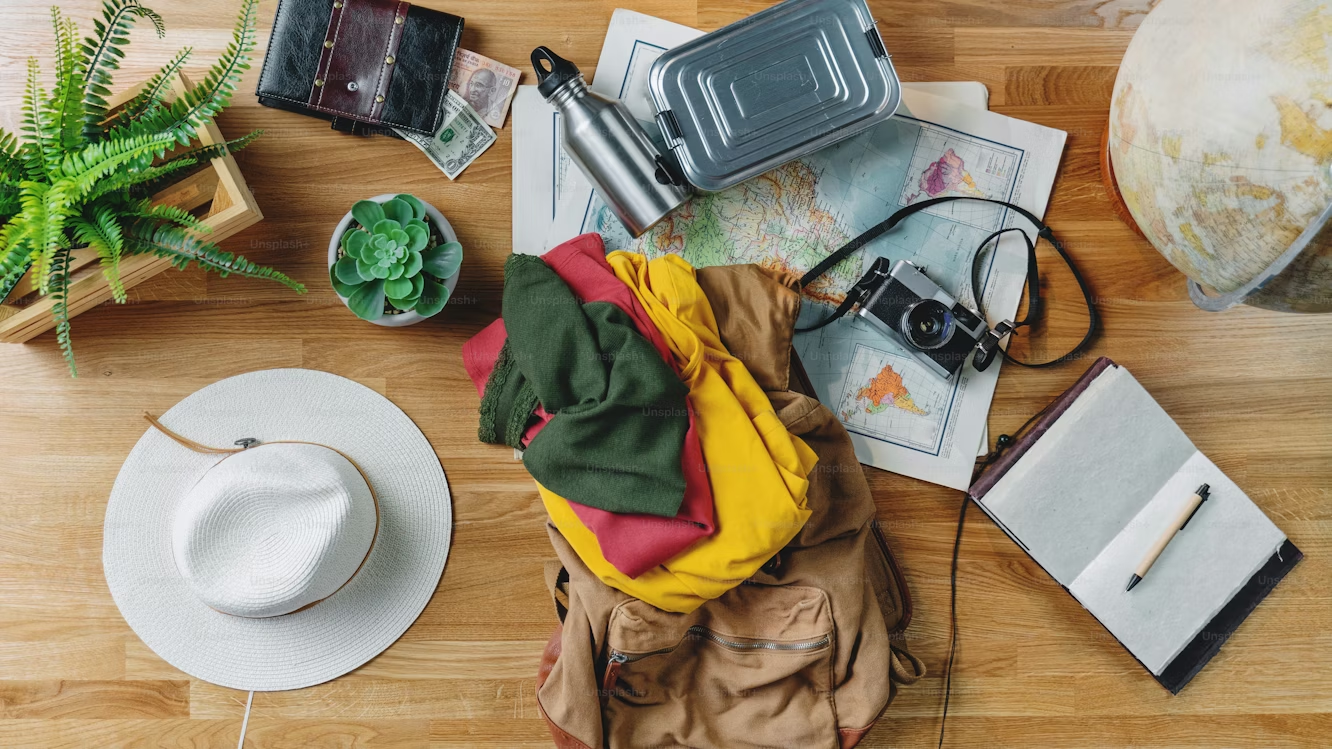

Packing sits at the quiet center of every journey. It happens before the excitement, before the airport, before the photos—and yet it shapes everything that follows. Pack too much, and you feel weighed down. Pack carelessly, and you end up buying things you didn’t need. Pack without thought for the environment, and your trip quietly accumulates waste before it even begins.
But packing, when done intentionally, becomes something else entirely. It becomes a filter. A discipline. Even a kind of freedom.
The following eight packing tricks are not abstract ideals. They’re practical, field-tested habits that reduce stress, cut costs, and minimize environmental impact—often all at once.
- build a modular packing system instead of random packing
Most people pack in piles: clothes here, toiletries there, gadgets stuffed into whatever space remains. It works, but it creates friction later—unpacking, repacking, searching.
A modular system changes that. Instead of packing items individually, you group them into functional units:
- Clothing cube (daily outfits)
- Sleepwear cube
- Toiletry pouch
- Tech organizer
- Laundry bag
Why it works:
You don’t unpack everything each time. You simply pull out what you need.
Environmental benefit:
Less disturbance means less re-washing, less damage to clothes, and fewer forgotten items that lead to replacement purchases.
Efficiency comparison:
| Packing Style | Time to Pack | Time to Find Items | Repacking Stress | Waste Risk |
|---|---|---|---|---|
| Random Packing | Medium | High | High | Medium |
| Modular Packing | Low | Low | Low | Low |
Hidden effect:
You become aware of what you actually use—and what you don’t.
- follow the “wear more, pack less” principle
Packing for “just in case” scenarios is one of the biggest contributors to overpacking. The alternative is to rely more on what you already wear in transit.
Simple adjustments:
- Wear your bulkiest shoes
- Layer clothing instead of packing extra jackets
- Use multi-purpose items (e.g., scarf as blanket)
Weight impact chart:
| Item Type | Packed Weight | Worn Weight | Space Saved |
|---|---|---|---|
| Jacket | 1.2 kg | 0 kg | High |
| Sneakers | 1 kg | 0 kg | High |
| Jeans | 0.7 kg | 0 kg | Medium |
Why it works:
- Reduces luggage size
- Avoids baggage fees
- Lowers fuel consumption (especially on flights)
Psychological benefit:
You feel lighter, both physically and mentally, from the moment you start your journey.
- choose fabrics that reduce washing and drying needs
Clothing choice isn’t just about style—it directly affects how often you need to wash.
Some fabrics naturally resist odor, dry quickly, and maintain shape longer:
- Merino wool
- Bamboo blends
- Quick-dry synthetics
Laundry frequency comparison:
| Fabric Type | Wears Before Wash | Drying Time | Water Usage |
|---|---|---|---|
| Cotton | 1–2 | Long | High |
| Polyester | 2–3 | Medium | Medium |
| Merino Wool | 4–6 | Short | Low |
Why it works:
You carry fewer items while maintaining freshness.
Eco advantage:
Less washing means reduced water and energy consumption throughout your trip.
- replace disposable toiletries with refillable solutions
Travel-sized toiletries often seem convenient, but they create a steady stream of plastic waste. They’re also surprisingly expensive over time.
Instead:
- Use refillable silicone bottles
- Carry solid toiletries (shampoo bars, soap bars)
- Bring only what you need
Cost and waste comparison:
| Toiletry Type | Cost per Trip | Plastic Waste | Longevity |
|---|---|---|---|
| Disposable Minis | $15–$25 | High | Single-use |
| Refillable Bottles | $10 (initial) | Low | Long-term |
| Solid Toiletries | $8–$15 | Minimal | Multi-trip |
Why it works:
You reduce both clutter and waste without sacrificing hygiene.
Unexpected bonus:
Solid toiletries are TSA-friendly and less likely to leak.
- pack a “zero-waste essentials pouch”
Even with the best intentions, travel exposes you to situations where waste feels unavoidable—street food, takeaways, quick snacks.
A small pouch can change that:
- Reusable cutlery
- Foldable container
- Cloth napkin
- Reusable straw
Usage impact over a week:
| Item Type | Without Kit (units) | With Kit (units) | Reduction |
|---|---|---|---|
| Plastic Cutlery | 10–15 | 0 | 100% |
| Food Containers | 5–10 | 1–2 | 80% |
| Paper Napkins | 20+ | 0–2 | 90% |
Why it works:
It removes the need to make decisions in the moment. You’re already prepared.
Behavioral shift:
You move from reactive consumption to proactive control.
- adopt a “one-in, one-out” packing rule
Every time you consider adding something to your bag, remove something else. This simple rule forces prioritization.
Example:
| Item Added | Item Removed | Net Impact |
|---|---|---|
| Extra Shirt | Unused T-shirt | Neutral |
| New Gadget | Old Accessory | Neutral |
| Extra Shoes | Bulky Hoodie | Neutral |
Why it works:
It keeps your packing list lean without requiring strict limits.
Environmental angle:
Fewer items mean less consumption, fewer replacements, and reduced travel weight.
- digitize documents and entertainment
Paper is easy to overlook. Boarding passes, maps, guidebooks, tickets—they accumulate quickly.
Switching to digital alternatives:
- E-tickets
- Offline maps
- E-books
- Cloud-stored documents
Paper usage comparison:
| Item Type | Paper Version | Digital Version | Waste Reduction |
|---|---|---|---|
| Boarding Pass | 2–4 sheets | 0 | High |
| Travel Guides | 200+ pages | 0 | Very High |
| Tickets | Multiple | 0 | High |
Why it works:
- Reduces clutter
- Saves space
- Eliminates risk of losing important documents
Additional benefit:
Everything becomes searchable and accessible in seconds.
- pre-plan outfits instead of packing options
Packing “options” leads to overpacking. Packing outfits leads to clarity.
Instead of:
“I might wear this…”
Shift to:
“Day 1: Outfit A
Day 2: Outfit B”
Outfit planning table:
| Day | Activity | Outfit Components |
|---|---|---|
| Day 1 | Travel | Jeans, T-shirt, jacket |
| Day 2 | City Walk | Shorts, breathable shirt |
| Day 3 | Dinner | Smart casual outfit |
| Day 4 | Outdoor Trip | Activewear |
Why it works:
You pack exactly what you need—nothing more, nothing less.
Stress reduction:
No decision fatigue during the trip. You already know what to wear.
visual summary of packing impact
Here’s how these tricks combine:
| Strategy | Space Saved | Cost Saved | Stress Reduction | Eco Impact |
|---|---|---|---|---|
| Modular Packing | High | Medium | High | Medium |
| Wear More, Pack Less | High | High | High | High |
| Smart Fabrics | Medium | Medium | Medium | High |
| Refillable Toiletries | Low | Medium | Medium | High |
| Zero-Waste Kit | Low | Low | Medium | Very High |
| One-In-One-Out Rule | Medium | Medium | High | Medium |
| Digital Alternatives | Low | Low | Medium | High |
| Outfit Planning | High | Medium | Very High | Medium |
the deeper shift
At first glance, these packing tricks seem practical—and they are. But beneath the surface, they represent something more fundamental: a shift from excess to intention.
You stop packing for hypothetical scenarios and start packing for real experiences. You stop preparing for every possibility and start trusting your ability to adapt.
And interestingly, the lighter your bag becomes, the more flexible your trip feels.
There’s less to carry, less to worry about, less to manage.
That’s where the real freedom lies.
frequently asked questions
- how do i start packing more sustainably without overcomplicating things?
Start with one change—like switching to a reusable toiletry kit or packing fewer clothes. Build gradually rather than trying to overhaul everything at once.
- is eco-friendly packing more expensive upfront?
Sometimes, yes. But most reusable items pay for themselves within a few trips by eliminating repeated purchases.
- what’s the biggest mistake people make when packing?
Overpacking “just in case” items. These rarely get used and add unnecessary weight and stress.
- how can i manage laundry while packing fewer clothes?
Choose quick-dry and odor-resistant fabrics, and plan for minimal washing during your trip.
- are digital documents always reliable while traveling?
Yes, if you prepare properly. Keep offline backups and store important files in multiple locations (device + cloud).
- can minimalist packing work for long trips?
Absolutely. In fact, it works better for long trips because you rely more on routines (laundry, re-wearing) rather than carrying everything at once.
Packing is often treated as a task to get through quickly. But when approached thoughtfully, it becomes a powerful tool—one that shapes not just your luggage, but your entire travel experience.
Travel lighter. Waste less. Move freely.
And notice how everything else begins to feel easier.