
Travel has a way of opening the mind, but it can also leave a heavy footprint on the planet—especially when transportation is involved. For budget travelers, the challenge is even more interesting: how to move around affordably while minimizing environmental impact. The good news is that saving money and reducing emissions often go hand in hand.
This article explores practical, experience-driven strategies that combine sustainability with affordability. Along the way, you’ll find data tables, comparisons, and real-world insights that go beyond generic advice.
- Choose trains over planes whenever possible
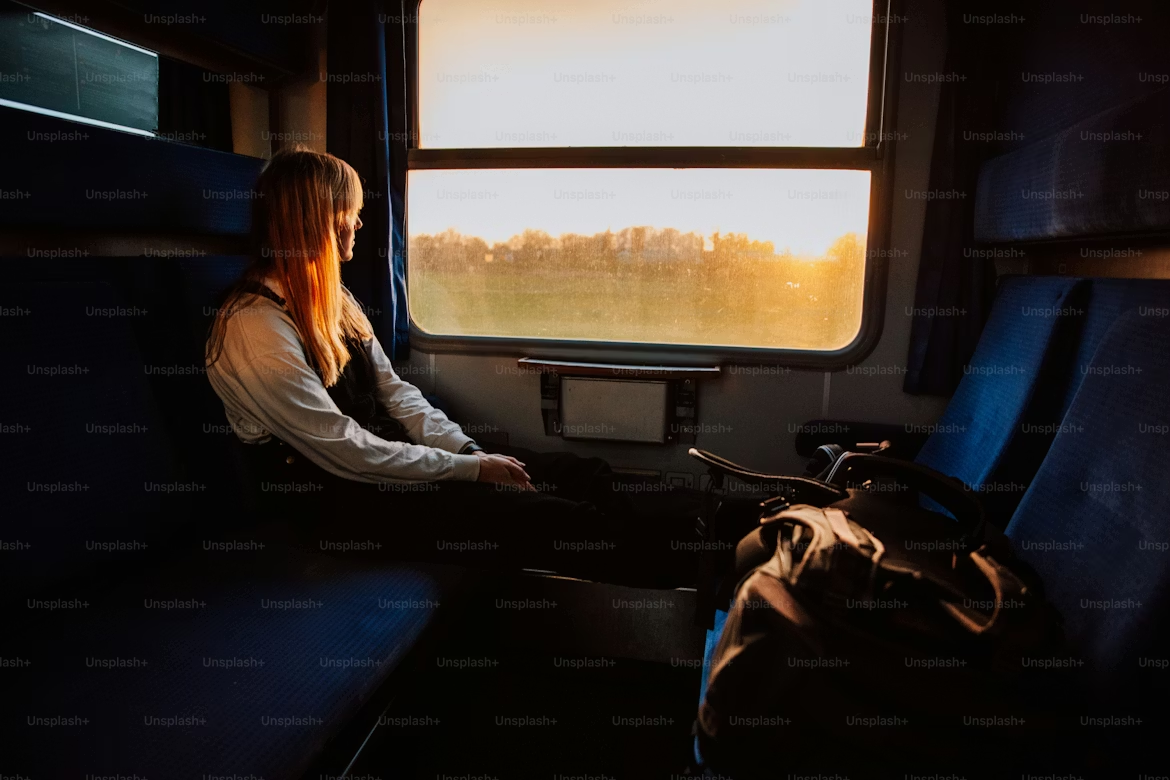
Flying is often the fastest way to travel, but it’s also one of the most carbon-intensive. Trains, on the other hand, are significantly more energy-efficient—especially electric rail systems.
Short-haul flights (under 1,000 km) are the least efficient because takeoff and landing consume a large portion of fuel. If a train journey takes under 6–8 hours, it’s almost always the greener choice.
Carbon emissions comparison per passenger (approximate values)
| Transport Mode | CO2 Emissions (kg per 100 km) | Cost Range (Budget) |
|---|---|---|
| Airplane | 20–30 | Medium–High |
| Car (solo) | 15–20 | Medium |
| Bus | 5–10 | Low |
| Train (electric) | 2–6 | Low–Medium |
Budget insight: Advance train tickets and overnight sleeper trains can eliminate the need for accommodation, saving both money and emissions.
- Travel by long-distance buses
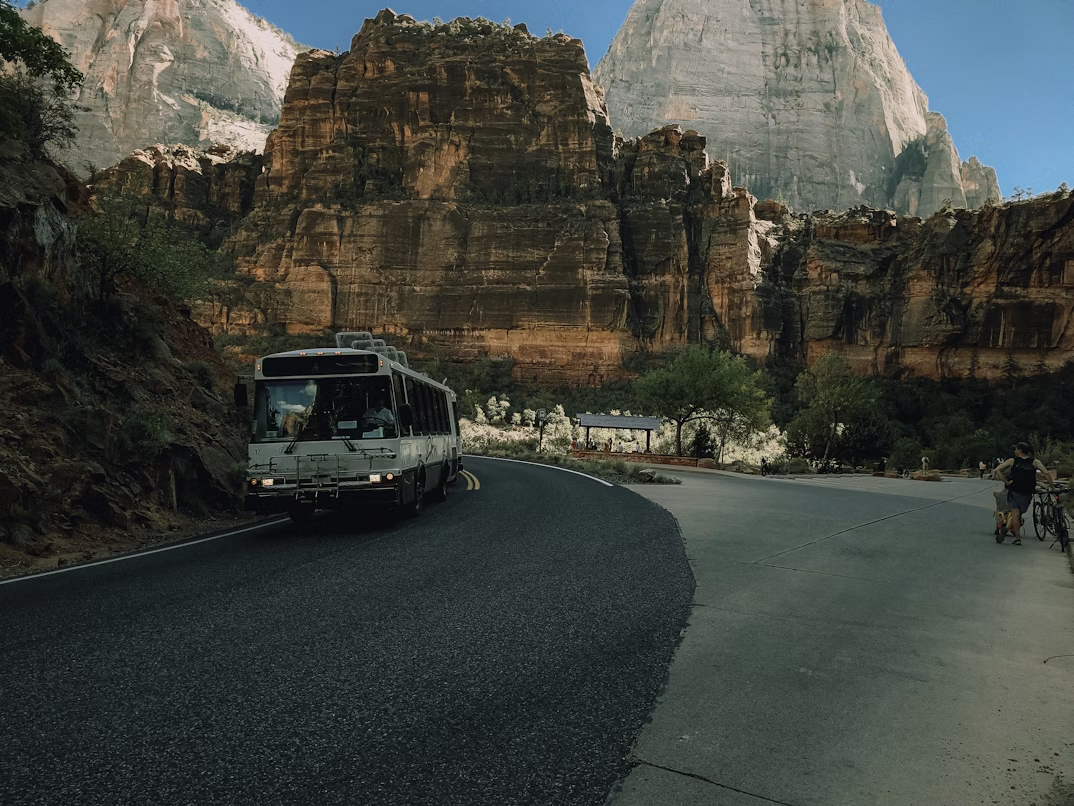
Buses are often overlooked, but they are one of the most economical and eco-friendly modes of transportation. When buses operate near full capacity, their emissions per passenger drop significantly.
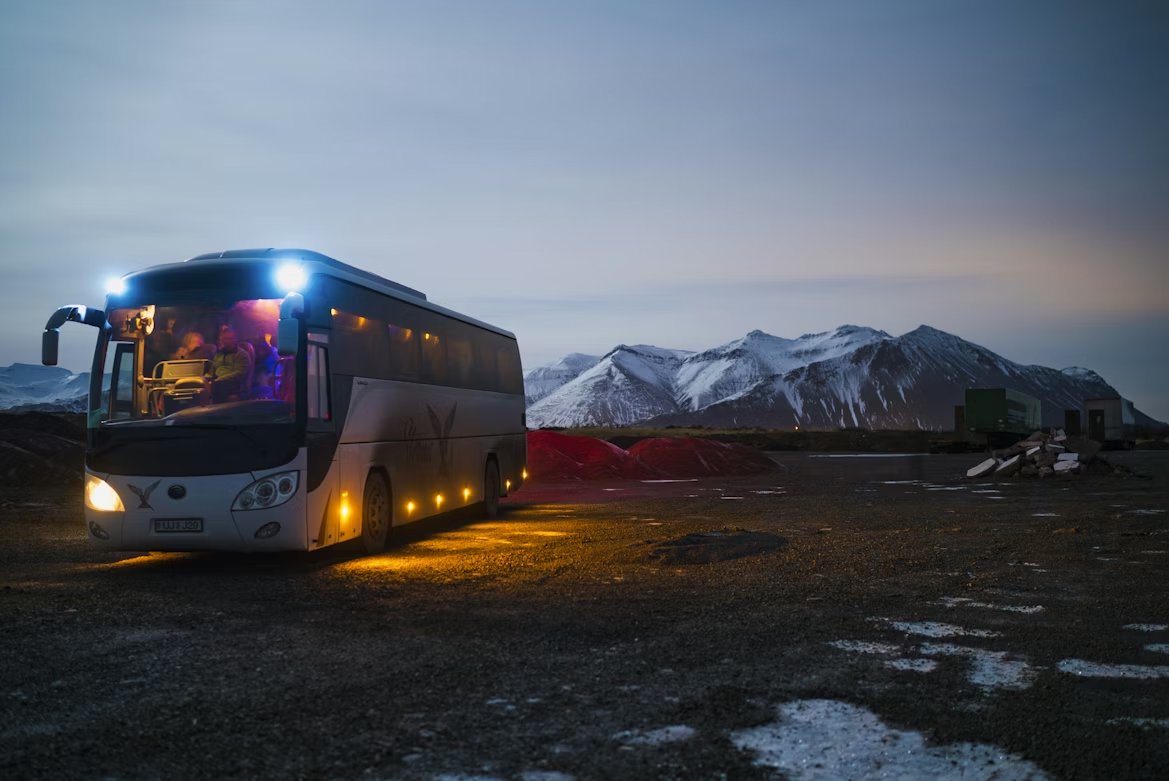
Modern coach services also offer improved comfort—Wi-Fi, reclining seats, and charging ports—making them a viable alternative to trains and flights.
Cost vs sustainability comparison
| Mode | Avg Cost per 500 km | Sustainability Score (1–10) |
|---|---|---|
| Flight | $50–$150 | 3 |
| Train | $30–$100 | 8 |
| Bus | $15–$60 | 9 |
Budget insight: Night buses double as accommodation. While not always luxurious, they are a practical choice for saving money.
- Share rides and carpool
Carpooling reduces the number of vehicles on the road and spreads fuel costs among passengers. For budget travelers, this can be one of the cheapest ways to cover medium distances.
Environmental impact of car occupancy
| Occupancy Level | CO2 per Passenger (relative) |
|---|---|
| 1 person | 100% |
| 2 people | 50% |
| 4 people | 25% |
Budget insight: Sharing a ride often costs less than a train ticket, especially in regions with limited public transport.
- Rent bicycles or use bike-sharing systems
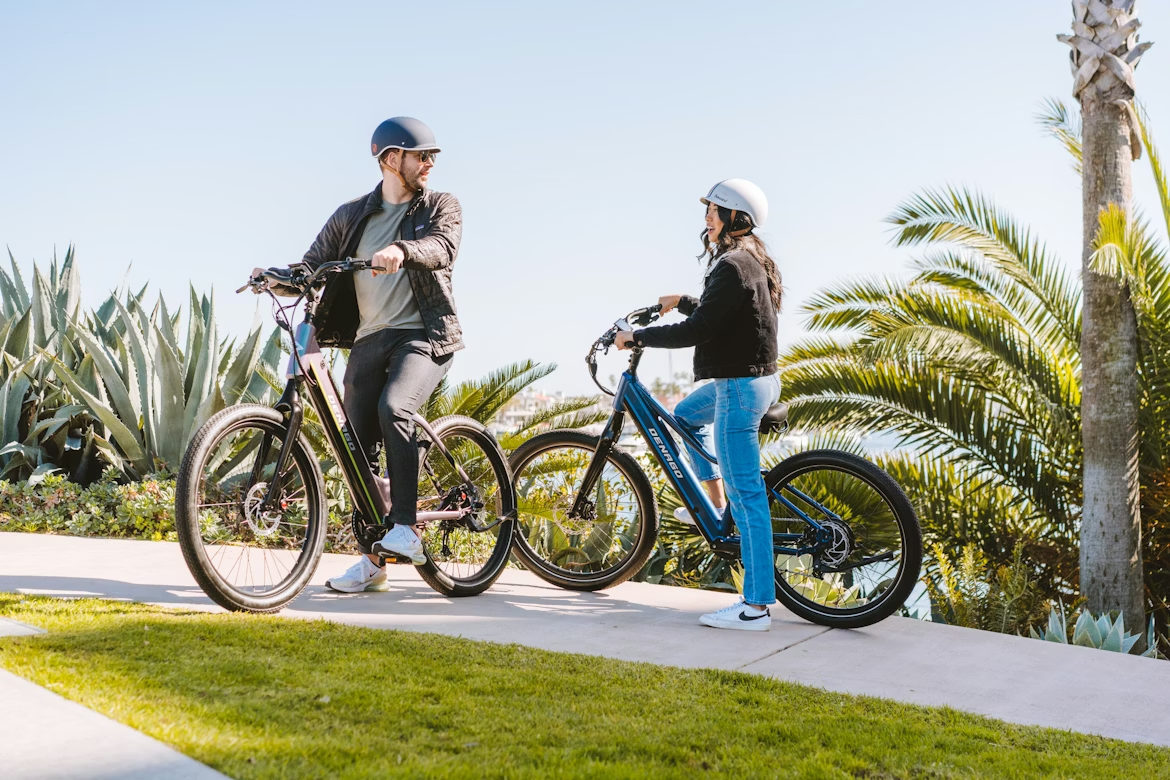
Cycling is perhaps the most eco-friendly mode of transportation available. It produces zero emissions, promotes health, and allows for a deeper connection with your surroundings.
Daily cost comparison
| Mode | Average Daily Cost |
|---|---|
| Taxi | $20–$50 |
| Public Transit | $5–$15 |
| Bike Rental | $2–$10 |
Budget insight: Many cities offer free or low-cost bike-sharing programs, making this option incredibly affordable.
- Walk more than you think you can
Walking is not only free and emission-free—it also transforms travel into an immersive experience. Budget travelers often discover hidden gems simply by exploring on foot.
Energy and cost comparison
| Mode | Cost | Emissions | Experience Level |
|---|---|---|---|
| Walking | Free | Zero | High |
| Taxi | High | Medium | Low |
| Bus | Low | Low | Medium |
Budget insight: Staying in centrally located accommodations can reduce transportation costs significantly by making walking feasible.
- Use public transportation systems
Metro systems, trams, and city buses are designed to move large numbers of people efficiently. This reduces emissions per passenger and keeps costs low.
Urban transport comparison
| Mode | Cost per Ride | CO2 Emissions | Reliability |
|---|---|---|---|
| Taxi | High | High | Medium |
| Metro | Low | Low | High |
| Bus | Low | Low | Medium |
Budget insight: Daily or weekly passes often provide unlimited rides at a discounted rate.
- Travel during off-peak times
Transportation systems operate more efficiently when they are not overloaded. Off-peak travel often means lower fares, fewer crowds, and reduced strain on infrastructure.
Price variation example
| Time Period | Price Level | Crowd Level |
|---|---|---|
| Peak Hours | High | High |
| Off-Peak | Low | Low |
Budget insight: Traveling midweek or outside holiday seasons can cut costs significantly.
- Pack light to reduce fuel consumption
It may not seem obvious, but luggage weight affects fuel consumption—especially in planes and cars. Every extra kilogram contributes to higher emissions.
Fuel efficiency impact
| Extra Weight | Fuel Increase |
|---|---|
| +10 kg | +1–2% |
| +20 kg | +2–4% |
Budget insight: Many airlines charge for checked baggage, so packing light saves both money and emissions.
- Choose eco-conscious transport providers
Some transportation companies invest in cleaner technologies—electric buses, hybrid fleets, or carbon offset programs. Supporting these providers encourages sustainable practices.
Comparison of provider types
| Provider Type | Sustainability Level | Cost Impact |
|---|---|---|
| Conventional | Low | Low |
| Hybrid/Electric | High | Medium |
| Carbon Offset | Medium | Slightly Higher |
Budget insight: The price difference is often minimal, especially when booked in advance.
- Combine multiple transport modes
Multimodal travel—using a mix of trains, buses, bikes, and walking—can be both cost-effective and eco-friendly. For example, taking a train to a city and then cycling locally.
Efficiency comparison
| Single Mode | Flexibility | Cost | Emissions |
|---|---|---|---|
| Flight only | Low | High | High |
| Mixed modes | High | Low | Low |
Budget insight: Combining modes often unlocks cheaper routes that are not visible in standard booking platforms.
- Offset your carbon footprint (strategically)
While reducing emissions is the priority, offsetting can help balance unavoidable travel. Budget travelers can contribute small amounts to environmental projects like reforestation or renewable energy.
Offset cost example
| Distance Flown | CO2 Emitted | Offset Cost |
|---|---|---|
| 1,000 km | ~200 kg | $3–$8 |
| 5,000 km | ~1,000 kg | $10–$30 |
Budget insight: Offsetting is relatively inexpensive and can be included as part of your travel budget.
Putting it all together: a sample budget-friendly eco itinerary
Let’s compare two hypothetical travel plans for a 1,000 km journey.
Scenario comparison
| Factor | Flight Plan | Eco Plan (Train + Bike) |
|---|---|---|
| Cost | $120 | $60 |
| CO2 Emissions | High | Low |
| Flexibility | Low | High |
| Experience | Limited | Rich |
The eco plan not only saves money but also enhances the travel experience through slower, more immersive movement.
Common mistakes budget travelers make
Many travelers unintentionally increase their environmental impact while trying to save money. Here are a few pitfalls:
- Booking last-minute flights instead of planning train routes
- Choosing taxis over public transport due to convenience
- Overpacking and incurring baggage fees
- Ignoring local transport passes that offer better value
- Not researching eco-friendly alternatives
Avoiding these mistakes can significantly improve both your budget and your environmental footprint.
FAQs
- Is eco-friendly travel always cheaper?
Not always, but in many cases it is. Options like buses, trains, and walking tend to be more affordable than flights and taxis. - How can I find eco-friendly transport options easily?
Use travel planning tools that allow filtering by transport type. Research local transit systems before arriving. - Are carbon offsets really effective?
They can help, but they should not replace efforts to reduce emissions. Think of them as a secondary step. - What is the best transport option for long distances?
Trains are often the best balance between cost, comfort, and sustainability. Buses are the cheapest, while flights are the fastest but least eco-friendly. - How much can I realistically save using these tips?
Savings vary, but many travelers report reducing transport costs by 30–60% by switching to buses, trains, and shared rides. - Is slow travel worth it for budget travelers?
Yes. Slower travel often leads to deeper experiences, lower costs, and reduced environmental impact.
Final thoughts
Eco-friendly travel is not about perfection—it’s about making better choices whenever possible. For budget travelers, these choices often align naturally with saving money. By rethinking how you move from one place to another, you can reduce your environmental impact without sacrificing the joy of exploration.
In many ways, traveling sustainably brings you closer to the essence of travel itself: experiencing the journey, not just the destination.