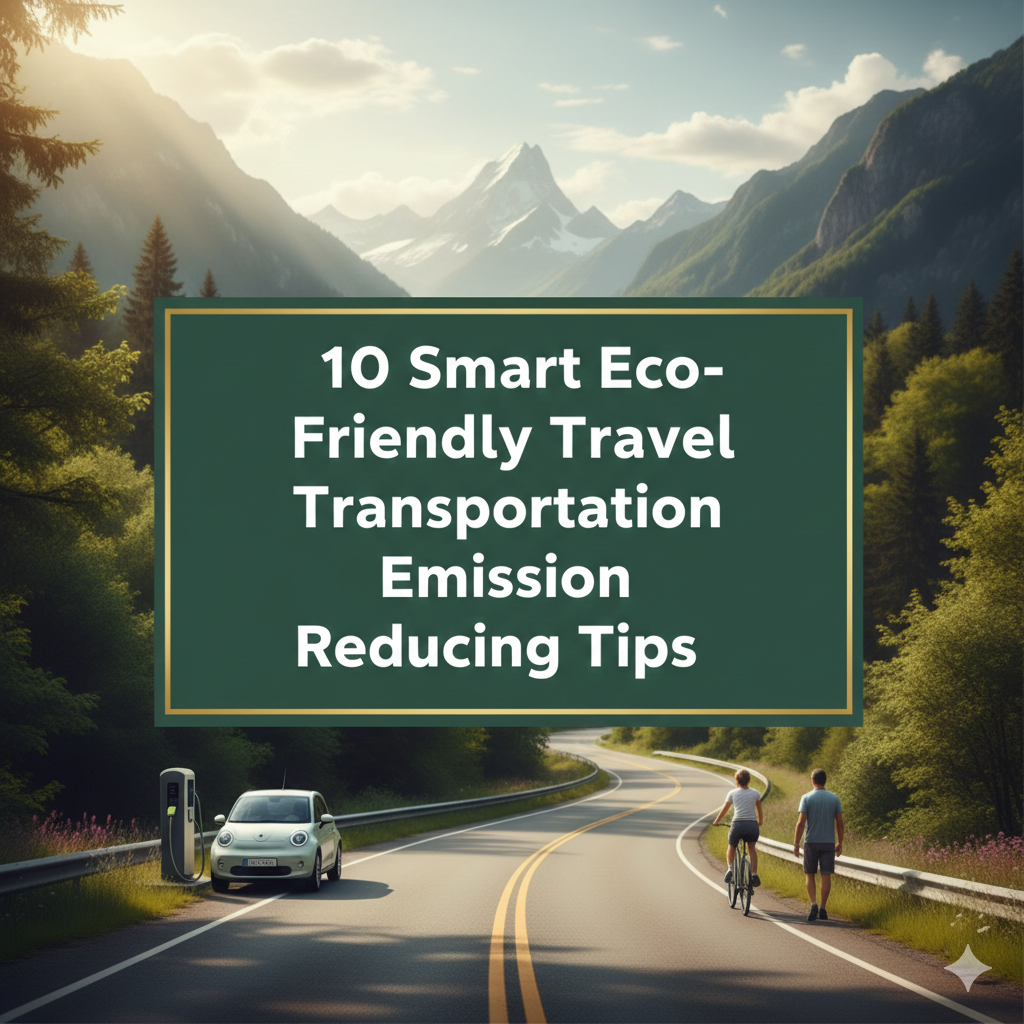

Daily travel is something most of us don’t question—we commute to work, run errands, visit friends, and move through our routines without thinking much about the environmental cost. Yet transportation is one of the largest contributors to carbon emissions worldwide. The good news? You don’t need to completely overhaul your life to make a meaningful difference. Small, practical shifts in how you travel each day can significantly reduce your carbon footprint while often saving you money and improving your well-being.
This guide walks through twelve smart, realistic eco-friendly transportation ideas tailored for everyday trips. These are not abstract concepts—they are habits, systems, and choices that real people use to travel smarter and greener.
- Walking as a primary transport mode
Walking is the simplest and most underrated eco-friendly transportation option. It produces zero emissions, requires no fuel, and offers clear physical and mental health benefits.

For short daily trips—grocery runs, nearby offices, or school drop-offs—walking can often replace motorized transport entirely. Many people underestimate how much of their travel falls within a walkable radius.
Benefits of walking:
| Factor | Impact Level |
|---|---|
| Carbon emissions | None |
| Cost | Free |
| Health improvement | High |
| Time efficiency | Moderate |
Practical tip: Start by identifying trips under 2 km and commit to walking those consistently. Over time, your comfort zone will expand.
- Cycling for medium-distance commutes

Cycling bridges the gap between walking and motorized transport. It’s fast, efficient, and still entirely emission-free.
Cities around the world are increasingly becoming bike-friendly, and even in less-developed infrastructure areas, bicycles remain a practical solution.
Types of cycling options:
| Type of Bike | Best Use Case |
|---|---|
| Standard bicycle | Short to medium daily trips |
| Electric bike | Longer distances or hilly areas |
| Folding bike | Mixed transport (bike + bus) |
Cycling not only reduces emissions but also cuts down travel time in congested areas. Electric bikes, in particular, make longer commutes accessible to more people.
- Carpooling with coworkers or neighbors
Carpooling is one of the easiest ways to reduce the number of vehicles on the road without sacrificing convenience.
Instead of four people driving separately, one car can serve the same purpose.
Environmental and economic impact:
| Metric | Single Driver | Carpool (4 People) |
|---|---|---|
| Fuel use per person | High | Low |
| Emissions per person | High | Reduced by ~75% |
| Cost per person | Full | Shared |
Beyond the environmental benefits, carpooling often builds stronger social connections and reduces stress from driving alone.
- Using public transportation efficiently
Public transportation systems—buses, trains, and metros—are designed to move large numbers of people efficiently.
While one bus may emit more than a car, its emissions per passenger are significantly lower.
Comparison of emissions:
| Mode of Transport | Emissions per Passenger (Relative) |
|---|---|
| Private car | High |
| Bus | Medium |
| Train/Metro | Low |
To maximize benefits:
- Plan routes in advance
- Travel during off-peak hours when possible
- Combine with walking or cycling for first/last mile
- Switching to electric vehicles (EVs)
Electric vehicles are becoming more accessible and practical for daily travel. While they are not completely emission-free (due to electricity generation), they significantly reduce direct emissions.
Comparison table:
| Feature | Gasoline Car | Electric Vehicle |
|---|---|---|
| Tailpipe emissions | Yes | None |
| Fuel cost | High | Lower |
| Maintenance | Moderate | Lower |
EVs are especially effective when combined with renewable energy sources.
- Planning multi-purpose trips
One overlooked source of emissions is unnecessary trips. By combining errands into a single outing, you can dramatically reduce travel frequency.
Example:
| Scenario | Trips Made | Fuel Used |
|---|---|---|
| Separate errands | 4 | High |
| Combined errands | 1 | Low |
This approach not only saves fuel but also time and mental energy.
- Ride-sharing instead of solo rides
Ride-sharing services can be eco-friendly when used wisely—especially shared rides rather than private ones.
Shared ride benefits:
- Fewer vehicles on the road
- Reduced congestion
- Lower per-person emissions
However, using ride-sharing excessively can increase overall traffic, so it works best as a supplement, not a replacement for greener modes.
- Choosing fuel-efficient or hybrid vehicles
If switching to a fully electric vehicle isn’t feasible, hybrid or fuel-efficient cars are a strong alternative.
Fuel efficiency comparison:
| Vehicle Type | Average Fuel Efficiency |
|---|---|
| SUV | Low |
| Sedan | Medium |
| Hybrid car | High |
Even small improvements in fuel efficiency can lead to significant long-term emission reductions.
- Remote work and digital commuting
One of the most powerful eco-friendly transportation ideas is not traveling at all.
Working from home, attending virtual meetings, and using digital services reduce the need for daily commuting.
Impact chart:
| Work Style | Weekly Commute Trips | Emissions |
|---|---|---|
| Office-based | 10 | High |
| Hybrid | 4–6 | Medium |
| Remote | 0 | Minimal |
Even reducing commuting by a few days per week can have a measurable environmental impact.
- Using micro-mobility options
Micro-mobility includes electric scooters, shared bikes, and other small-scale transport options.
These are particularly useful for short urban trips and last-mile connectivity.
Advantages:
| Feature | Benefit |
|---|---|
| Compact size | Easy parking |
| Low energy use | Reduced emissions |
| Accessibility | Widely available |
They are not perfect (battery production has environmental costs), but they are still far better than traditional vehicles for short trips.
- Maintaining your vehicle properly
A well-maintained vehicle is more fuel-efficient and produces fewer emissions.
Key maintenance practices:
- Regular oil changes
- Proper tire inflation
- Clean air filters
Efficiency impact:
| Maintenance Factor | Effect on Fuel Efficiency |
|---|---|
| Proper tire pressure | +3–5% |
| Engine tuning | +4% |
| Clean filters | +2% |
These small improvements add up over time.
- Adopting a “slow travel” mindset for daily life
Eco-friendly transportation is not just about tools—it’s about mindset.
A slower, more intentional approach to daily travel can lead to:
- Reduced reliance on cars
- Greater awareness of surroundings
- Improved mental health
Instead of rushing everywhere, consider:
- Walking meetings
- Local shopping
- Flexible scheduling
carbon footprint comparison chart
Below is a simplified comparison of carbon emissions per kilometer for different transport methods:
| Transport Mode | CO₂ Emissions (g/km per person) |
|---|---|
| Walking | 0 |
| Cycling | 0 |
| Electric scooter | 20–40 |
| Bus | 70–100 |
| Train | 30–60 |
| Car (single) | 150–250 |
| Car (carpool) | 40–80 |
This table highlights how even small changes—like carpooling or switching to public transport—can drastically reduce emissions.
how to build your eco-friendly daily travel plan
To make these ideas actionable, follow this simple framework:
Step 1: Audit your current travel habits
List all your weekly trips and distances.
Step 2: Categorize trips
Divide them into short, medium, and long distances.
Step 3: Assign greener alternatives
- Short → walking or cycling
- Medium → bike, bus, or carpool
- Long → public transport or EV
Step 4: Track progress
Measure fuel savings and reduced trips over time.
frequently asked questions
- Is walking really impactful if my trips are short?
Yes. Short trips are often the least fuel-efficient when done by car because engines consume more fuel during start-up. Replacing these with walking has a disproportionately positive impact.
- Are electric vehicles completely eco-friendly?
Not entirely. While they produce zero tailpipe emissions, their overall environmental impact depends on electricity sources and battery production. However, they are still significantly cleaner than gasoline vehicles.
- What if public transportation is not reliable in my area?
In such cases, combining alternatives—like cycling plus occasional ride-sharing or carpooling—can still reduce your overall environmental footprint.
- How can I stay consistent with eco-friendly travel habits?
Start small. Replace just one or two trips per week with greener options, then gradually expand. Consistency matters more than perfection.
- Is cycling safe for daily commuting?
It depends on infrastructure and safety practices. Using helmets, reflective gear, and safe routes can greatly reduce risks.
- Does carpooling really make a difference?
Absolutely. Sharing rides can cut emissions per person by up to 75%, making it one of the most effective and practical solutions.
final thoughts
Eco-friendly transportation doesn’t require dramatic sacrifice. It’s about making smarter, more conscious decisions with the options available to you. Whether it’s choosing to walk instead of drive, sharing a ride, or planning your errands more efficiently, each action contributes to a larger impact.
The key is not to aim for perfection but progress. Over time, these small adjustments become habits, and those habits shape a more sustainable daily life—not just for you, but for everyone around you.