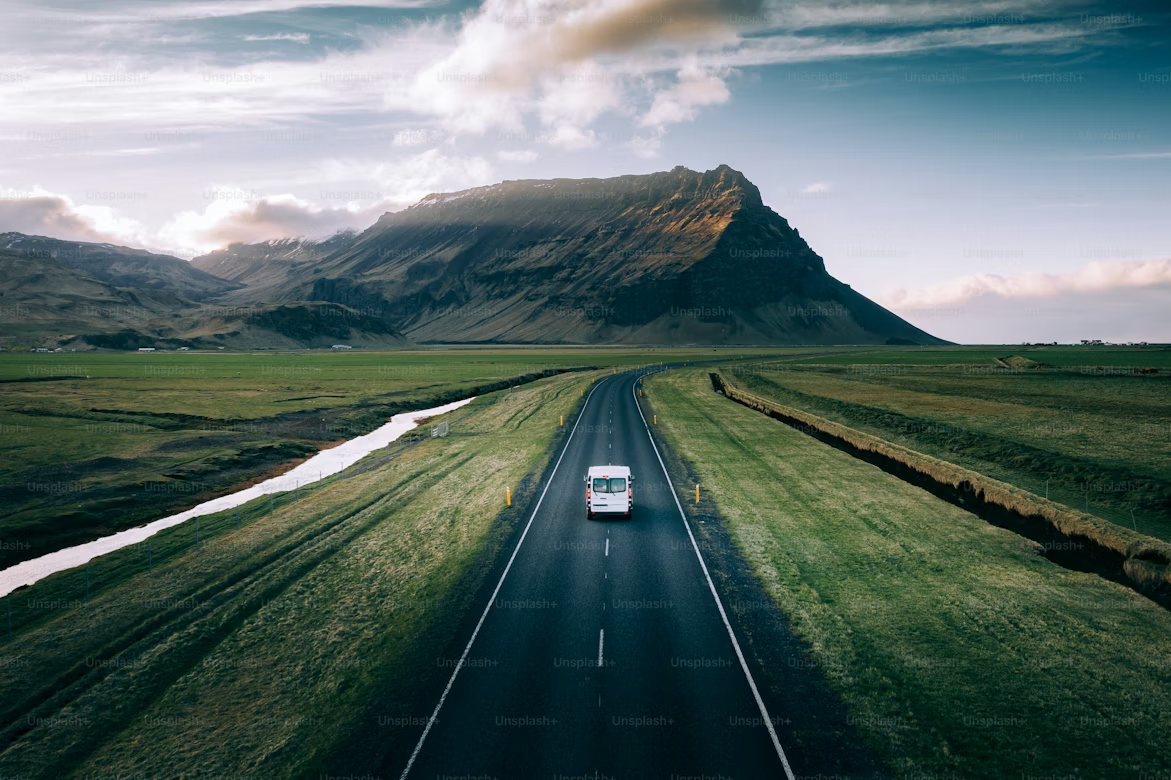


Travel has a way of opening up the world, but it also quietly adds pressure to the environment—especially through transportation. Whether it’s a short road trip, a cross-country journey, or a daily commute during travel, the way we move matters more than we often realize. Fuel consumption isn’t just about cost; it’s tied directly to carbon emissions, air quality, and long-term sustainability.
Over time, I’ve learned that saving fuel while traveling doesn’t require dramatic lifestyle changes. It’s about small, practical adjustments—choices that feel almost effortless once they become habits. These seven transportation tips aren’t theoretical ideas. They’re grounded in real experiences, observations, and simple behavioral shifts that can make a measurable difference.
What’s interesting is that most of these tips don’t just help the planet—they also save money, reduce stress, and even improve the overall travel experience.
let’s explore them one by one.
tip 1: choose smarter routes, not just shorter ones
At first glance, the shortest route seems like the obvious choice. But in practice, the shortest path isn’t always the most fuel-efficient. Stop-and-go traffic, steep inclines, poor road conditions, and congestion can significantly increase fuel consumption.
Modern navigation apps often provide multiple route options. Instead of blindly selecting the fastest or shortest, take a moment to evaluate:
- Is there heavy traffic?
- Are there frequent stops or signals?
- Does the route pass through urban congestion?
A slightly longer highway route with steady speed can consume far less fuel than a shorter city route filled with interruptions.
Here’s a simple comparison:
route comparison table
| route type | distance (km) | avg speed (km/h) | stops | fuel efficiency (km/l) | fuel used (liters) |
|---|---|---|---|---|---|
| city shortcut | 18 | 30 | 15 | 10 | 1.8 |
| highway alternative | 24 | 60 | 2 | 15 | 1.6 |
Even though the highway route is longer, it ends up saving fuel due to smoother driving conditions.
A small habit: check traffic conditions before starting your journey, especially during peak hours.
tip 2: maintain a steady driving speed

Frequent acceleration and braking are among the biggest fuel wasters. Every time you press the accelerator aggressively, your engine burns more fuel than necessary.
Driving at a steady speed—especially on highways—keeps fuel consumption predictable and lower.
Some practical ways to achieve this:
- Use cruise control on long, open roads
- Maintain safe following distance to avoid sudden braking
- Anticipate traffic flow instead of reacting late
fuel consumption vs speed chart
| speed (km/h) | fuel efficiency (km/l) |
|---|---|
| 40 | 12 |
| 60 | 15 |
| 80 | 17 |
| 100 | 16 |
| 120 | 13 |
Notice how fuel efficiency improves up to a point, then starts to drop as speed increases. The sweet spot for many vehicles is between 70–90 km/h.
Driving smoothly not only saves fuel but also reduces wear and tear on your vehicle.
tip 3: reduce unnecessary weight and drag
It’s easy to underestimate how much extra weight affects fuel consumption. Overpacking, carrying unused items, or installing roof racks unnecessarily can all reduce efficiency.
Every additional 50 kg can increase fuel consumption by around 1–2%.
common weight culprits:
- unnecessary luggage
- sports equipment not in use
- full water containers
- unused tools or gear
aerodynamic drag matters too:
Roof racks and open windows at high speeds increase resistance, forcing the engine to work harder.
impact of weight on fuel use
| extra weight (kg) | fuel increase (%) |
|---|---|
| 50 | 1–2 |
| 100 | 2–4 |
| 150 | 4–6 |
simple habit: before starting your trip, quickly review what you’re carrying. Remove anything you don’t need.
tip 4: combine trips and avoid unnecessary travel
One of the simplest ways to save fuel is to reduce the number of trips altogether.
Instead of making multiple short trips throughout the day, combine them into a single, well-planned route.
example:
instead of:
- morning: grocery run
- afternoon: fuel station
- evening: pharmacy
combine:
- one loop covering all stops
trip efficiency comparison
| trip style | number of trips | total distance (km) | fuel used (liters) |
|---|---|---|---|
| separate trips | 3 | 15 | 1.5 |
| combined trip | 1 | 10 | 1.0 |
Short trips also tend to consume more fuel because engines operate less efficiently when cold.
This approach works especially well during travel when exploring a city—plan your sightseeing geographically rather than randomly.
tip 5: use public transport or shared mobility when possible
This tip might sound obvious, but its impact is significant. Shared transportation dramatically reduces fuel usage per person.
Consider:
- buses
- trains
- carpooling
- ride-sharing services
fuel efficiency comparison per passenger
| transport mode | fuel per 100 km (liters per person) |
|---|---|
| single car | 6–8 |
| carpool (4 ppl) | 2–3 |
| bus | 1–2 |
| train | 0.5–1 |
In many cities, public transport is not only eco-friendly but also faster due to dedicated lanes and reduced congestion.
If you’re traveling in a group, sharing a ride can cut both fuel costs and emissions significantly.
tip 6: keep your vehicle well maintained
A poorly maintained vehicle consumes more fuel than necessary. Regular maintenance ensures that your engine runs efficiently.
key areas to focus on:
- tire pressure
- engine tuning
- air filters
- oil quality
tire pressure impact
| tire condition | fuel efficiency change |
|---|---|
| properly inflated | optimal |
| under-inflated | -3% to -5% |
| over-inflated | uneven wear, risk |
Dirty air filters can reduce efficiency by up to 10% in some cases.
A simple routine:
- check tire pressure every 2–3 weeks
- service your vehicle as recommended
- replace filters when needed
These small steps compound over time into noticeable fuel savings.
tip 7: consider alternative transportation options
Sometimes, the best way to save fuel is not to use it at all.
Depending on your destination and distance, consider:
- walking
- cycling
- electric scooters
- hybrid or electric vehicles
distance vs best transport option
| distance (km) | recommended mode |
|---|---|
| 0–2 | walking |
| 2–5 | cycling |
| 5–15 | scooter / public transport |
| 15+ | car / train |
Short distances are often faster on foot or bicycle, especially in crowded areas.
Electric vehicles (EVs) also reduce fuel dependency significantly, although their environmental impact depends on how electricity is generated.
bringing it all together
What makes these tips powerful is how easily they fit into everyday travel. None of them require major investments or drastic changes. Instead, they rely on awareness and intentional choices.
Here’s a quick summary:
summary table
| tip number | action | fuel saving potential |
|---|---|---|
| 1 | smarter route planning | moderate |
| 2 | steady driving | high |
| 3 | reduce weight/drag | moderate |
| 4 | combine trips | high |
| 5 | shared transport | very high |
| 6 | vehicle maintenance | moderate |
| 7 | alternative transport | very high |
When combined, these habits can reduce fuel consumption by 20–40% in many cases.
real-world scenario: a week of eco-friendly travel
To understand the cumulative effect, let’s look at a simple weekly travel comparison.
| scenario | fuel used (liters/week) | cost (relative) | emissions |
|---|---|---|---|
| inefficient habits | 40 | high | high |
| eco-friendly approach | 25 | lower | reduced |
That’s a reduction of 15 liters per week—significant both economically and environmentally.
a shift in mindset
Eco-friendly travel isn’t about perfection. It’s about awareness.
It’s choosing the highway over the congested shortcut.
It’s driving smoothly instead of aggressively.
It’s walking that extra kilometer instead of starting the engine.
Over time, these choices become second nature.
And the interesting part? You don’t just save fuel—you travel better. Less stress, fewer costs, and a quieter impact on the world around you.
frequently asked questions
- how much fuel can i realistically save by following these tips?
Most people can save between 15% to 30% on fuel consumption by consistently applying these habits. The exact amount depends on driving conditions, vehicle type, and travel patterns.
- does driving slower always save fuel?
Not necessarily. Extremely slow speeds can be inefficient. The optimal range for fuel efficiency is usually between 70–90 km/h for most vehicles.
- is it better to use air conditioning or open windows?
At low speeds, open windows are fine. At high speeds, open windows increase drag and reduce efficiency. In that case, using air conditioning moderately is often more efficient.
- are electric vehicles completely eco-friendly?
They reduce fuel usage and emissions during operation, but their overall environmental impact depends on electricity sources and battery production. Still, they are generally more sustainable than traditional fuel vehicles.
- how often should i check tire pressure?
Ideally every 2–3 weeks and before long trips. Proper tire pressure improves safety and fuel efficiency.
- is carpooling really that effective?
Yes. Sharing a ride with just one or two additional passengers can cut fuel use per person by half or more, making it one of the most effective eco-friendly travel strategies.
In the end, eco-friendly transportation is less about sacrifice and more about smarter choices. Once you start noticing the patterns—how speed affects fuel, how routes change outcomes—you naturally begin to travel differently.
And that difference adds up, one trip at a time.