
You’ve booked your flight. Your destination is picked. The next part is the phase most people zoom through: packing.
But here’s the thing: how you pack does, in fact, matter more than many travelers understand.
Anything extra in your bag is additional weight on the plane. Every plastic bottle of shampoo becomes landfill waste. All those throwaway cups, straws, printed boarding passes, and single-use plastic bags you generate along the way contribute to a footprint far bigger than most people realize.
The good news? A few smart swaps and habits can fix all of that.
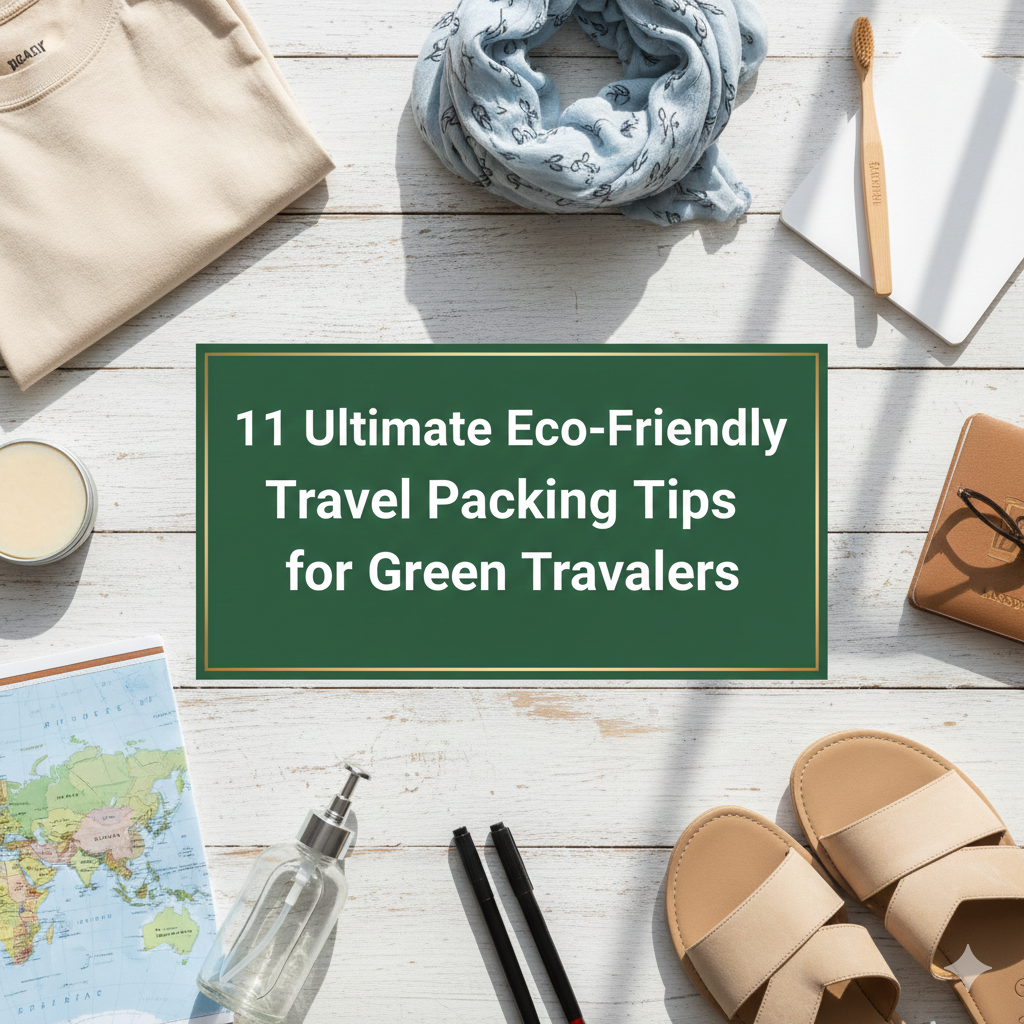
This guide covers 11 ultimate eco-friendly travel packing tips designed specifically for green travellers — those who wish to discover the world without contributing to its destruction. These tips are practical, budget-friendly, and genuinely effective.
No matter if you’re a first-time eco-traveler or already halfway there, there’s something on this list for you.
The True Environmental Cost of How We Pack
Most people assume that when it comes to their carbon footprint from travel, all they need to worry about is the flight. And yes, flights do have a big impact.
But what you take on that flight — and what you throw away during your journey — also counts.
Consider this:
| Travel Habit | Environmental Impact |
|---|---|
| Check-in baggage (23kg) | Extra fuel burned per flight |
| Plastic toiletry bottles | Majority end up in landfill |
| Printed travel documents | Unnecessary paper waste |
| Single-use plastics on the road | Fueling destination waste crisis |
| Fast-fashion travel clothing | Short lifespan, high production waste |
| Disposable razors, wipes, etc. | Non-recyclable, adds to landfills fast |
The pattern is clear. Packing without thought creates waste at every stage of your travels.
Now let’s fix that — one tip at a time.
Tip 1: Carry Only What You Can Lift With One Hand
This is the golden rule of eco-friendly travel packing — and the hardest one for many people to follow.
If your bag is so heavy that you need two hands and a prayer to lift it, you’ve packed too much.
The Carry-On Challenge
Try flying carry-on only. A standard-sized carry-on (about 40–56 liters) is more than enough for most trips under two weeks when packed efficiently.
Here’s why this matters environmentally:
Every extra kilogram of luggage requires more fuel to get airborne and stay that way. When multiplied across a full flight of hundreds of passengers, the collective weight of checked baggage burns a significant amount of extra fuel.
Flying carry-on only is one of the most effective eco-friendly travel packing decisions you can make — and it saves you baggage fees too.
The One-Week Test
Before any trip, spread everything you plan to pack out on your bed. Then remove 30% of it. You likely wouldn’t miss a single item.
Ask yourself three questions about each item:
- Will I use this more than twice?
- Does another item in my bag do the same thing?
- Can I buy or borrow this at my destination if I truly need it?
If the answer to all three is no, leave it behind.
Tip 2: Build a Neutral-Toned Capsule Wardrobe

Clothes are nearly always the primary cause of overpacking. The solution is a capsule wardrobe — a small, curated collection of clothing that can be mixed and matched in countless combinations.
Stick to a Three-Color Rule
Choose no more than three complementary colors. Neutrals like white, beige, olive, navy, and grey work best since they pair naturally with almost anything.
Every item you pack should go with at least three others. If it only works with one outfit, leave it behind.
The Ideal Capsule Packing List by Trip Length
| Trip Length | Tops | Bottoms | Layers | Shoes |
|---|---|---|---|---|
| Weekend (2–3 days) | 2 | 1 | 1 | 1 pair |
| Short trip (4–7 days) | 3 | 2 | 1 | 2 pairs |
| Medium trip (1–2 weeks) | 4 | 2–3 | 1–2 | 2 pairs |
| Long trip (2–4 weeks) | 5 | 3 | 2 | 2 pairs |
Notice how little the number changes for longer trips. That’s because you do laundry on the road — and that’s traveling smart.
Choose Fabrics That Work Harder
When it comes to eco-friendly travel, not all fabrics are created equal. Here are the best ones to pack:
- Merino wool — naturally odor-resistant and temperature-regulating. A merino t-shirt can be worn several days without washing.
- Organic cotton — grown without synthetic pesticides, softer on your skin and the environment.
- Recycled nylon or polyester — made from reclaimed plastic bottles or ocean plastic. Durable and quick-drying.
- Tencel (Lyocell) — biodegradable, produced in a closed-loop system that recycles water and solvents.
Tip 3: Make the Switch to Solid Toiletries
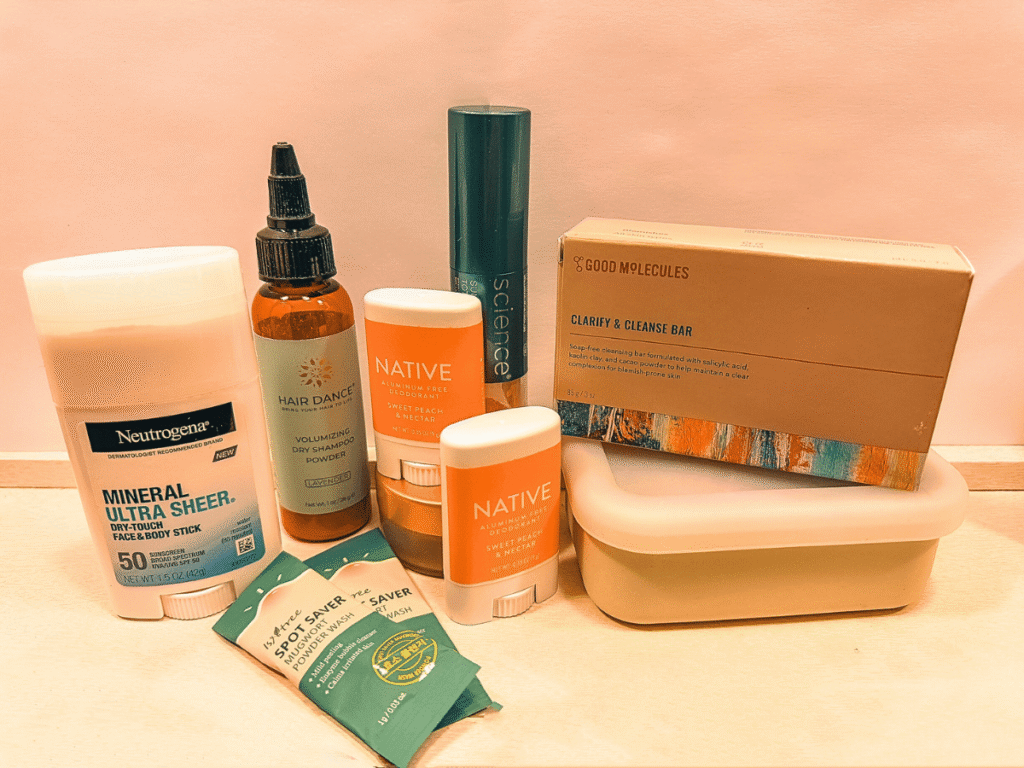
This single tip alone can eliminate most of the plastic waste your trip would otherwise generate.
Standard shampoo, conditioner, body wash, and face wash all come packaged in single-use plastic bottles. Most of those bottles are too small to be recycled and go straight to landfill.
Solid toiletries replace all of them — with no loss in quality.
Your Complete Solid Toiletry Swap List
| Liquid Product | Solid Swap | Eco Benefit |
|---|---|---|
| Shampoo bottle | Shampoo bar | Removes plastic entirely |
| Conditioner bottle | Conditioner bar | Lasts longer than liquid |
| Body wash | Soap bar | Zero packaging needed |
| Face wash | Face cleansing bar | Travel-friendly, no spills |
| Toothpaste tube | Toothpaste tablets | Paper/tin packaging only |
| Sunscreen lotion | Solid sunscreen stick | Plastic-free, reef-safe options available |
| Liquid deodorant | Deodorant bar or stick | Plastic-free and natural formulas |
Keep all of these in a small reusable tin, bamboo case, or cloth drawstring bag. Your toiletry kit will shrink to the size of a paperback book.
One Extra Win
No more liquids bag at security. Solid toiletries don’t fall under TSA liquid restrictions. That’s one less plastic zip-lock bag you’ll need to pack.
Tip 4: Build Your Reusable Essentials Kit
Here’s a truth that surprises many travelers: the single-use items you use on the road — bottles, straws, cutlery, bags — create far more waste than the ones you use at home.
At home, you have systems. On the road, convenience wins. And convenience usually means disposable.
A reusable essentials kit solves this before it becomes a problem.
What Goes Into a Green Traveller’s Kit
Filtered water bottle — brands like LifeStraw or GRAYL let you drink safely from taps worldwide. One bottle can prevent hundreds of plastic purchases per trip.
Reusable coffee cup — many cafés around the world now offer discounts for bringing your own cup. A lightweight collapsible cup takes up almost no space.
Bamboo or stainless steel cutlery set — fork, spoon, knife, and chopsticks in a roll-up pouch. Essential for street food and airport meals.
Stainless steel straw with brush — simple, small, and eliminates straw waste for your entire trip.
Reusable tote bag — folds down to the size of your fist. Replaces every plastic shopping bag you would otherwise use.
Beeswax wraps or silicone food bags — for snacks, leftovers, and keeping things fresh without plastic wrap.
Microfiber travel towel — dries in about 20 minutes, weighs almost nothing, and eliminates the need to request extra hotel towels.
Weight Check: Is This Kit Heavy?
Not at all. Here’s a rough breakdown:
| Item | Approximate Weight |
|---|---|
| Filtered water bottle | 150–200g |
| Collapsible coffee cup | 80–100g |
| Bamboo cutlery set | 60–80g |
| Stainless straw + brush | 20–30g |
| Reusable tote bag | 30–50g |
| Beeswax wraps (2–3) | 60–80g |
| Microfiber towel | 100–150g |
| Total | ~500–700g |
Just over half a kilogram. For the amount of waste it prevents, that’s an outstanding trade-off.
Tip 5: Go Fully Digital — Zero Paper, Zero Waste
Paper waste is one of the most overlooked forms of travel waste. Before you even leave home, here’s what the average traveler prints or collects on paper:
- Boarding passes
- Hotel booking confirmations
- Tour and activity vouchers
- Travel insurance documents
- Maps and directions
- Itineraries
That stack of paper gets crumpled, lost, or thrown out within days.
The Green Traveller’s Digital System
Airline apps — every major airline has one. Your boarding pass lives on your phone. No printing needed.
Google Maps offline — download your destination’s maps before departure. Works without data or Wi-Fi.
Google Drive or Dropbox — store digital copies of your passport, visa, insurance, and confirmations. Accessible from any device, anywhere.
TripIt or Wanderlog — free travel organizer apps that turn email confirmations into a single, clean itinerary.
Kindle or e-reader app — one device holds thousands of books. No paperback novels adding weight and being abandoned at hostels.
Notes app — use it for recommendations, addresses, and translation phrases instead of scribbling on paper.
Going fully digital is the easiest eco-friendly travel packing tip on this list — because it costs nothing and removes something rather than adding to it.
Tip 6: Pack a Compact Eco First Aid Kit
This tip is all about prevention — preventing both health problems and wasteful purchases abroad.
When travelers get sick or injured in tourist areas, they’re often at the mercy of overpriced, over-packaged pharmacy products. Individual tablets come in blister packs wrapped in cardboard wrapped in plastic sleeves. It’s a waste nightmare.
Packing your own first aid kit sidesteps all of that.
What to Include
| Item | Why Pack It |
|---|---|
| Pain relievers (ibuprofen/paracetamol) | Prevents buying overpackaged tablets abroad |
| Antihistamines | For allergies, bites, and reactions |
| Antidiarrheal tablets | One of the most common travel needs |
| Adhesive bandages (8–10) | A small selection covers most needs |
| Antiseptic wipes | Individually wrapped, minimal waste |
| Blister plasters | Essential if you’re walking a lot |
| Reusable cold/hot pack | Eco alternative to chemical packs |
| Personal prescription medications | Pack more than enough for the full trip |
| Electrolyte sachets | Lightweight and invaluable for dehydration |
Keep everything in a small zippered pouch. The whole kit should weigh under 200g.
Tip 7: Master the Roll-and-Cube Packing System
It’s not just what you pack — it’s how you pack it. The roll-and-cube system is the most space-efficient packing method available, and it directly supports eco-friendly travel by letting you travel with a smaller bag.
Step-by-Step: How to Roll and Cube
Step 1 — Lay all clothes flat on a surface.
Step 2 — Roll each item tightly from the bottom up. T-shirts, jeans, socks — everything rolls.
Step 3 — Sort rolled items into packing cubes by category (tops, bottoms, layers, undergarments).
Step 4 — Stand the rolls upright in each cube so you can see everything at a glance.
Step 5 — Pack cubes into your bag in order of weight — heaviest at the bottom, closest to your back.
Rolling vs. Other Packing Methods
| Method | Space Saved | Wrinkle Risk | Finding Items |
|---|---|---|---|
| Flat folding | None (baseline) | Medium | Difficult |
| Rolling | ~30% more space | Low | Easy |
| Bundle wrapping | ~40% more space | Very low | Complex |
| Compression bags | ~50% more space | Medium | Moderate |
For most travelers, rolling into packing cubes hits the sweet spot between efficiency, organization, and ease.
Choose packing cubes made from recycled materials — several sustainably minded brands now offer exactly that.
Tip 8: Choose Eco-Certified Gear From Ethical Brands
The gear you bring on every trip reflects a purchasing decision you made at some point. Choosing well means you buy less often — and that, ultimately, is the heart of eco-friendly consumption.
Certifications That Actually Mean Something
| Certification | What It Covers |
|---|---|
| Bluesign | Sustainable textile and chemical manufacturing |
| Fair Trade Certified | Ethical wages and safe working conditions |
| GOTS (Global Organic Textile Standard) | Organic fibers and responsible processing |
| B Corp Certified | Verified environmental and social standards |
| OEKO-TEX Standard 100 | Tested to be free from harmful substances |
| 1% for the Planet | Brand donates 1% of revenue to environmental causes |
Materials to Seek Out
- Recycled polyester — same performance as virgin polyester, far lower carbon footprint
- Organic cotton — uses 91% less water than conventional cotton
- Hemp — fast-growing, requires no pesticides, highly durable
- Cork — naturally harvested, lightweight, water-resistant
The “Per-Use Cost” Way of Thinking
A $15 fast-fashion rain jacket lasts one season. A $90 rain jacket made from recycled material lasts a decade. Divide cost by uses — the sustainable option is almost always cheaper in the long run.
Tip 9: Respect the Destination — Pack for Low-Impact Activities
Green travellers don’t just pack sustainably — they also pack with their destination in mind.
Certain destinations require specific low-impact gear choices that reduce your footprint on the local environment.
Destination-Specific Eco Packing Guide
Beach and coastal destinations:
- Reef-safe, mineral-based sunscreen (chemical sunscreens are harmful to coral reefs)
- Rash guard instead of applying excess sunscreen
- Reusable mesh bag for collecting any litter you find
Mountain and hiking destinations:
- Lightweight, durable gear to avoid damaging trails
- Biodegradable soap for any washing near water sources
- A small trowel and waste bags for leave-no-trace camping
Urban destinations:
- Compact reusable bag for markets and shopping
- Refillable water bottle (most cities have drinking fountains)
- Walking shoes that double as casual shoes — one pair, two uses
Wildlife and nature destinations:
- Neutral-colored clothing to minimize disturbance to animals
- No aerosol sprays (noise and chemical impact)
- Binoculars instead of getting close to wildlife for photos
Tip 10: Bring Snacks From Home to Steer Clear of Packaging Waste
This tip is simple, underrated, and genuinely impactful.
Airport food is some of the most wastefully packaged food in the world. Every sandwich comes in a plastic triangle. Every snack comes wrapped in layers of packaging. Every coffee comes in a disposable cup with a plastic lid and a paper sleeve.
Smart Snack Packing for Green Travellers
Bring snacks from home in reusable containers or beeswax wraps:
- Trail mix or nuts in a small reusable bag
- Fresh fruit that travels well (apples, oranges, bananas)
- Energy bars bought in bulk and wrapped in beeswax wrap
- Crackers or rice cakes in a reusable container
- Dark chocolate squares in foil — naturally minimal packaging
This approach saves money, reduces packaging waste, and means you’re not stuck eating overpriced, over-packaged airport food.
For longer trips, research zero-waste grocery stores, bulk food shops, and local markets at your destination. Shopping locally also puts money directly into the destination’s economy.
Tip 11: Forget the Souvenirs — Collect Experiences Instead
This final tip might be the most thought-provoking one on the list.
Souvenirs are perhaps the most wasteful aspect of travel culture. Mass-produced keychains, plastic figurines, and cheap magnets are made in factories far from their claimed origin, shipped around the world, sold to tourists, and frequently thrown away months later.
What Green Travellers Collect Instead
Photographs — free, weightless, and truly personal. A well-composed photo tells a story that no keychain ever could.
Recipes — learn a local dish or buy a local cookbook. You bring the culture home in a lasting and meaningful way.
Handmade local goods — if you do buy something, choose items made by local artisans using traditional methods. Ask where it was made and by whom.
Digital journals — document your experiences. It costs nothing, weighs nothing, and creates a record far more meaningful than plastic souvenirs.
Seeds or dried botanicals — check local regulations, but in many places, a packet of local seeds is a living, growing memory of your trip.
The less you bring home, the lighter your return bag — and the smaller your overall travel footprint.
Your Green Traveller’s Packing Checklist
| Category | Item | Eco Reason |
|---|---|---|
| Clothing | Capsule wardrobe (merino/recycled fabrics) | Lighter bag, sustainable production |
| Toiletries | Solid shampoo, conditioner, soap, sunscreen | Zero plastic waste |
| Hydration | Filtered reusable water bottle | Eliminates plastic bottle purchases |
| Food | Reusable snack bags + home snacks | Cuts airport packaging waste |
| Documents | All digital, stored in cloud | Zero paper waste |
| First aid | Compact personal kit | Avoids over-packaged pharmacy products |
| Gear | Eco-certified, ethically made | Longer lifespan, less total waste |
| Eating | Bamboo cutlery + reusable cup | Replaces disposable cutlery and cups |
| Packing method | Roll + packing cubes | Enables smaller, lighter bag |
| Entertainment | E-reader | Replaces multiple paper books |
| Mindset | Experience over souvenirs | Reduces consumption entirely |
For more tips, destination guides, and sustainable travel inspiration, explore Eco Friendly Travel — your home base for greener adventures around the world.
FAQs: Eco-Friendly Travel Packing for Green Travellers
Q: Do I need to buy all new eco-friendly gear before my first green trip?
Not at all. Start with what you already have. Use your gear until it wears out, then replace it with a sustainable version. Buying new “eco” products to replace perfectly functional ones isn’t actually eco-friendly.
Q: What’s the single most impactful eco packing swap I can make right now?
A filtered reusable water bottle. It prevents dozens — sometimes hundreds — of plastic bottle purchases per trip. Get one before your next journey and use it for years.
Q: Is solid shampoo as effective as liquid shampoo?
Yes, though your scalp may take one to two weeks to adjust. Test the bar at home first. Once adjusted, most people find solid bars work just as well or better — and are especially easy to travel with.
Q: How do I handle laundry on a carry-on-only trip?
Pack quick-dry fabrics, plan to do laundry every four to five days, and carry a small packet of eco-friendly laundry soap sheets (they weigh next to nothing). Many hotels, hostels, and Airbnbs offer laundry access.
Q: Is reef-safe sunscreen really that important?
Yes. Studies show that common chemical sunscreen ingredients — particularly oxybenzone and octinoxate — are harmful to coral reefs even at very low concentrations. Choose mineral-based sunscreens with zinc oxide or titanium dioxide instead.
Q: Can eco-friendly travel packing actually save me money?
Absolutely. A reusable water bottle saves you from buying bottled water. Solid toiletries last longer than liquids. Flying carry-on only eliminates checked baggage fees. Green packing choices frequently pay for themselves over the course of a trip.
Q: How do I find zero-waste shops or bulk food stores at my destination?
Apps like Litterless, Zero Waste Home’s map tool, or a simple Google search for “zero waste store [city name]” will find options near your destination. Many major cities worldwide now have thriving zero-waste shop communities.
Q: What about medications — can I make those more eco-friendly too?
Focus on reducing packaging rather than changing your medications. Buy in bulk at home, use pill organizers instead of carrying full bottles, and look for brands that use recyclable or minimal packaging.
The Bigger Picture: Why How You Pack Really Does Matter
Here’s something worth sitting with for a moment.
Tourism is one of the world’s largest industries. In a typical pre-pandemic year, more than 1.4 billion international trips were taken globally. If each of those travelers made just a few of the swaps in this guide, the collective reduction in plastic waste, fuel consumption, and reliance on disposable products would be remarkable.
You are one traveler. But you are also part of one of the most powerful consumer groups in the world.
When green travelers make eco-friendly packing choices, they do two things: they directly reduce their own footprint, and they send a signal to the travel industry — airlines, hotels, gear brands, tourism operators — that sustainability matters to their customers.
That signal drives change at scale.
Conclusion: Pack Green, Travel Light, Explore Boldly
Eco-friendly travel packing isn’t a sacrifice. It’s a smarter way to travel.
You carry less. You spend less. You waste less. And you move through the world with the kind of intentionality that makes every trip feel more meaningful.
Start with one tip. Maybe it’s switching to a solid shampoo bar. Maybe it’s downloading your boarding pass and leaving the printer alone. Maybe it’s challenging yourself to fly carry-on only for the first time.
From there, each green habit builds on the last. Before long, packing light and packing sustainably becomes second nature — not a checklist, but a mindset.
The world’s most incredible places are worth protecting. And the way you pack is one small, meaningful part of how you do that.
Pack with purpose. Travel with intention. Leave every place better than you found it.