
Travel has quietly changed over the last decade. What used to be about reaching a destination as quickly and cheaply as possible has gradually become a more thoughtful process. People now think about emissions, local impact, and how their choices ripple outward. Yet even travelers who care deeply about sustainability often fall into habits that undermine their intentions.
This article explores ten common eco-friendly transportation mistakes travelers make and offers five practical fixes that are simple to adopt. Along the way, you’ll find tables and structured insights to help you visualize the environmental impact of different choices.
mistake 1: assuming flying is always unavoidable
Many travelers default to flying without comparing alternatives. This habit is deeply ingrained because flights are marketed as the fastest and often the cheapest option. However, for short to medium distances, flying is often the most carbon-intensive choice.

A short-haul flight can produce more emissions per passenger than a long-distance train journey covering the same route. The environmental cost becomes even more pronounced when flights include layovers.
table: average emissions by transport type (per passenger, per km)
| Transport Mode | CO₂ Emissions (grams per km) |
|---|---|
| Airplane (short) | 150–255 |
| Airplane (long) | 90–150 |
| Car (single) | 120–200 |
| Bus | 60–90 |
| Train | 20–50 |
| Bicycle | 0 |
The mistake here is not just choosing a plane, but failing to check whether a viable alternative exists.
mistake 2: ignoring occupancy when choosing a vehicle
Driving a fuel-efficient car alone may still be less eco-friendly than taking a bus or carpooling in a larger vehicle. Occupancy matters more than many people realize.
For example, a car carrying four passengers distributes emissions across all travelers, reducing the per-person impact significantly.
chart: emissions per person based on car occupancy
| Occupancy | Emissions per Person (relative scale) |
|---|---|
| 1 person | 100% |
| 2 people | 50% |
| 3 people | 33% |
| 4 people | 25% |
Travelers often overlook this simple factor and end up making less sustainable choices.
mistake 3: choosing convenience over efficiency
Ride-hailing services and taxis are often chosen for convenience, but they can increase emissions due to empty return trips or inefficient routing. Waiting a few extra minutes for public transport can significantly reduce your environmental footprint.
Convenience-driven decisions tend to accumulate over a trip, making a noticeable difference in total emissions.
mistake 4: not planning routes in advance
Spontaneous travel can be exciting, but lack of planning often leads to inefficient transportation choices. Missed trains, last-minute flights, and unnecessary detours all increase environmental impact.
Planning ahead allows travelers to:
- Choose direct routes
- Avoid peak emissions times
- Combine trips efficiently
mistake 5: overlooking slow travel options
Slow travel, such as trains or buses, is often dismissed because it takes longer. However, it provides both environmental and experiential benefits.
Travelers who rush from one place to another tend to accumulate higher emissions, while those who slow down often reduce their overall footprint.
mistake 6: renting large vehicles unnecessarily
Travelers often rent SUVs or large vehicles “just in case,” even when a compact car would suffice. Larger vehicles consume more fuel and produce more emissions.
table: fuel efficiency comparison
| Vehicle Type | Average Fuel Consumption (L/100 km) |
|---|---|
| Compact Car | 5–7 |
| Sedan | 7–9 |
| SUV | 10–14 |
| Van | 12–16 |
Choosing the right vehicle size can make a meaningful difference.
mistake 7: ignoring local transportation systems
Many destinations have efficient public transport systems, but travelers often default to taxis or rental cars due to unfamiliarity.
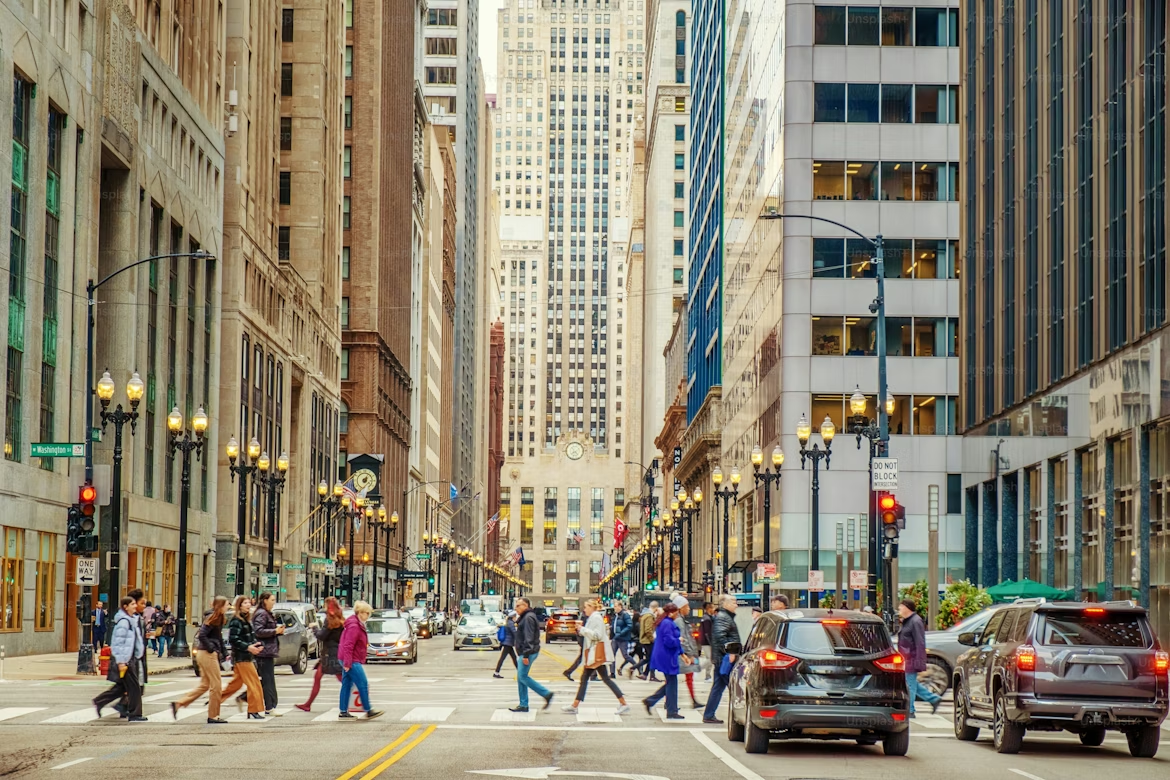
Public transport not only reduces emissions but also supports local infrastructure and reduces congestion.
mistake 8: overpacking and increasing weight
Heavier luggage increases fuel consumption, especially on flights. While the effect per passenger may seem small, it adds up across thousands of travelers.
Light packing is a simple yet often overlooked eco-friendly practice.
mistake 9: failing to combine trips
Making multiple short trips instead of combining errands or sightseeing routes leads to unnecessary emissions.
For example, visiting three locations in separate trips instead of one combined route can triple your transportation impact.
mistake 10: neglecting carbon offset opportunities
While not a perfect solution, carbon offset programs can help mitigate unavoidable emissions. Many travelers ignore this option entirely.
Offsets should not replace sustainable choices, but they can complement them when necessary.
five easy fixes for eco-friendly travel transportation
fix 1: compare transport options before booking
Before committing to a flight or car rental, take a few minutes to compare alternatives. Look at:
- Distance
- Travel time
- Emissions
Even simple comparisons can lead to better decisions.
fix 2: prioritize shared transportation
Whenever possible, choose options that maximize occupancy:
- Carpooling
- Buses
- Trains
Shared transportation spreads emissions across multiple passengers, reducing individual impact.
fix 3: adopt a “slow travel” mindset
Instead of trying to see everything in a short time, focus on fewer destinations and spend more time in each.
Benefits include:
- Lower emissions
- Reduced stress
- Deeper cultural experiences
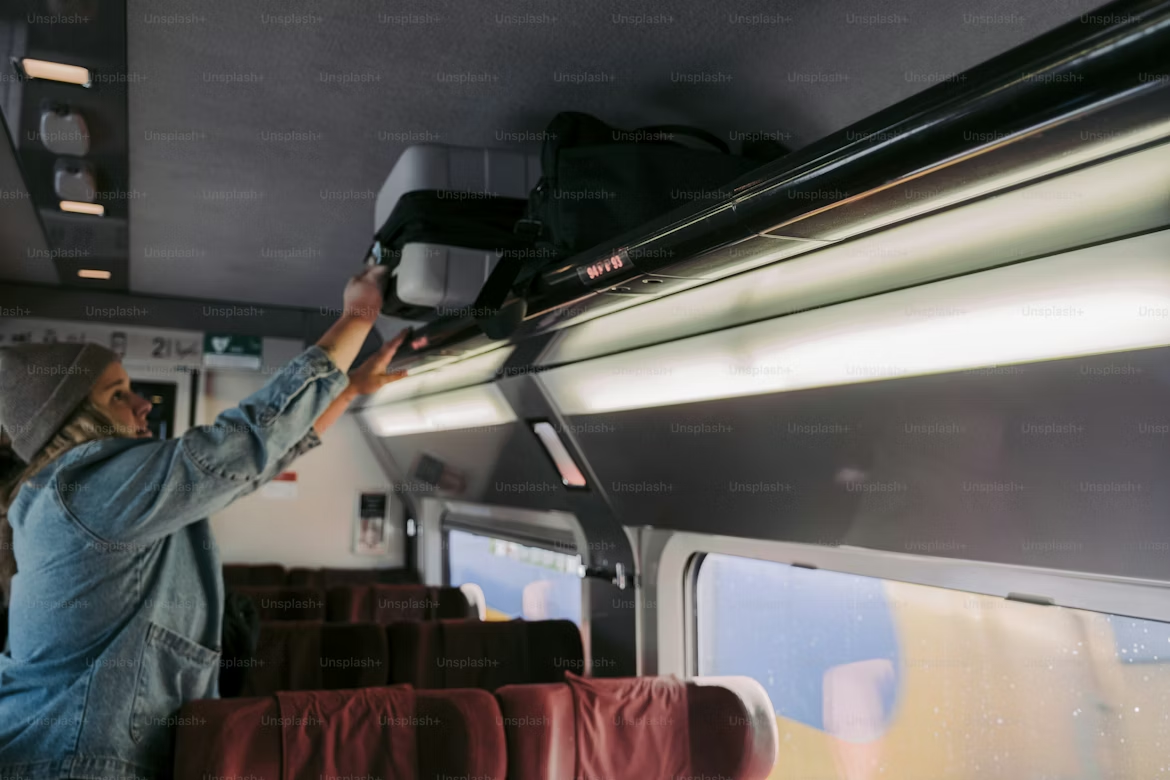
fix 4: pack light and smart
Reducing luggage weight helps lower fuel consumption. Focus on:
- Versatile clothing
- Minimal essentials
- Reusable items
fix 5: use local and sustainable transport
Once you arrive at your destination, rely on:
- Public transport
- Walking
- Cycling
These options often provide a more authentic experience while minimizing environmental impact.
integrated comparison: typical travel scenarios
table: emission comparison for a 500 km trip
| Scenario | Estimated CO₂ per person |
|---|---|
| Solo car | 60–100 kg |
| Car with 4 passengers | 15–25 kg |
| Bus | 20–40 kg |
| Train | 10–20 kg |
| Flight | 75–120 kg |
This table highlights how small decisions can significantly alter environmental outcomes.
practical checklist for eco-friendly transport
- Check train or bus alternatives before booking flights
- Share rides whenever possible
- Avoid unnecessary vehicle upgrades
- Plan routes in advance
- Pack only what you need
- Use public transport at your destination
- Combine trips to reduce travel frequency
frequently asked questions
- is flying always worse than other transport options?
Not always, but for short distances, flying is usually the most carbon-intensive option. For longer distances, the difference may be smaller, but trains and buses are generally still more eco-friendly.
- how much does carpooling really help?
Carpooling can reduce per-person emissions by up to 75% when four people share a ride. It is one of the simplest ways to make travel more sustainable.
- are electric vehicles always eco-friendly?
Electric vehicles produce fewer emissions during use, but their overall impact depends on how the electricity is generated. They are generally better than gasoline cars, especially in regions with clean energy.
- what is the easiest change I can make right away?
Switching to public transportation or carpooling for even part of your trip can make an immediate difference.
- does packing light really matter?
Yes. While the impact per individual is small, it becomes significant when multiplied across many travelers. Lighter loads reduce fuel consumption.
- should I always buy carbon offsets?
Offsets can help balance unavoidable emissions, but they should not replace efforts to reduce emissions in the first place. Think of them as a supplement, not a solution.
Travel choices don’t have to be perfect to be meaningful. Small, consistent changes—choosing a train over a flight, sharing a ride, or planning ahead—can collectively reduce your environmental impact. Over time, these habits become second nature, shaping not just how you travel, but how you experience the world.