
Travel has always been a mix of excitement and discovery for me, but over time, it also became a quiet lesson in responsibility. Somewhere between missed buses, long train rides, and spontaneous road trips, I started noticing how my transportation choices affected not just my wallet—but the environment too. What began as small adjustments slowly turned into habits that now shape how I move from one place to another.
This article isn’t a list of idealistic rules. It’s a reflection of real experiences—mistakes included—and five simple transportation tips that genuinely made my travels greener, smoother, and often cheaper. Along the way, I’ve added practical tables and data so you can see how small decisions stack up over time.
- choosing trains over short flights whenever possible
One of the first habits I picked up was swapping short-haul flights for trains. Initially, it was out of convenience—airport lines were exhausting—but I soon realized the environmental impact was dramatically lower.
A short flight might seem harmless, but the emissions per passenger can be surprisingly high, especially during takeoff and landing phases. Trains, particularly electric ones, are significantly more efficient.
Here’s a comparison I once made during a trip:
transport type | average CO₂ emissions (per passenger per km) | comfort level | cost variability
train (electric) | 14 g | high | low to moderate
short flight | 255 g | moderate | moderate to high
car (solo driver) | 171 g | moderate | moderate
bus (intercity) | 68 g | moderate | low
The difference is hard to ignore. On one trip between two cities about 400 km apart, choosing a train instead of flying reduced my carbon footprint by roughly 96%. That single decision stuck with me.
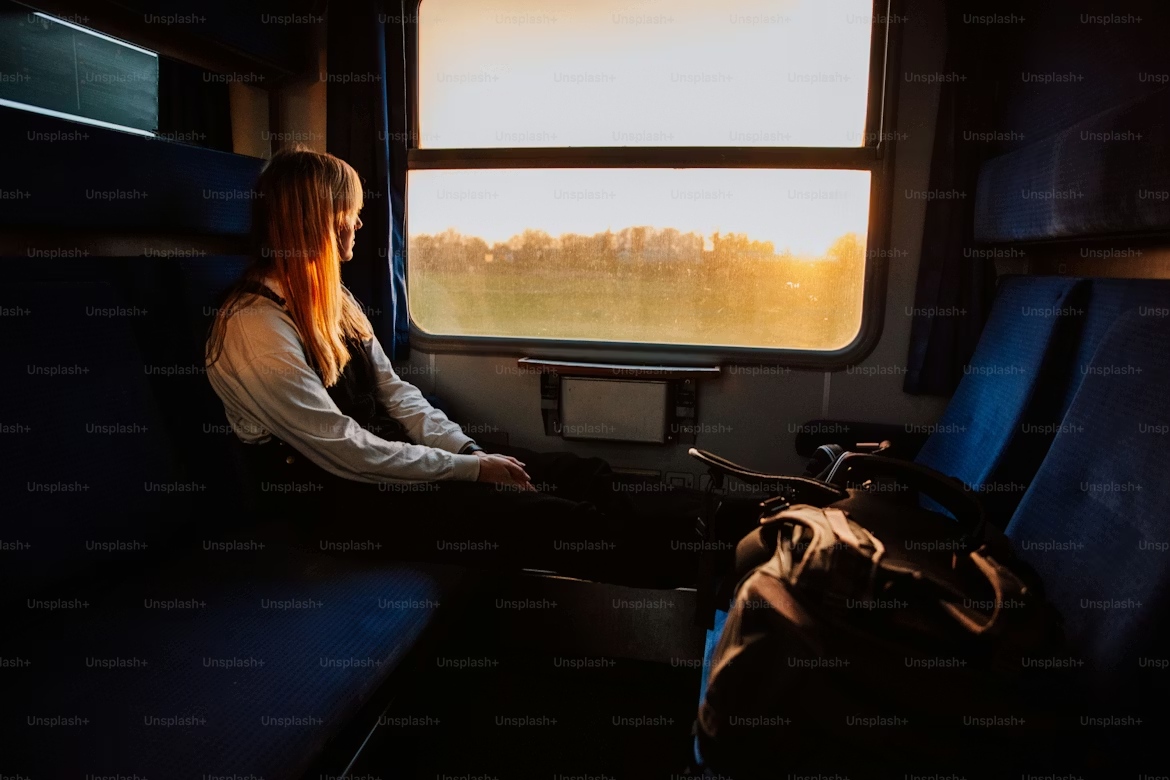
Beyond emissions, trains offered something unexpected: time to observe. Landscapes unfolding slowly outside the window reminded me that travel isn’t just about reaching a destination—it’s about the journey itself.
- embracing public transportation like a local
At first, navigating public transport in unfamiliar places felt intimidating. I remember standing in front of a bus route map that looked more like abstract art than something functional. But once I pushed past that hesitation, it became one of the most rewarding parts of traveling.

Public transportation reduces congestion, cuts emissions, and gives you a glimpse into everyday life. Whether it’s a metro system, a tram, or a shared minibus, it’s often the most efficient way to get around.
Here’s a breakdown of emissions and cost efficiency:
mode | emissions per km (g CO₂ per passenger) | cost efficiency | accessibility
metro/subway | 20–50 | high | high in cities
bus | 60–100 | very high | very high
taxi/rideshare | 150–250 | low | high
rental car | 170–250 | moderate | high
Using public transport also changed how I experienced cities. Instead of hopping between tourist spots, I found myself observing daily routines—people heading to work, students chatting, vendors carrying goods. It made each destination feel more authentic.
A simple tip that helped me: download offline maps and transport apps before arriving. It removes the stress of figuring things out in real time.
- walking more than I thought possible
This might sound obvious, but walking became one of the most impactful changes in my travel habits. Not only is it completely emission-free, but it also transforms how you experience a place.
I used to rely heavily on taxis for short distances, assuming I was saving time. In reality, I was missing out on details that make travel memorable—street art, local cafes, small conversations.
To understand the impact, I once tracked my daily travel:
activity | distance covered | emissions saved (approx.)
walking (5 km/day) | 35 km/week | ~6 kg CO₂
replacing taxi rides | 20 km/week | ~5 kg CO₂
Over a two-week trip, that added up to over 20 kg of CO₂ saved—just by walking more.
Walking also naturally slowed me down. It gave me time to notice how neighborhoods changed block by block, how smells shifted from street food to fresh rain, how sounds evolved from traffic noise to quiet alleys.
If there’s one habit that requires no planning and delivers immediate impact, it’s this one.
- sharing rides instead of traveling solo
There were times when public transport wasn’t available or practical. That’s when I turned to shared rides—carpooling, group taxis, or even informal ride-sharing with fellow travelers.
Initially, it felt like a compromise. But it quickly became one of the most efficient ways to travel responsibly without sacrificing convenience.
Here’s a simple comparison:
scenario | passengers | emissions per person (relative)
solo car ride | 1 | 100%
car with 2 people | 2 | 50%
car with 4 people | 4 | 25%
The math is straightforward: the more people sharing a ride, the lower the impact per person.
Beyond environmental benefits, shared rides often led to unexpected conversations. Some of my most memorable travel stories came from these journeys—exchanging tips, learning about different cultures, or simply sharing a quiet moment on a long road.
A practical approach I used:
- coordinate with travelers staying at the same hostel
- ask hotel staff about shared transport options
- use local ride-sharing groups when available
It’s not always perfect, but it’s usually better than traveling alone in a vehicle.
- planning routes instead of rushing decisions
This last tip might sound less exciting, but it ties everything together. Poor planning often leads to last-minute choices, which are rarely eco-friendly.
I learned this the hard way after missing a train and booking a short flight instead. That single rushed decision canceled out days of careful travel choices.
Planning doesn’t mean over-structuring your trip. It simply means thinking ahead about transportation options.
Here’s a simple planning checklist I now follow:
step | action | benefit
research routes | compare train, bus, and car options | lower emissions
book early | secure better prices and availability | avoids rushed decisions
bundle trips | combine nearby destinations | reduces travel frequency
check distances | identify walkable areas | eliminates unnecessary rides
Even a little preparation can make a significant difference. It reduces stress, saves money, and keeps your travel aligned with your environmental goals.
carbon impact comparison chart
To put everything into perspective, here’s a combined view of how different choices affect emissions over a 500 km journey:
transport method | total emissions (kg CO₂ per passenger)
flight | 127 kg
car (solo) | 85 kg
car (4 մարդիկ) | 21 kg
bus | 34 kg
train | 7 kg
This table became a reference point for me. Whenever I’m unsure, I think about these numbers and adjust accordingly.
the bigger picture
What surprised me most wasn’t just how much emissions I could save—but how these choices improved my overall travel experience.
Slower transportation made trips feel richer. Shared rides made them more social. Walking made them more immersive. And planning made everything smoother.
Eco-friendly travel isn’t about perfection. There were days when I still took a taxi or chose convenience over sustainability. But the goal isn’t to eliminate impact entirely—it’s to reduce it wherever possible.
Over time, these small changes became second nature. I no longer think of them as “eco-friendly tips.” They’re just how I travel now.
frequently asked questions
- is eco-friendly transportation more expensive?
Not necessarily. In many cases, options like buses, trains, and walking are cheaper than flights or taxis. Planning ahead often reduces costs even further.
- what’s the most eco-friendly way to travel long distances?
Trains are generally the most eco-friendly option for long distances, especially electric rail systems. Buses are a good alternative where trains aren’t available.
- does walking really make a significant impact?
Yes. While individual distances may seem small, replacing multiple short rides with walking adds up quickly in terms of emissions saved.
- how can I find reliable public transportation in a new place?
Use offline maps, transport apps, or ask locals. Many cities also provide clear signage and route maps at stations.
- is ride-sharing always eco-friendly?
It depends. Ride-sharing reduces impact compared to solo travel, but it’s still less eco-friendly than public transport or walking. It’s best used when other options aren’t available.
- how much planning is enough for eco-friendly travel?
You don’t need to plan every detail. Just researching major routes and booking key transportation in advance can make a big difference.
In the end, eco-friendly travel is less about strict rules and more about awareness. Once you start noticing the impact of your choices, even small adjustments begin to feel meaningful. And over time, those small adjustments shape a way of traveling that feels both responsible and deeply rewarding.