
What if you could get rich by going green?
Most people assume eco-travel is expensive. They picture fancy electric cars, overpriced organic hotels, and premium train tickets. But here’s the truth — traveling sustainably is often the cheapest way to get around.
You cut costs when you cut fuel use. By avoiding short flights, you save money. When you walk, cycle, or take the bus, your wallet wins just as much as the planet does.
This guide gives you 10 quick, easy, and practical eco-friendly travel transportation tips that will actually save you money on your next trip. These are not complicated or time-consuming changes. They’re simple shifts anyone can make — whether you’re a student backpacking through Europe or a family planning a summer road trip.
Let’s get into it.
The Green-Money Connection: Why Cutting Fuel Cuts Costs
Here’s what you need to know: going green can save you quite a bit of money.
For most people, transportation is the single largest travel expense — after accommodation. It’s also the greatest source of travel-related carbon emissions. That’s not an accident — both problems share the same root cause. Too much fuel consumption.
You save money when you use less fuel. Full stop.
Here’s a look at how much people generally spend on various modes of transportation compared with greener alternatives:
| Transport Option | Typical Cost (per person) | Carbon Footprint | Greener? |
|---|---|---|---|
| Short-haul flight (London–Edinburgh) | £80–£150 | ~150 kg CO₂ | ✗ No |
| Train (London–Edinburgh) | £30–£70 | ~14 kg CO₂ | ✓ Yes |
| Solo rental car (daily) | £40–£80 | High | ✗ No |
| Carpooling (per seat) | £10–£25 | Low | ✓ Yes |
| City taxi | £15–£40 per trip | Medium | ✗ No |
| Metro/Bus pass (daily) | £3–£10 | Very Low | ✓ Yes |
| E-bike rental (half day) | £10–£20 | Zero | ✓ Yes |
The greener option is almost always the cheaper one. That is the central idea behind every tip on this list.
Tip 1: Book Trains Early and Beat Both Prices and Emissions
Why Buying Train Tickets Early Is a Double Win
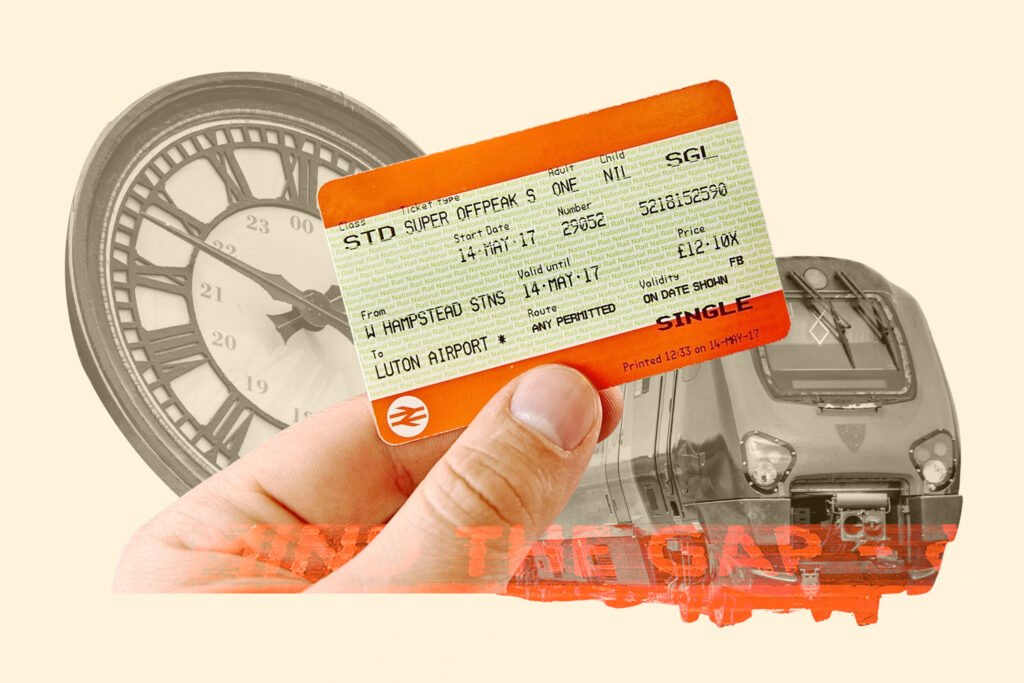
Train travel is one of the greenest and cheapest ways to get from A to B — provided you plan ahead.
For many European, British, and American rail operators, the cheapest tickets are released weeks or even months in advance. Book a London to Manchester train on the day and you might pay £120. Book it six weeks out and you could pay just £15. Same seat. Same journey. Dramatically different price.
Compare that to flying the same route. Even a no-frills flight rarely comes in under £50 once you add bags and airport transfers. And it emits about ten times more carbon.
The Booking Window That Gets You the Best Deal
Here’s a quick guide to the best time to buy cheap train tickets:
| Country / Rail Network | Best Booking Window |
|---|---|
| UK (Avanti, LNER, etc.) | 8–12 weeks in advance |
| France (SNCF) | 3–4 months in advance |
| Germany (Deutsche Bahn) | 6 months in advance |
| USA (Amtrak) | 11 months in advance |
| Spain (Renfe) | 2–3 months in advance |
| Italy (Trenitalia) | 4 months in advance |
Set a reminder. Check the booking window. Lock in that cheap ticket. Your bank account and the planet will both thank you.
Tip 2: Forget the Rental Car — Use Public Transit Passes Instead
What Nobody Tells You About Rental Cars
Rental cars feel like freedom. But they’re one of the sneakiest money drains in travel.
The advertised daily rate is rarely what you end up paying. Add insurance, fuel, parking charges, and motorway tolls, and that “£30 a day” car swiftly ends up costing £90 a day or more.
Then factor in emissions. A single person driving a rental car generates nearly seven times more carbon per kilometer than riding a local bus.
City Transit Passes: Cheap, Green, and More Convenient Than You Think
A tourist transit pass is available in almost every major city in the world. These offer unlimited bus, metro, tram, and sometimes even local train rides — for one flat daily or weekly fee.
Here are some of the best deals in popular destinations:
| City | Transit Pass | Cost | Coverage |
|---|---|---|---|
| London | Travelcard (daily) | ~£14 | Tube, bus, overground |
| Paris | Navigo Easy | ~€8/day | Metro, RER, bus |
| Tokyo | Suica Card | Load as needed | Trains, metro, bus |
| New York | NYC 7-day pass | ~$34 | Subway + bus |
| Barcelona | T-Casual (10 trips) | ~€12 | Metro, bus, tram |
| Amsterdam | GVB Day Ticket | ~€9 | Tram, bus, metro |
A weekly transit pass in most cities costs less than a single day of car rental. And you’ll never have to worry about parking, fuel, or getting lost in unfamiliar traffic.
Tip 3: Carry-On Only — Baggage Fees Are Burning Your Budget
How Your Suitcase Is Draining Your Wallet and Hurting the Planet
This tip works on two levels — it saves you money and protects the environment.
Airlines love checked baggage fees. Budget carriers like Ryanair and EasyJet charge £25–£50 each way for a checked bag. On a return trip, that’s up to £100 extra — just for your luggage. That’s money you could spend on food, experiences, or your next adventure.
Every extra kilogram on a plane also burns more fuel. A heavy suitcase doesn’t just hit you at the check-in desk — it contributes to higher emissions across the entire flight.
The One-Bag Challenge: How to Actually Make It Work
Packing light sounds simple but feels hard until you’ve tried it. Here’s a system that works:
Start with your “essentials only” list:
- 3–4 tops that mix and match
- 2 bottoms (one smart, one casual)
- 1 lightweight jacket or layer
- Underwear and socks for 5 days (wash mid-trip if needed)
- 1 pair of versatile shoes worn on travel day
- Toiletries in 100ml containers or bought at destination
Gear that helps:
- A 40-litre backpack or cabin-sized roller bag
- Packing cubes to compress clothing
- A dry bag for toiletries
Once you go carry-on only, it’s hard to go back. You skip baggage drop queues, walk straight off the plane, and never wait at a carousel again. It’s faster, cheaper, and greener — all at once.
Tip 4: Carpool for Road Trips — Share the Cost, Split the Emissions
Carpooling Is the Budget Traveler’s Best-Kept Secret
Going on a road trip? Carpooling is one of the smartest eco-friendly travel transportation moves you can make.
Instead of driving alone and bearing all the fuel costs yourself, you fill your car — or join someone else’s — and split everything. Fuel, tolls, parking. Divided by three or four passengers, a long road trip suddenly becomes very affordable.
The environmental math is compelling too. A car carrying four passengers produces about 25% of the emissions per person compared to four solo drivers covering the same route.
Apps and Platforms That Make Carpooling Easy
You don’t need to know anyone heading your way. These platforms do the matching for you:
| Platform | Best For | Where It Operates |
|---|---|---|
| BlaBlaCar | Long-distance carpooling | Europe, India, South America |
| Waze Carpool | Daily commutes and short trips | USA, Brazil, Israel |
| Liftshare | UK-based ride sharing | United Kingdom |
| GoCarShare | Trips to festivals and events | UK + Europe |
| Rideshare (Facebook Groups) | Community-based matching | Worldwide |
A seat on BlaBlaCar from Paris to Lyon, for example, typically costs around €10–€20. The same train journey costs €30–€80. Flying is even more expensive — and far more carbon-intensive.
Tip 5: Walk More — The Free, Zero-Emission Way to See Everything
The Greenest Transport Option Is Already on Your Feet
This one costs absolutely nothing. Walking is free, produces zero emissions, and is one of the best ways to actually experience a destination.
Travelers who walk instead of taking taxis for short city trips can save £20–£50 per day easily. Over a seven-day trip, that’s £140–£350 back in your pocket — just from choosing to walk.
When Walking Beats Every Other Option
Here’s a simple rule — if your destination is under 20 minutes away on foot, walk it. No taxi. No rideshare. No metro.
Some of the best travel experiences happen on foot anyway. The side street with the incredible bakery. The mural you’d have rolled past in a cab. The local market nobody mentions in guidebooks.
Cities built for walking — like Prague, Florence, Dubrovnik, and Kyoto — reward slow exploration far more than speed. Download an offline map app like Maps.me or use Google Maps in walking mode, and you’ll be surprised how much ground you can cover on foot.
Estimated daily savings from walking instead of taking taxis:
| City | Avg. Taxi Cost (3 short trips) | Walking Cost | Daily Saving |
|---|---|---|---|
| London | £30–£45 | £0 | £30–£45 |
| Paris | €25–€40 | €0 | €25–€40 |
| Bangkok | ฿300–฿500 | ฿0 | ฿300–฿500 |
| New York | $30–$50 | $0 | $30–$50 |
| Rome | €20–€35 | €0 | €20–€35 |
Tip 6: Rent an E-Bike or Scooter for Medium Distances

E-Bikes Are Changing the Way Budget Travelers Get Around
For distances too far to walk but too short to justify a car, e-bikes are a game-changer.
E-bikes allow you to cover 15–30 km comfortably without breaking a sweat. Most city rental schemes charge just £5–£15 for a few hours. That’s a fraction of what a taxi or rideshare would cost for the same distance.
They’re also enormous fun. You see the city at a pace that lets you actually take it in — faster than walking, slower than zooming past in a car.
Bike-Share Schemes Worth Knowing
| City | Bike-Share Scheme | Cost |
|---|---|---|
| London | Santander Cycles | £3.30/30 min (e-bikes available) |
| Paris | Vélib’ | €5/day |
| New York | Citi Bike | $3.99/30 min |
| Amsterdam | OV-fiets | €4.25/24 hours |
| Barcelona | Bicing | Residents only; tourist rentals from ~€10/day |
| Copenhagen | Donkey Republic | ~€5/hour |
Several e-bike rental apps operate across multiple cities. Download one before your trip and have it ready to go when you land.
Tip 7: Take Overnight Transport — Save on Accommodation Too
Two Problems, One Ticket
This is one of the cleverest money-saving tricks in travel. And it’s deeply eco-friendly.
Overnight trains and overnight buses do two things at once — they move you to your next destination and replace a night of hotel accommodation. Instead of paying for a hotel room AND a travel ticket, you buy one ticket and sleep through the journey.
A sleeper train from Vienna to Paris, for example, costs around €50–€150 for a berth in a shared cabin. A basic hotel room in Paris costs £100+ per night. By taking the overnight train, you eliminate the hotel cost entirely.
Best Overnight Train Routes for Budget Eco Travelers
| Route | Operator | Approx. Cost | Travel Time |
|---|---|---|---|
| Vienna → Paris | Nightjet | €50–€150 | ~13 hours |
| Amsterdam → Vienna | Nightjet | €39–€99 | ~14 hours |
| London → Edinburgh (sleeper) | Caledonian Sleeper | £50–£150 | ~9 hours |
| Lisbon → Madrid | Lusitania | €40–€100 | ~10 hours |
| New York → Chicago | Amtrak Lake Shore Ltd | $60–$200 | ~19 hours |
You fall asleep in one city and wake up in another. No fuel wasted on a flight. No hotel bill. Just one efficient, eco-friendly journey.
Tip 8: Use Ferry Travel for Coastal and Island Routes
Ferries Beat Short-Haul Flights on Cost and Carbon Emissions
For coastal routes and island hopping, ferries are frequently the cheapest and one of the most eco-friendly transport options available.
A foot-passenger ferry from Athens to the Greek islands can be as cheap as €20–€40 return. Flying the same route typically costs €80–€150 once fees are added — and generates significantly more carbon per passenger.
Ferries emit around 19g of CO₂ per passenger kilometer. That’s dramatically lower than flying, which hits 155–255g per passenger kilometer on short routes.
According to the International Maritime Organization (IMO), the shipping and ferry industry continues to make measurable progress in reducing emissions per passenger — making ferry travel one of the most credible green transport choices for coastal and island travel.
Best Ferry Routes for Budget Eco Travelers
- Greek Islands — Athens to Santorini, Mykonos, or Crete (cheap and stunning)
- Scandinavia — Stockholm to Helsinki, or Copenhagen to Oslo
- UK to Ireland — Holyhead to Dublin, or Cairnryan to Belfast
- Italy to Croatia — Ancona to Split or Dubrovnik
- Southeast Asia — Between Thai islands, or Malaysia to Indonesia
Book directly with ferry operators or use Ferryscanner and Directferries for the best prices.
Tip 9: Travel Off-Peak to Save on Every Mode of Transport
The Right Timing Makes All the Difference for Green Travel Savings
The same train. The same bus. The same ferry. They can cost drastically different amounts depending on when you travel.
Off-peak travel comes at a discount across nearly every mode of transport. And since off-peak times often mean fewer passengers, the environmental load per passenger is lower too — your cost and share of emissions both drop when you book smarter.
Off-Peak Timing Guide Across Transport Types
| Mode of Travel | Peak Times (Expensive + Busy) | Off-Peak Times (Cheaper + Quieter) |
|---|---|---|
| Trains | Mon–Fri 7–9am, 5–7pm | Midday, weekends, mid-week evenings |
| Flights | Friday, Sunday, school holidays | Tuesday, Wednesday, early morning |
| Buses | Rush hours, weekends | Mid-morning, midweek |
| Ferries | Summer peak season (July–Aug) | Spring, autumn, shoulder season |
| Rideshares | Surge pricing evenings/weekends | Off-hours weekday rides |
Shifting your departure time by just a few hours can save you 20–40% on train tickets alone. For flights, traveling on a Tuesday or Wednesday instead of a Friday or Sunday can cut airfare by 30% or more.
Tip 10: Choose Hotels Near Transit Hubs — Cut Daily Transport Costs
Stop Paying for Transport You Wouldn’t Need With a Smarter Hotel Choice
This final tip brings everything together.
Your accommodation location determines how much you spend on getting around every single day. A budget hotel on the city outskirts might look like a bargain — until you add up four daily metro rides, two taxis back from dinner, and all the time you waste commuting.
A slightly pricier room in a central, walkable location often costs less overall once you subtract the daily transport savings.
How Location Saves You Money and Reduces Emissions
Here’s a real-world comparison:
| Accommodation Scenario | Hotel Cost/Night | Daily Transport Cost | Total Daily Cost |
|---|---|---|---|
| Budget hotel (outskirts) | £60 | £25–£40 | £85–£100 |
| Mid-range hotel (city centre) | £80 | £5–£10 (metro) | £85–£90 |
| Central hostel or guesthouse | £35 | £0–£5 (walking) | £35–£40 |
The central hostel wins easily — on both price and transport emissions. When you walk everywhere, you spend nothing on transport and produce zero transport emissions.
What to look for when booking:
- Major attractions within 15 minutes on foot
- Direct metro or bus access from the front door
- Bike rental availability on-site
- A neighborhood with restaurants and shops nearby
For more sustainable stays and transit-friendly travel inspiration, visit EcoFriendlyTravel.online — a valuable resource for travelers who want to go green without spending more.
What Are You Really Saving? A Real Trip Comparison
Let’s put this all together with a side-by-side example. Two travelers. Same destination. Very different budgets.
Destination: London to Barcelona | Duration: 7 days
| Expense | Traditional Traveler | Eco-Smart Traveler |
|---|---|---|
| Outward journey | Flight: £110 | Train (advance): £55 |
| Return journey | Flight: £110 | Train (advance): £55 |
| Baggage fees | £50 (checked bag x2) | £0 (carry-on only) |
| Daily local transport | Taxi/Uber: £35/day = £245 | Transit pass: £8/day = £56 |
| Day trip | Short-haul flight: £80 | Bus + e-bike: £18 |
| Accommodation | Airport hotel (outskirts): £75/night | Central hostel: £35/night |
| Total | ~£870 | ~£409 |
The eco-smart traveler saves over £460 on a single 7-day trip — and produces a fraction of the carbon emissions in the process.
FAQs About Eco-Friendly Travel Transportation Tips to Save Money
Q: Are eco-friendly transport options always slower than flying or driving?
Not always. When you factor in airport check-in, security queues, boarding, and baggage collection, short-haul flights can frequently take longer door-to-door than a direct train. For trips under 5 hours, trains are often faster in total travel time — and always cheaper and cleaner.
Q: Can I travel eco-friendly on a very tight budget?
Absolutely. Eco-friendly travel transportation is practically designed for the frugal traveler. Walking costs nothing. Public transit is cheap. Carpooling splits costs between multiple people. Overnight trains eliminate hotel nights. The greener your choices, the less you tend to spend.
Q: What is the single fastest way to save money on travel transportation?
Skip the checked baggage. On many budget airlines, checked bag fees cost more than the base fare itself. Switching to carry-on only saves you money immediately on every trip without changing anything else.
Q: Are overnight trains comfortable enough to actually sleep on?
Yes — especially if you book a couchette (shared cabin with bunk beds) or a private sleeper cabin. Earplugs and a travel pillow help. Most experienced overnight train travelers report a surprisingly good night’s sleep, and wake up refreshed in a new city having saved both a hotel night and a separate travel ticket.
Q: How do I find the cheapest train tickets in Europe?
Use Trainline, Rail Europe, or book directly with national rail operators. Set up price alerts where available. Book as far in advance as possible — particularly on popular routes in France, Spain, and the UK, where advance fares can be 60–80% cheaper than walk-up prices.
Q: Is carpooling safe for solo travelers?
Platforms like BlaBlaCar have robust rating and review systems for both drivers and passengers. Millions of solo travelers — including women traveling alone — use these services safely every year. Read reviews, check driver ratings, and share your trip details with someone you trust before you go.
Q: Can I use eco-friendly transport options when traveling with young children or elderly family members?
Yes. Trains, ferries, and city transit systems are often better suited to families and older travelers than flying or driving — more space to move around, no security stress, and easy boarding. Many transit passes offer discounted or free travel for children and seniors.
Q: What about traveling in countries with limited public transport?
In destinations with less developed transit networks, e-bikes, cycle rickshaws, tuk-tuks, and shared minibuses are frequently the greenest and most affordable local options. Research local transport before you go using Rome2Rio or local travel forums to find the best alternatives.
The Bottom Line: Going Green Puts Money Back in Your Pocket
Eco-friendly travel transportation tips are not about sacrifice. They’re about being smarter — with your money and your choices.
Every tip on this list does double duty — it reduces your carbon footprint and your travel costs. That’s not a trade-off. That’s a win on every front.
You don’t have to adopt all ten tips at once. Pick two or three that work for your next trip and start there. Pack lighter. Book a train instead of a plane. Grab a transit pass instead of a rental car. Walk a little more.
Those small choices compound quickly. Over a year of travel, an eco-smart traveler can save hundreds — sometimes thousands — of pounds, dollars, or euros compared to a traveler making conventional choices.
The planet benefits. Your budget benefits. And your travel experience, stripped of airport stress and car rental queues, often gets better too.
Travel smart. Travel green. Save more money on every single trip.