
You love to travel. This is true of almost everybody else on the planet.
But here’s the uncomfortable truth: how most of us get around from place to place is quietly wreaking serious damage on the environment. Planes consume epic quantities of jet fuel. Cars clog the highways and dump exhaust into them. Even cruise ships are some of the most polluting vehicles on the planet.
The great news, however, is that you can travel clean. You need not surrender your passport or cancel your bucket list. You simply need to make more intelligent decisions about how you move through the world.
These 11 eco-friendly travel transportation tips are designed for real travelers — people who have jobs, budgets, and a finite amount of time off. Each tip is practical, easy to apply, and genuinely makes a real difference.
Let’s get into it.
The True Price of Getting There
Before we jump into the tips, let’s take a look at what is actually happening behind the scenes when you travel.
All transportation consumes energy. The majority of that energy still flows from fossil fuels. As those fuels are burned, they emit carbon dioxide (CO₂) and other greenhouse gases into the air. These gases warm the planet and cause climate change.
Here’s how various modes of transportation compare in emissions:
| Mode | CO₂ per Passenger (per km) |
|---|---|
| Domestic flight | 255g |
| Long-haul flight | 195g |
| Single-occupancy car | 171g |
| Ferry | 120g |
| Car (4 people) | 43g |
| Bus/Coach | 27g |
| Train (EU average) | 14g |
| Electric train (renewable energy) | 6g |
| Cycling | 0g |
| Walking | 0g |
The pattern is clear. The more people sharing a ride, and the cleaner the source of power, the less impact it will have on the environment per person.
Now, here are your choices.
Tip 1: Choose Trains Over Planes for Short and Medium Hauls
Rail Is the Quiet Hero of Green Travel
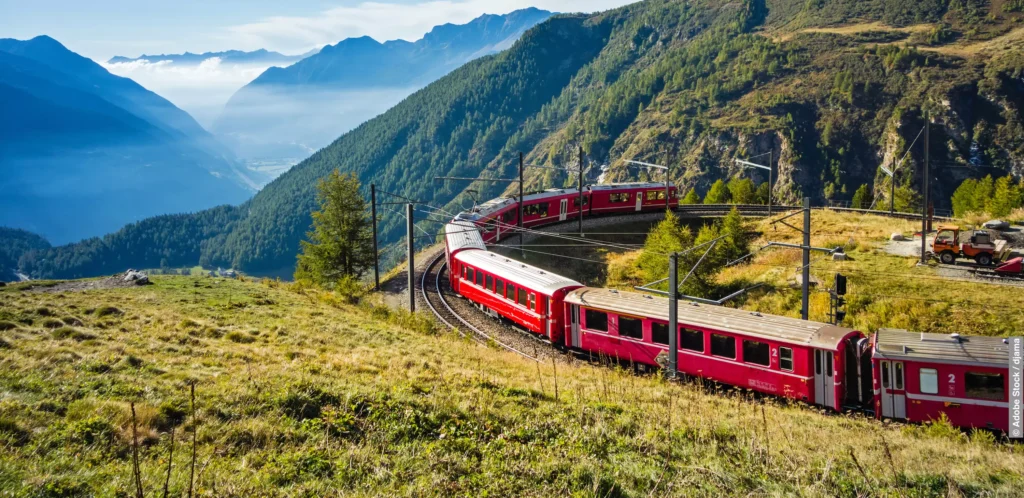
If there’s one eco-friendly travel transportation tip that provides the most immediate impact, it’s this — wherever you can, reasonably speaking, take a train instead of a flight.
Trains are so much cleaner than planes, especially on routes of less than 500 miles. The numbers are startling. A flight from London to Paris generates about 100 kg of CO₂ per passenger. The Eurostar train on that very route? Just 6 kg. That’s a 94% reduction.
In the United States, Amtrak is 46% less carbon intensive per mile than car travel and 34% less than domestic flights.
Countries With the Best Rail Networks
There are some countries where train travel is remarkably easy and quick:
- Japan – The Shinkansen bullet train can travel at up to 200 mph
- France – Paris is just hours away from other major cities via TGV
- Germany – Deutsche Bahn covers the country reliably
- Spain – The AVE high-speed train is one of Europe’s finest
- Switzerland – Known for punctuality and scenic mountain passes
Local trains and intercity buses can even competently replace short-haul flights in countries with less developed rail systems.
Book Smart, Travel Greener
Book your train tickets three to four weeks in advance to get the best prices. Travel mid-week when trains are less crowded. Look into rail passes if you are doing a multi-destination trip — they can sometimes save money and will naturally push you toward trains instead of flights.
Tip 2: Go Direct When Flying Is Unavoidable
Why a Stopover Costs More Than Time
Sometimes, flying is unavoidable. Crossing an ocean, reaching a faraway island, or visiting family on the other side of a continent — no train can take you there.
But even if you’re flying, there are things you can do to minimize your footprint.
The very best option is a direct, nonstop flight. The reason? Takeoff and landing are by far the most fuel-hungry stages of any flight. A plane uses an outsized amount of fuel during ascent compared with cruising at altitude.
Every additional stopover means another takeoff. Another landing. Yet another surge in fuel use and emissions.
Economy Class Is the Greener Seat
Most people don’t realize this, but the class you sit in makes a really big difference environmentally.
Business class seats require approximately three times the floor area of economy seats. That means fewer passengers per flight sharing the same emissions. A business class seat can emit two to four times as much CO₂ per passenger as an economy seat on the same flight.
So if you want to fly and shrink your footprint — sit in economy.
Tip 3: Offset Your Flight Emissions Through Recognized Programs
You Can’t Always Avoid It — But You Can Compensate for It
Carbon offsetting involves paying into programs that remove or reduce as much CO₂ as you have added to the atmosphere. When done through a quality program, it really does make an impact.
A round-trip flight from New York to London results in about 1.8 metric tons of CO₂ per passenger. Offsetting that typically adds $15 to $30, depending on the program.
Trusted Offset Programs Worth Your Money
| Program | What Makes It Stand Out |
|---|---|
| Gold Standard | Certified projects with verified environmental and social benefits |
| Verified Carbon Standard (VCS) | Science-based, widely recognized internationally |
| Cool Effect | Nonprofit with transparent, highly rated projects |
| Terrapass | US-focused, easy-to-use, well-established |
| MyClimate | Swiss nonprofit with rigorous verification standards |
Always check for certification before you pay. Steer clear of programs that can’t clearly explain where your money goes or what projects they fund.
Think of offsetting as a last resort, not your first move. Reduce first. Offset what’s left.
Tip 4: Go Electric or Hybrid When Renting a Car
When Public Transit Simply Can’t Get You There
Let’s face it — national parks, rural coastlines, and remote mountain villages will frequently require a car. When that’s the case, opting for an electric vehicle (EV) or hybrid rental is one of the most impactful eco-friendly travel transportation tips you can act on.
An EV produces zero direct tailpipe emissions. And even when charged from a grid that draws somewhat on fossil fuels, EVs are still responsible for far fewer lifetime emissions than gas-powered cars.
Here’s the lifetime emissions comparison:
| Vehicle Type | Lifetime CO₂ Per Mile |
|---|---|
| Standard gas car | 170g |
| Hybrid | 110g |
| Plug-in hybrid | 80g |
| EV (mixed energy grid) | 53g |
| EV (renewable energy grid) | ~20g |
Where to Find EV Rentals
The largest rental companies — Enterprise, Hertz, Avis, and Budget — now offer hybrid and electric vehicles at most large airports and city locations. Apps like Turo also pair you with individual owners, many of whom specifically list EVs.
Book your EV rental early. Spots fill quickly, especially during peak travel seasons.
Tip 5: Ride Buses and Coaches for Budget-Friendly Green Travel
The Most Underrated Clean Transport Option
Buses don’t get nearly enough credit. A fully loaded coach emits only 27g of CO₂ per passenger per kilometer — less than any type of personal vehicle and substantially less than flights.
Long-distance bus services like FlixBus in Europe, Greyhound and Megabus in the United States, and RedBus across Asia have transformed considerably. Many now offer comfortable reclining seats, Wi-Fi, USB charging, and even onboard food and drink service.
For eco-friendly travel transportation on a budget, the bus is often the smartest choice available.
Night Buses: Save Time and Money
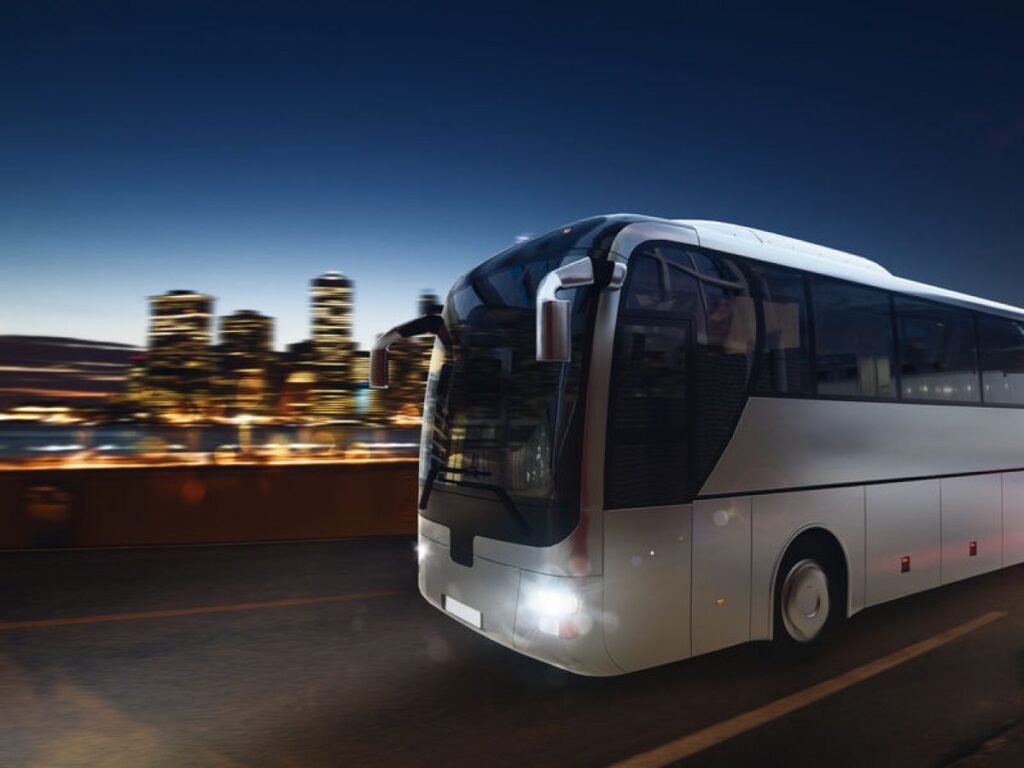
Night buses deserve special mention. They let you travel overnight, arrive at your next destination, and skip the cost of a hotel night entirely.
One overnight bus ride can replace a short-haul flight and a night in a hotel. That’s a double win for your wallet and the planet.
Tip 6: Use Public Transportation Like You Actually Live There
Metros, Trams, and Ferries Beat Taxis Every Time
The moment you arrive at your destination, your transportation choices start mattering again. Skipping the taxi line and heading to the metro is one of those eco-friendly travel transportation tips that costs you almost nothing — and makes the planet a little greener each time.
City buses, trams, subways, and ferries distribute emissions among dozens or hundreds of passengers. The per-person carbon cost drops dramatically compared to a solo taxi ride.
Cities That Make Going Car-Free Easy
| City | Why It’s Great for Car-Free Travel |
|---|---|
| Tokyo | Remarkable 24/7 metro that goes everywhere |
| Amsterdam | Trams, buses, ferries, and bicycles are part of daily life |
| Singapore | Clean, affordable, and comfortable MRT system |
| Vienna | One of Europe’s best integrated transit networks |
| Bogotá | TransMilenio BRT is a global model for sustainability |
| Seoul | Extensive subway with real-time multilingual navigation |
Transit Apps That Really Work
You don’t need to figure it out on your own. Apps like Google Maps, Citymapper, Moovit, and Transit make navigating public transportation in a new city easy. Download them before you arrive and you’ll hit the ground running.
Tip 7: Cycle Your Way Through Cities
Two Wheels, Zero Emissions, Total Freedom
Cycling is one of the most joyful and genuinely zero-emission ways to explore a city. And with the rise of worldwide bike-share networks, you don’t need to bring your own bicycle anywhere.
Cities everywhere have invested billions in cycling infrastructure. Dedicated bike paths, cycle-friendly roads, and docking stations make cycling practical — not just picturesque.
Top Bike-Share Programs Around the World
- Citi Bike – New York City, Miami, and expanding
- BIXI – Montreal, Canada
- Vélib’ – Paris, France
- Boris Bikes (Santander Cycles) – London, UK
- OV-Fiets – Netherlands national rail-integrated bike rental
- Mobike – Available in various Asian and European cities
Most programs cost just a few dollars per day or offer affordable weekly passes. Many cities also have dedicated cycling tourism routes that take you past major landmarks — so you see more and emit nothing.
E-Bikes for When You Need a Little Help
Hills, heat, or simply a longer ride than you anticipated — e-bikes handle all of it. Electric pedal-assist bikes are available in most major tourist cities now. They add power without removing the experience of cycling. And they still produce a minuscule fraction of the emissions of any motorized vehicle.
Tip 8: Walk More Than You Think You Need To
The Greenest Transportation on Earth Costs Nothing
Before you open a map app to find the nearest transit stop — check the walking distance first. You might be surprised.
Many travelers instinctively reach for transport for trips that are perfectly walkable. A 15-minute walk becomes a taxi ride. A 20-minute stroll becomes a bus trip. Over the course of a week-long trip, those short rides generate real emissions and cost real money.
Walking is completely emission-free. It costs nothing. And it so frequently leads to the best discoveries — a café not found on any tourist map, a mural around a corner, a local market you never would have passed otherwise.
When Walking Makes the Most Sense
Anything under 1.5 miles is generally a comfortable walk for most people. In walkable cities like Barcelona, Rome, Prague, and Lisbon, you can cover enormous ground entirely on foot.
Wear comfortable shoes. Carry a reusable water bottle. Download an offline map. Then just walk.
Tip 9: Pack Light and Travel Lighter on the Planet
Every Kilogram Counts More Than You Think
Here’s one of the eco-friendly travel transportation tips that people most often overlook — what you carry affects how much fuel gets burned to carry you.
On a plane, each extra kilogram of luggage adds roughly 15–20g of CO₂ per kilometer to the flight’s total emissions. That’s per passenger. Multiply that across an entire plane of 150 or 200 passengers, all with overstuffed bags, and the excess emissions are sizable.
On trains and buses too, weight impacts fuel efficiency. Every kilogram matters.
How to Cut Your Pack Weight
- Go carry-on only for trips up to two weeks
- Pack clothing that mixes, matches, and can be re-worn
- Choose lightweight gear — merino wool is a traveler’s best friend
- Leave behind anything you could buy cheaply at your destination
- Use packing cubes to organize and compress everything
Packing light also means no checked baggage fees, no waiting at the carousel, and no lugging an oversized suitcase through narrow European streets.
Tip 10: Travel Slower and Spend More Time in Each Place
The Environmental Math of Fewer Trips
This is the tip that most people don’t want to read — but it may be the most powerful of all.
The single largest source of travel emissions isn’t how you travel. It’s how often you travel. Even four short weekend flights per year can create more emissions than one two-week international trip.
Slow travel means fewer departures. Fewer departures translate into dramatically fewer emissions.
If you trade four short weekend flights for one longer trip with the same total time away, you can cut your aviation emissions by 60–70% without reducing your time spent traveling.
How Slow Travel Makes Every Trip Better
Beyond the environmental benefits, slow travel just makes for a richer experience.
When you stay in one place or region for a full week instead of burning through five countries in ten days, you go deeper. You discover the neighborhood restaurants that don’t appear on any tourist app. You pick up a few words of the local language. You sleep properly. You come home recharged instead of drained.
Slow travel is better for the planet. And better for you.
Tip 11: Vote for Green Transportation Infrastructure With Your Wallet
Where You Spend Money Sends a Message
This final tip is bigger than any single trip. Every time you choose an electric rental over a gas car, a train over a plane, or a bike-share over a taxi — you are sending a signal to the market.
Travel companies track what passengers choose. Airlines have added fuel-efficiency programs partly because passengers began demanding them. Rental car companies expanded EV fleets because demand grew. Cities built more bike lanes because cycling tourism became economically significant.
Your choices, multiplied by millions of other travelers, genuinely change the face of the industry. For a deeper look at how to build a fully sustainable travel lifestyle, explore resources at Eco Friendly Travel — a hub built specifically for travelers who want to explore the world responsibly and sustainably.
Simple Ways to Support Green Travel Infrastructure
- Leave honest positive reviews for eco-conscious hotels, transit systems, and rental services
- Choose airlines that are committed to sustainable aviation fuel (SAF) and carbon reduction programs
- Use travel booking platforms that screen for sustainability — like Kind Traveler
- Write to your elected representatives in support of rail investment and public transit funding
Small voices, combined, move mountains. Or at least move policy.
Your Quick-Reference Green Travel Cheat Sheet
| Situation | Greenest Choice | Second Best Option |
|---|---|---|
| Distance up to 500 miles | Train | Long-distance bus |
| International travel required | Direct flight + economy class | Offset emissions |
| Getting around the city | Metro/tram/bus | Cycling or walking |
| Rural area exploration | EV rental | Hybrid rental |
| Short city distance | Walk | Bike-share |
| Luggage decisions | Carry-on only | One checked bag max |
| Long trip planning | Slow travel (fewer trips) | Combine destinations |
FAQs About Eco-Friendly Travel Transportation
Q: What is the single most important eco-friendly travel transportation tip? Getting on a train instead of flying has the biggest immediate impact for most travelers. Replacing a flight with a train journey on routes such as London to Paris cuts emissions per passenger by more than 90%.
Q: Does carbon offsetting actually do any good? Yes — if you use a certified program. Look for Gold Standard or Verified Carbon Standard certification. Stay away from vague offerings without a clear description of what projects are funded. Offsetting should be used after you have already made the greener choices available to you.
Q: Are electric cars always the greenest rental option? In almost all cases, yes. Even in regions with a partly fossil-fuel-powered grid, EVs produce far fewer lifetime emissions than gas cars. The greener the local electricity grid, the greater the environmental benefit.
Q: How do I find bike-share programs at my destination? Before you go, search “[city name] bike share.” Most major cities have dedicated bike-share websites and apps. Bike-share docking stations in most supported cities are also displayed on Google Maps.
Q: Does packing light really make a difference to emissions? It adds up more than most people think. Over an entire flight with 200 passengers carrying excess baggage, the emissions are significant. Packing lighter is a straightforward, free improvement for any trip.
Q: Can slow travel work if I only have two weeks of vacation per year? Absolutely. Slow travel doesn’t require months of freedom. Even just picking one destination and staying put instead of hopping between three cities makes your trip greener — and usually more enjoyable. Fewer flights, deeper experience.
Q: What is the best free tool for calculating my travel emissions? The ICAO Carbon Emissions Calculator (from the International Civil Aviation Organization) is free and reliable for flights. Google Flights also now displays estimated emissions for different route options directly in search results.
Q: Is long-distance bus travel really comfortable enough? Long-distance buses today aren’t what they used to be. Companies like FlixBus and Megabus offer comfortable reclining seats with Wi-Fi, power outlets, and air conditioning. Many travelers are genuinely surprised by the experience.
The Bottom Line
Eco-friendly travel transportation isn’t a compromise. It’s a smarter way to see the world.
Every train you catch instead of a plane. Every bike ride through a city instead of a taxi. Every carry-on bag instead of an overstuffed checked suitcase. Every longer stay instead of a frantic multi-city sprint. They all add up.
You don’t have to be the perfect traveler. You just need to be a little more thoughtful.
The planet isn’t asking you to stop traveling. It’s asking you to explore with a little more care.
Start with one tip from this list. Then another. Before long, cleaner travel stops being a conscious effort and becomes second nature.
The world is still worth seeing. Let’s keep it that way.