
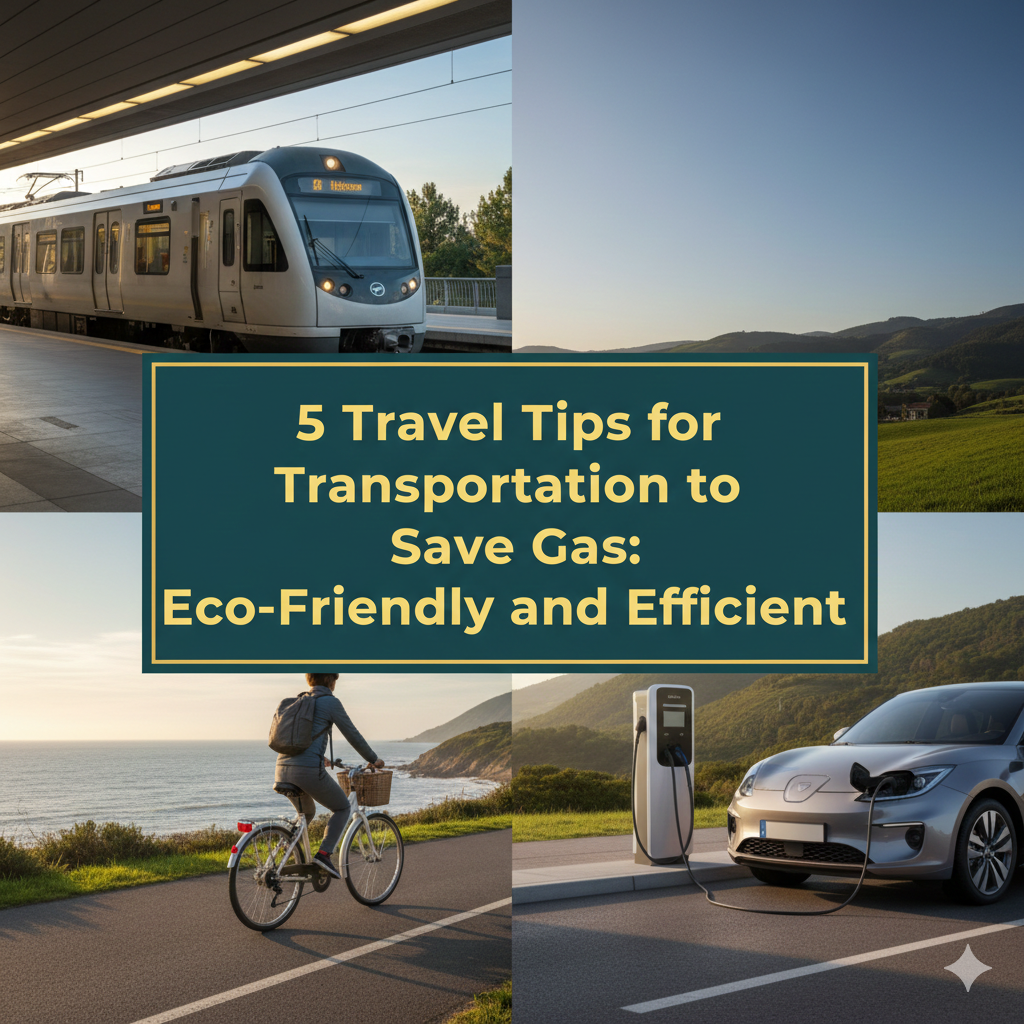

There are few greater joys in life than travel. But it will cost you — and not just in dollars.
Each time you board a plane, start a car engine, or embark on a cruise, you’re consuming fuel. And burning fuel results in pumping carbon dioxide and other dangerous gases into the air. The good news? You don’t have to stop traveling in order to save the planet.
Green travel transport is not about making vast sacrifices. It is about making smarter choices — choosing what saves fuel, cuts emissions, and gets you where you want to be in a brave new world of electric cars and abundance of sunshine.
In this guide, you’ll discover 5 simple and actionable eco-friendly travel transportation tips that you can use. Whether you’ve got a long weekend road trip or a month-long international adventure ahead, these easy-to-implement tips are aimed at helping you travel lighter on the earth.
Let’s dive in.
Why Eco-Friendly Travel Transportation Matters Right Now
Before we dive into those tips, let’s take a look at why this is important.
Transportation is one of the largest sources of greenhouse gas emissions in the world. Transport is responsible for around 37% of the world’s CO₂ emissions from end-use sectors, according to the International Energy Agency. That’s a massive chunk.
Here’s a quick comparison of different modes of transportation in carbon emissions per passenger kilometer:
| Mode of Transport | CO₂ Emissions (grams per passenger km) |
|---|---|
| Short-haul flight | ~255 g |
| Long-haul flight | ~195 g |
| Gasoline car (1 person) | ~192 g |
| Ferry | ~19 g |
| Coach/Bus | ~27 g |
| Train (average) | ~41 g |
| Electric car | ~47 g |
| Cycling | — |
| Walking | — |
Source: Our World in Data / Estimates from the IPCC
The numbers don’t lie. It really matters how you travel.
You might not be able to bike across an ocean. But there are plenty of things you can do to reduce your travel footprint — beginning with the five tips below.
Tip 1: Choose Trains Over Planes As Often As Possible
Why Trains Are the Greenest Mode of Transportation
If ever there was a single switch that could make the biggest difference to your travel emissions, this is it — swap the plane for a train.
Trains are, by an enormous margin, one of the most fuel-efficient methods for traveling long distances across land. The carbon footprint of traveling by train for the same journey is roughly 80% smaller than comparable air travel. That’s not a small difference. That’s enormous.
And trains have gotten a lot better in recent years. High-speed rail systems now link hundreds of cities across Europe, Japan, China, and parts of the United States. The Eurostar can get you from London to Paris in just over 2 hours. It is about 2.5 hours from Tokyo to Osaka on the Shinkansen. These are fast, comfortable, and highly fuel-efficient trains.
When Riding a Train Makes More Sense Than Flying
Trains are ideal when your travel time is going to be less than 5–6 hours. That’s the sweet spot where trains begin to beat planes — in terms of both actual time (once you add in airport check-in, security, and baggage claim) and emissions.
Here are some great train routes to consider instead of flying:
- London → Paris (Eurostar — 2h 16m)
- New York → Washington D.C. (Amtrak — 3h 30m)
- Amsterdam → Brussels (Thalys — 1h 52m)
- Barcelona → Madrid (AVE — 2h 30m)
- Tokyo → Osaka (Shinkansen — 2h 25m)
Night Trains: Travel While You Sleep

Here’s a little extra something you get with trains — there are night trains. You board at night, sleep in a snug cabin, and wake up at your destination. No hotel needed for that night. No fuel wasted on a flight. It’s a win-win that can also save you money.
Overnight trains are experiencing a renaissance in Europe. Nations like Austria, Sweden, and the Netherlands are expanding their overnight rail networks. If you can catch one, do it.
Tip 2: Pack Light to Save More Gas Than You Might Think
The Weight-Fuel Connection Most Travelers Overlook
This tip sounds simple. It is simple. Yet most travelers grossly underestimate the extent to which their luggage increases fuel consumption.
Each additional kilogram you take on a plane, train, car, or bus requires more energy to move. More energy means more fuel consumed. More fuel burned equals more emissions injected into the air.
Airlines calculate that every extra 1 kg carried over the course of a year equals about 0.53 kg of CO₂ emissions per flight hour. Multiply that by a long-haul flight and an entirely stuffed suitcase, and you’re talking about a significant environmental cost.
How Much Fuel Does Extra Weight Actually Burn?
Let’s explain with an example.
Say you’re flying from New York to London — about 7 hours in the air. A 25 kg suitcase versus a 10 kg bag creates a difference of 15 kg.
That 15 kg difference over a 7-hour flight adds roughly an extra 5–6 kg of CO₂ per passenger. Now multiply that by hundreds of passengers doing the same thing on the same plane. The numbers add up fast.
Smart Packing Tips for Traveling Lighter
Here are some tips for packing smarter — without leaving anything you need at home:
- Travel carry-on only — Most trips under 10 days don’t need a checked bag
- Wear your heaviest items (boots, thick jackets) on travel days
- Opt for lightweight fabrics like merino wool or linen that don’t wrinkle
- Go versatile — choose items you can wear during the day and at night
- Use packing cubes to stay organized and avoid overpacking
- Leave the “just in case” items at home — you almost never end up needing them
- Purchase toiletries at your destination instead of bringing full-size bottles
Packing light is one of the most overlooked eco-friendly travel transportation habits. It costs you nothing extra. In fact, it saves you money on checked baggage fees. And it saves fuel every single time.
Tip 3: Use Public Transportation Like a Local
Stop Renting Cars — Start Riding Buses and Metros
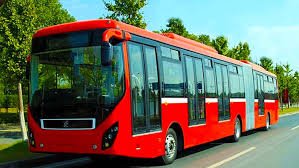
Renting a car feels convenient. But it is often one of the least environmentally responsible choices you can make at your destination.
A solo driver in a rental car has one of the worst fuel-use-to-passenger ratios. You’re burning fuel to move one person and a couple of tons of steel. Contrast that with a city bus or metro system, where dozens — sometimes hundreds — of passengers share the same fuel cost per trip.
Using public transportation can reduce your per-person carbon emissions by up to 70% compared to driving alone in a car.
Public Transit Is Better Than You Think
Many travelers fear using public transit in foreign countries due to language barriers, confusing routes, or safety concerns. But modern cities have made it easier than ever.
Here are a few tools that make riding local transit simple:
| Tool / App | What It Does |
|---|---|
| Google Maps | Shows real-time transit options worldwide |
| Citymapper | Deep-dive urban transit navigation |
| Rome2Rio | Compares every transport option between two destinations |
| Moovit | Real-time public transit directions globally |
| Local transit apps | Many big cities have their own (e.g., SNCF for France, TfL for London) |
When You Do Need a Vehicle, Share It
If you truly need a car at your destination, there are still green options.
Carpooling is one of the simplest ways to reduce emissions. Apps like BlaBlaCar match up travelers heading in the same direction. You split the fuel cost, reduce emissions per person, and often meet some interesting people along the way.
Car-sharing services like Zipcar, or local alternatives, let you rent a car by the hour — so you only use one when it’s really needed, rather than paying for a rental that sits in a parking lot all day.
Electric vehicle rentals are now available in many cities. If you do rely on a car, going electric is a big leap toward eco-friendly travel transportation. For more tips on greener travel choices, check out EcoFriendlyTravel.online — a great resource for sustainable travel inspiration.
Tip 4: Cut the Short-Haul Flight — Walk, Cycle, or Bus Instead
The Dirty Secret of Short Flights
Here’s something that many people don’t realize. Short flights — those under 500 km — are actually the worst offenders when it comes to emissions per kilometer.
Why? A large part of a plane’s fuel is burned during takeoff and landing. On a short flight, you’re doing a lot of taking off and landing relative to the distance traveled. The efficiency ratio is terrible.
A 1-hour flight from London to Edinburgh, for example, produces roughly 10 times more emissions per passenger than taking the train on the same route.
Yet millions of people take these short flights every year because it feels faster and more convenient.
Better Alternatives to Short-Haul Flights
Let’s get practical. Here are the best swaps for popular short-haul flight routes:
| Instead of Flying… | Try This Instead |
|---|---|
| City to city under 3 hours away | High-speed train or intercity bus |
| Airport to city center | Train, metro, or shared shuttle |
| Nearby country visit | Overnight train or ferry |
| Day trip to a neighboring city | Bus or rent an e-bike |
| Theme park or resort transfer | Shuttle bus or hotel transport |
Cycling as a Travel Mode — Not Just for Short Distances
Cycling doesn’t have to be limited to your hometown. Cycling tourism is one of the fastest-growing eco-friendly travel trends in the world.
Countries like the Netherlands, Denmark, and New Zealand have world-class cycling infrastructure. Bikes are rentable in nearly any city. E-bikes now allow you to cover 50–80 km per day without arriving exhausted.
Some travelers are even taking multi-day cycling trips as their full vacation — think the Loire Valley in France, the Danube Cycle Path, or the Otago Rail Trail in New Zealand. You see more, burn zero fuel, and often discover places cars simply can’t reach.
Tip 5: Choose Eco-Friendly Hotels With Green Transportation Links
Your Hotel Choice Affects Your Transportation Footprint Too
This tip might surprise you. Where you stay has a direct impact on how much fuel you’ll burn during your trip.
Here’s why.
Book a hotel that’s far from the city center or your main activities, and you’ll spend more time — and fuel — commuting back and forth every day. You’ll be calling cabs, renting cars, or riding buses all over the place. That adds up fast over a week-long trip.
Choosing accommodation that is:
- Centrally located or near public transit hubs
- Close to your main activities
- Walkable to restaurants and shops
…means you’ll naturally walk more, drive less, and reduce your overall transportation footprint.
Look for Hotels That Support Green Transport
Many eco-certified hotels do more than just place recycling bins in your room. The best ones actively help you get around sustainably.
Look for properties that offer:
- Free bike rentals for guests
- Electric vehicle charging stations
- Complimentary shuttle services to nearby attractions
- Public transport cards or guides for guests
- Partnerships with local tour operators who use electric or low-emission vehicles
Organizations like Green Key, EarthCheck, and Rainforest Alliance certify hotels that meet rigorous environmental standards. Booking with these properties ensures your stay supports the bigger eco-friendly picture — including how you get around.
According to the Global Sustainable Tourism Council (GSTC), certified sustainable accommodations play a key role in reducing the overall environmental impact of tourism — including transportation habits encouraged by where guests choose to stay.
Slow Travel: The Greenest Transportation Strategy of All
Here’s a mindset shift worth making. Rather than cramming five cities into seven days, what if you dedicated a whole week to just one or two places?
It’s called slow travel, and it’s one of the greenest things you can do.
Once you slow down, you stop bouncing between airports and train stations. You walk more. You explore your immediate surroundings deeply. You get around like a local, not a tourist. And you burn far, far less fuel in the process.
Slow travel also tends to be more rewarding. You get to know neighborhoods, eat at local places that don’t show up in tourist guides, and actually relax instead of rushing from landmark to landmark.
Traditional Travel vs. Eco-Friendly Travel Transportation: A Quick Comparison
| Travel Scenario | Traditional Approach | Eco-Friendly Swap | Estimated CO₂ Saved |
|---|---|---|---|
| London to Paris | Short-haul flight | Eurostar train | ~90% less emissions |
| City exploration | Rental car | Metro + walking | ~70% less emissions |
| Luggage | 25 kg checked bag | 10 kg carry-on | ~5–6 kg CO₂ per flight |
| Airport to hotel | Taxi alone | Shared shuttle or train | ~50–60% less |
| Beach day trip | Flight + car hire | Overnight train + e-bike | ~80% less |
Eco-Friendly Travel Transportation: Your Simple Action Plan
You don’t need to change everything at once. Start with one or two of these tips on your next trip and build from there.
Here’s a quick recap:
Step 1: Book trains instead of planes where possible — particularly for routes under 5 hours.
Step 2: Pack a carry-on only. Challenge yourself to fit everything into one bag.
Step 3: Download a transit app before you arrive and commit to using public transport for at least the first few days.
Step 4: Avoid short-haul flights. Take the bus, train, or even a bike for nearby destinations.
Step 5: Choose centrally located, eco-certified accommodation so you naturally walk and cycle more.
Small changes, repeated across every trip, add up to a massive difference over time.
FAQs About Eco-Friendly Travel Transportation
Q: Is eco-friendly travel more expensive than regular travel?
Not necessarily. Trains, buses, and public transportation are often more economical than planes or car rentals — especially if you book in advance. Going light also saves you baggage fees. Slow travel saves money on accommodation by reducing the number of places you stay.
Q: What is the single most impactful eco-friendly travel transportation change I can make?
The greatest single difference is made by replacing just one short-haul flight with a train journey. Flights are the most carbon-intensive form of travel, so avoiding even one per year can have a big impact on your personal carbon footprint.
Q: Are electric cars automatically better for the environment when renting abroad?
By and large, yes — particularly in countries where electricity comes from a grid that runs on renewable sources. However, the environmental benefit depends on how local electricity is generated. In places with a heavy dependence on coal, the emissions advantage of an electric vehicle narrows. A bus or train is most often still the greener choice.
Q: How do I find out if my destination has good public transportation?
Apps like Google Maps, Rome2Rio, and Citymapper cover transit networks in most major destinations worldwide. You can also check travel forums like TripAdvisor or Reddit’s r/travel for firsthand advice from other travelers.
Q: Can I still take long-haul flights and travel eco-consciously?
Yes. Sometimes flying is unavoidable — particularly for overseas travel across oceans. In those cases, you can choose direct flights (stopovers mean more takeoffs and landings, which burn extra fuel), fly economy class (business class carries a bigger per-passenger footprint due to space), and purchase verified carbon offsets through reputable programs like Gold Standard or Cool Effect.
Q: What exactly is “slow travel”?
Slow travel means spending more time in fewer places, rather than rushing through multiple destinations. It reduces transportation frequency, promotes walking and cycling, and generally results in a smaller overall carbon footprint — as well as a more enriching travel experience.
Q: Is it realistic to travel without a car in most popular destinations?
Yes, in most cities and many rural tourist areas — especially in Europe, Japan, and Southeast Asia. Some destinations are less transit-friendly, but even there, sharing a ride or renting an e-bike can mean a fraction of the environmental impact compared to driving solo.
Let’s Wrap It Up: Travel Smarter, Travel Greener
Eco-friendly travel transportation doesn’t have to be a bore. It’s about choosing adventure more carefully and thoughtfully.
Every train ticket you buy instead of a plane ticket matters. Every time you carry a lighter bag through an airport instead of a heavy one, it matters. Every bus ride, every bike rental, every walkable hotel you choose — it all adds up.
The world doesn’t need a small number of people doing eco-travel perfectly. It needs millions of travelers making slightly better choices, consistently, over time.
You have the power to be one of those travelers. And the five tips in this guide give you everything you need to start — right now, on your very next trip.
Travel is too good to give up. The earth is too important to ignore. Fortunately, you don’t have to choose between them.