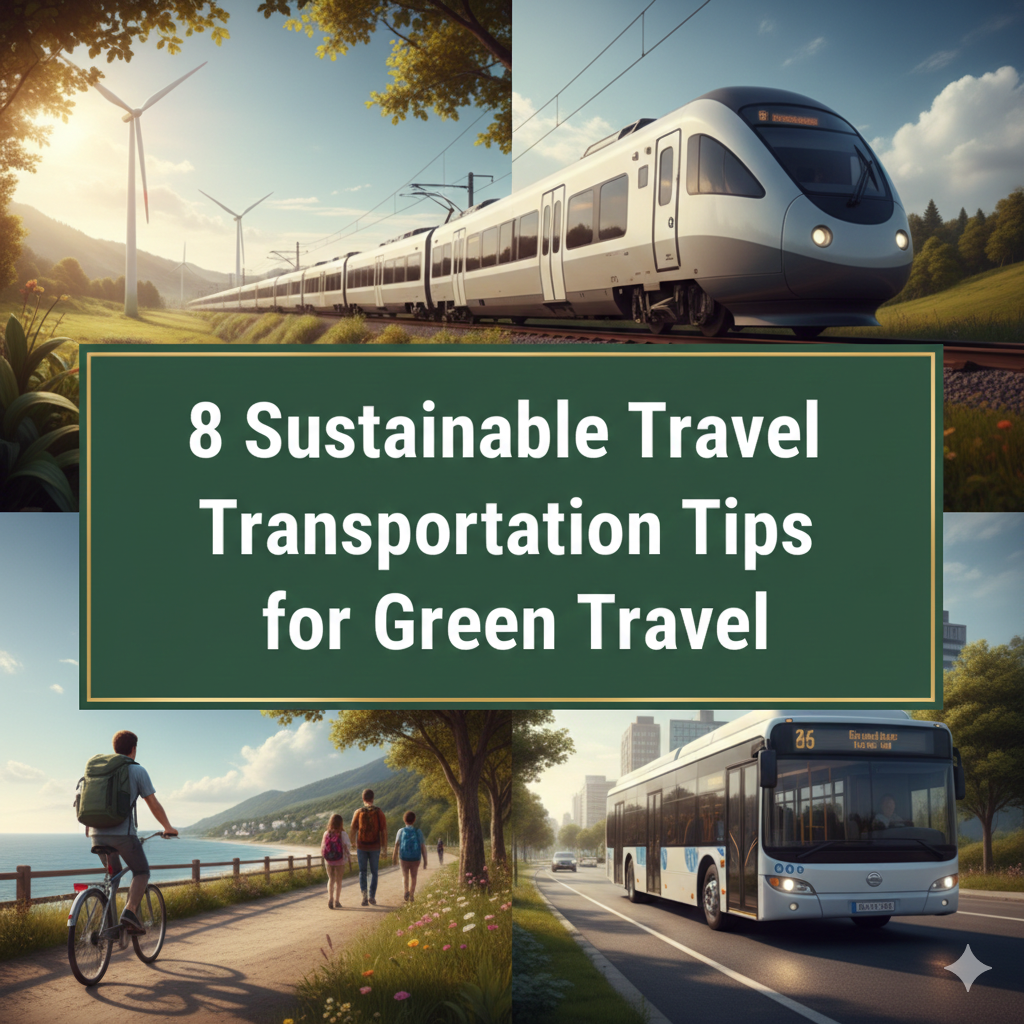
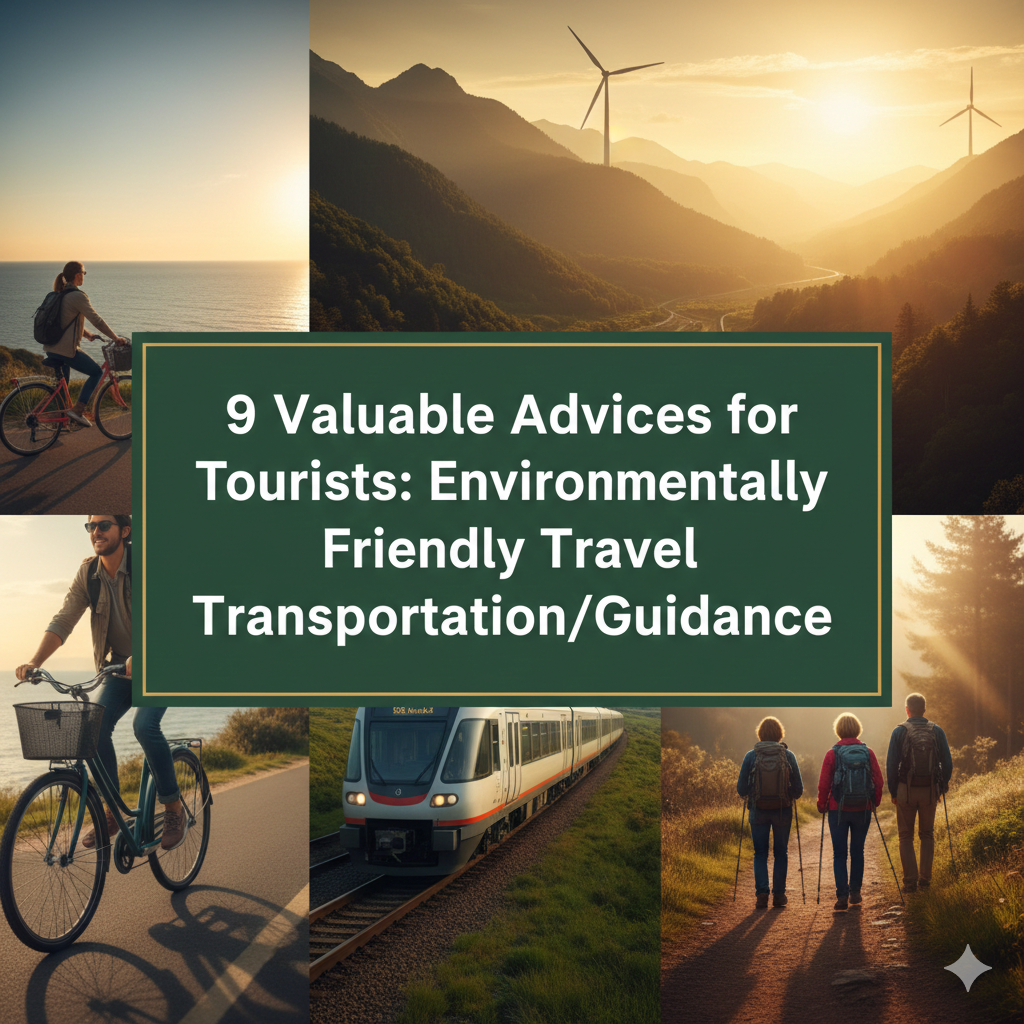

It’s one of the most pleasurable things about life on this earth. But each flight, car trip, and cruise leaves a smudge on the planet. The good news? You needn’t cease traveling to have an impact. You only need to travel more intelligently.
Eco-friendly travel transportation does not have to mean sacrificing adventure. It’s all about choosing options that get you where you want to be — without leaving a trail of carbon behind. Minor changes in how you get around can amount to a whole lot of positive change.
In this post I will share 9 common sense, simple and useful transportation tips every traveler can start implementing today. Whether bouncing around cities or exploring an entire country, these strategies can help you travel a little lighter on the Earth.
Here’s Why Your Transportation Choices Really Are a Big Deal
Before we get to the pointers, let’s consider the facts.
One of the largest contributors to climate change is transportation. Global transportation makes up nearly 37% of CO₂ emissions from energy, according to the International Energy Agency. And a big piece of that is tourism.
Flying is the biggest offender. Just one long-haul flight can fill the skies with more carbon than a whole year’s worth of driving. But getaways in gas-powered vehicles, cruise ships, and even brief domestic flights add up fast.
Here’s a snapshot of carbon emissions among various modes of transport:
| Transport Type | Avg. CO₂ per Passenger (per km) |
|---|---|
| Domestic Flight | ~255g |
| Long-Haul Flight | ~195g |
| Gasoline Car (one person) | ~192g |
| Bus | ~89g |
| Electric Car | ~47g |
| Train (electric) | ~41g |
| Bicycle | 0g |
| Walking | 0g |
Source: Our World in Data / IPCC estimates
The difference is clear. Opting for a train instead of a plane, or riding the bus instead of renting a car, can substantially reduce your travel emissions. Now let’s go over how to do it.
Tip 1: Choose Trains Over Planes Whenever Possible
This is the one switch that will make the greatest difference.
Trains produce 6 times fewer CO₂ emissions than planes on an equivalent journey. And in much of the world — particularly Europe, Japan, and parts of Asia — trains are faster, cheaper, and more comfortable than flying once you account for time spent at airports.
Why Trains Win the Green Race
Rail travel is electric, and as the world shifts to renewable energy grids, trains become cleaner still. Flying doesn’t have that luxury — jet fuel is still jet fuel.
And train stations are often right in the middle of cities. No long hauls to remote airports. No security lines that suck up two hours of your life.
Train routes that are faster than flying:
- London to Paris (Eurostar — approximately 2.5 hours)
- Tokyo to Osaka (Shinkansen — around 2 hours 15 minutes)
- New York to Washington D.C. (Amtrak — 3 hours or so)
- Barcelona to Madrid (AVE — approximately 2.5 hours)
If you can get to your destination by train in less than 4–5 hours, take the train.
Tip 2: Max Out the Public Transportation at Your Destination
It’s exciting, landing in a new city. Renting a car feels convenient. But it’s one of the least eco-friendly decisions you can make as a traveler.
City buses, metros, trams, and minibuses carry dozens or even hundreds of passengers at once. So the emissions per individual plummet compared with a solo car rental.
Get Public Transit Into the Mix Early
Research the public transportation options at your destination before you go. Many big cities now have great apps and tourist passes that make getting around easy.
Cities like Singapore, Vienna, Amsterdam, and Medellín have world-class transit systems that are faster and more reliable than driving through traffic.
Quick wins for using public transport abroad:
- Purchase a city transit card or tourist pass when you arrive
- Download Google Maps or Citymapper before you land
- Ask locals which bus or metro line they actually use
- Book accommodation near transportation hubs
You’ll save money too. Rental cars come with extra fees — fuel, parking, insurance, and tolls. A weekly metro pass is frequently cheaper than a single day of car rental.
Tip 3: Book Non-Stop Flights When You Must Fly

There are times when the only practical choice is to fly. Crossing the Pacific or Atlantic? You’re not taking a train for that. But how you fly still does matter.
Layovers seem harmless. You’re on the same trip, aren’t you? Wrong. Takeoffs and landings burn the most fuel of any part of a flight. Each connection adds one more full takeoff-and-landing cycle to your trip.
Fly Direct, Fly Smarter
A non-stop flight from New York to London produces significantly less CO₂ per passenger than a routing through a connecting hub. It also saves time and stress.
When booking flights, look for:
- Direct routes, even if they cost a little more
- Economy class (business and first class have a bigger carbon footprint per seat because they take up more space)
- Airlines with verified carbon offset programs
- Newer, more fuel-efficient aircraft like the Boeing 787 or Airbus A350
Sitting in economy is actually the greener choice. Business class seats occupy about 3–4 times the space, meaning they carry a proportionally larger share of the plane’s emissions.
Tip 4: Rent Electric or Hybrid Cars Instead of Gas Cars
There are times when you really do need a car — particularly in rural areas, national parks, or destinations with limited public transportation. In those cases, the type of car you rent can make a big difference.
Electric vehicles (EVs) produce zero tailpipe emissions. Even accounting for the electricity used to charge them, EVs produce far less CO₂ than gasoline cars over the same distance.
What to Look for When Renting Green
Major rental companies like Hertz, Enterprise, and Sixt now offer EV and hybrid options. Book early — the eco-friendly options tend to go fast.
| Vehicle Type | Best For | Eco Rating |
|---|---|---|
| Full Electric (EV) | City driving, short-medium trips | ⭐⭐⭐⭐⭐ |
| Plug-in Hybrid | Mixed city/highway trips | ⭐⭐⭐⭐ |
| Standard Hybrid | Long highway driving | ⭐⭐⭐ |
| Small Gasoline | Last resort if EVs unavailable | ⭐⭐ |
| Large SUV/Truck | Avoid unless truly needed | ⭐ |
If you can’t get an electric vehicle, at least get the smallest car suitable for your needs. A compact car consumes far less fuel than an SUV.
Tip 5: Ride a Bike Like the Locals Do

Here’s a transportation option with a zero-carbon footprint and a 100% chance of seeing a city the way locals do.
Cycling is thriving in destinations around the world. Cities like Amsterdam, Copenhagen, Bogotá, and Portland have invested heavily in bike infrastructure. Many more are catching up fast.
Why Tourists Should Go By Bike
Bikes let you cover more ground than walking, but move slowly enough that you can actually notice and enjoy your surroundings. You can duck into neighborhoods that tour buses never visit.
Most cities now offer:
- Docked bike-share systems (like Citi Bike in New York or Vélib’ in Paris)
- Dockless e-bike rentals (pick up and drop off anywhere)
- Guided cycling tours for first-timers who want company
E-bikes are especially great for tourists who aren’t confident cyclists. They offer a little electric assist on hills and longer stretches, so you don’t arrive somewhere completely worn out.
Pro tip: Check if your hotel or hostel offers free bike rentals. Many eco-conscious accommodations do.
Tip 6: Walk More — Seriously, Just Walk
It sounds almost too simple. But walking is the most sustainable mode of transport on earth, and the one visitors mostly underuse.
When you look at a map and see two points that look “far apart,” zoom in. It may well be a 15-minute walk. That’s a walk that could take you past street food stalls, murals, local shops, and views that no guided tour would ever show you.
The Walking Tourist Mindset
Change your thinking from “How do I get there?” to “How close can I get on foot?”
Walking tips that actually work:
- Download an offline map (Maps.me or Google Maps offline) so you’re not constantly draining your phone
- Wear comfortable shoes from day one — don’t pack pretty shoes that destroy your feet
- Start your mornings early and walk to your first stop
- Use walking as your default for anything under 1.5 km (about 1 mile)
Cities reward walkers with details you can never see from a cab or bus window — the architecture, the smells, the sounds, and the rhythm of a place.
Tip 7: Carpool and Use Rideshare Services Wisely
When you do need a car, sharing it with others is the next best thing to not using one at all.
Carpooling cuts the per-person emissions of a car ride in half — or more, depending on how many people are sharing. It saves costs too, which is always a bonus while traveling.
Smarter Rideshare Habits for Eco-Minded Travelers
Apps like BlaBlaCar connect long-distance travelers heading in the same direction. It’s popular throughout Europe and increasingly available in other regions. You share a private car with someone already making the trip — so no extra emissions are created specifically for your journey.
For shorter trips, apps like Uber and Lyft offer carpooling options (UberPool, Lyft Shared). These match you with other riders going in the same direction. Not always perfectly convenient, but meaningfully greener.
Tips for eco-friendly ridesharing:
- Always choose shared/pool options when available
- Request electric vehicles when the app allows you to filter
- Combine rideshare with transit — ride to the nearest metro, then take the train
- Avoid surge pricing times — not just for your wallet, but because surge periods often mean more cars on the road
Tip 8: Offset Your Carbon When You Can’t Avoid Emissions
Even the most dedicated eco-traveler will occasionally have to accept a flight or a long car journey. That’s okay. What matters is what you do about it.
Carbon offsetting lets you compensate for your emissions by funding projects that remove or reduce CO₂ elsewhere. This could be reforestation projects, renewable energy development in developing countries, or methane capture programs.
How Carbon Offsetting Actually Works
When you book a flight, many airlines and booking platforms — including Google Flights — now show you an estimated carbon footprint for the route and give you the option to offset it for a few extra dollars.
You can also offset independently through trusted organizations:
| Organization | Focus Area | Website |
|---|---|---|
| Gold Standard | Verified global projects | goldstandard.org |
| Terrapass | US-based carbon projects | terrapass.com |
| Cool Effect | Community-vetted projects | cooleffect.org |
| Atmosfair | Aviation-specific offsets | atmosfair.de |
Important note: Carbon offsetting is a supplement, not a substitute. The aim is still to reduce your emissions first, and offset what you truly can’t avoid. Don’t think of it as a guilt-free pass to fly more than you need.
Tip 9: Plan Your Itinerary to Avoid Backtracking
This one is more subtle than the others, but it may just be the most underappreciated tip on this list.
A lot of tourists plan trips based on what they want to see without thinking through the logical order of visits. The result? Zigzagging back and forth across a region or country, retracing steps already taken, and adding extra flights or drives that were totally unnecessary.
The “Loop Route” Method for Green Travel
Instead of hopping about at random, plan a circular or linear route that flows logically from one destination to the next.
Example — A poorly planned European trip: Paris → Rome → Paris → Amsterdam → Brussels → Home (Two trips back to Paris = wasted emissions)
A smarter version: Paris → Brussels → Amsterdam → (fly once) → Rome → Home (One logical loop, one flight, far fewer total kilometers)
This type of itinerary planning can eliminate one or two unnecessary flights or long drives from your trip altogether — making it one of the highest-impact changes you can make before you even leave home.
Use tools like Google Maps’ multi-stop route planner or Rome2Rio to map out your route and find the most efficient path between destinations.
Putting It All Together: Your Green Travel Checklist
Before every trip, run through this quick checklist:
Before You Book:
- Can I reach my destination by train instead of flying?
- Have I planned a logical route to avoid backtracking?
- Have I looked into EV rental options at my destination?
During Booking:
- Did I choose a non-stop flight (if flying)?
- Did I book economy class?
- Did I add a carbon offset?
At Your Destination:
- Do I have a transit app downloaded?
- Did I look into bike rentals?
- Is everything within walking distance planned for foot travel?
For more tips, guides, and resources on sustainable travel, visit Eco Friendly Travel — a great hub for tourists who want to explore the world without harming it.
FAQs About Eco-Friendly Travel Transportation
Q: Is it more expensive to travel in an eco-friendly way? Not usually. Trains, buses, and bikes are often less expensive than flying and renting a car. Walking costs nothing. The eco-friendly choice will frequently save you money.
Q: What’s the single biggest change I can make? Swap one flight with a train trip. That single switch, even applied once a year, does more than almost anything else to shrink your travel carbon footprint.
Q: Do carbon offsets really work? They can, but quality varies widely. Stick with Gold Standard or other verified programs. And always prioritize reducing emissions over offsetting them.
Q: Can I travel eco-consciously in countries without good public transportation? Yes — rent an EV or hybrid, carpool using apps like BlaBlaCar, and plan your route carefully to minimize total distance traveled.
Q: Are airlines really doing anything meaningful with offsetting? Some do, some don’t. Research before you trust. Look for airlines certified by the Carbon Offsetting and Reduction Scheme for International Aviation (CORSIA) and those using sustainable aviation fuel (SAF).
Q: Is it hypocritical to say you’re an eco-traveler if you fly internationally? No. Good is the enemy of perfect. It matters to make meaningful improvements to the way we travel — you don’t have to stay home forever to care about the planet. Progress, not perfection.
The Bottom Line
Eco-friendly travel transportation isn’t all about guilt. It’s about awareness. There are always decisions — large and small — on any journey, and those decisions accumulate over a lifetime of travel.
Take the train when you can. Walk when it makes sense. Bike when it’s an option. Share rides when you need them. Plan smarter so you travel less distance to see more of the world.
The planet doesn’t need you to stop exploring it. It just needs you to explore it more thoughtfully.
Start with one tip from this list on your next trip. Then add another. Eventually, eco-friendly travel stops feeling like a sacrifice and starts feeling like the smarter, richer, more intentional way to see the world.