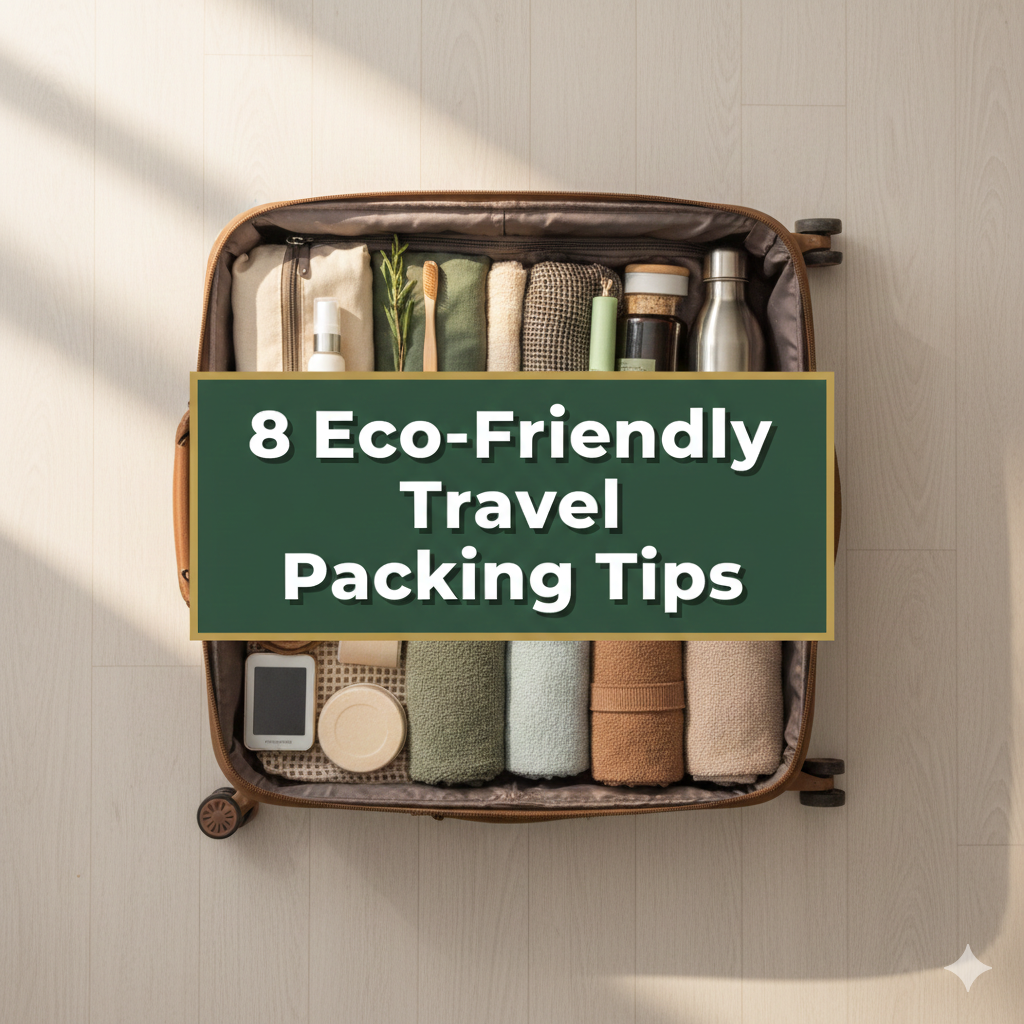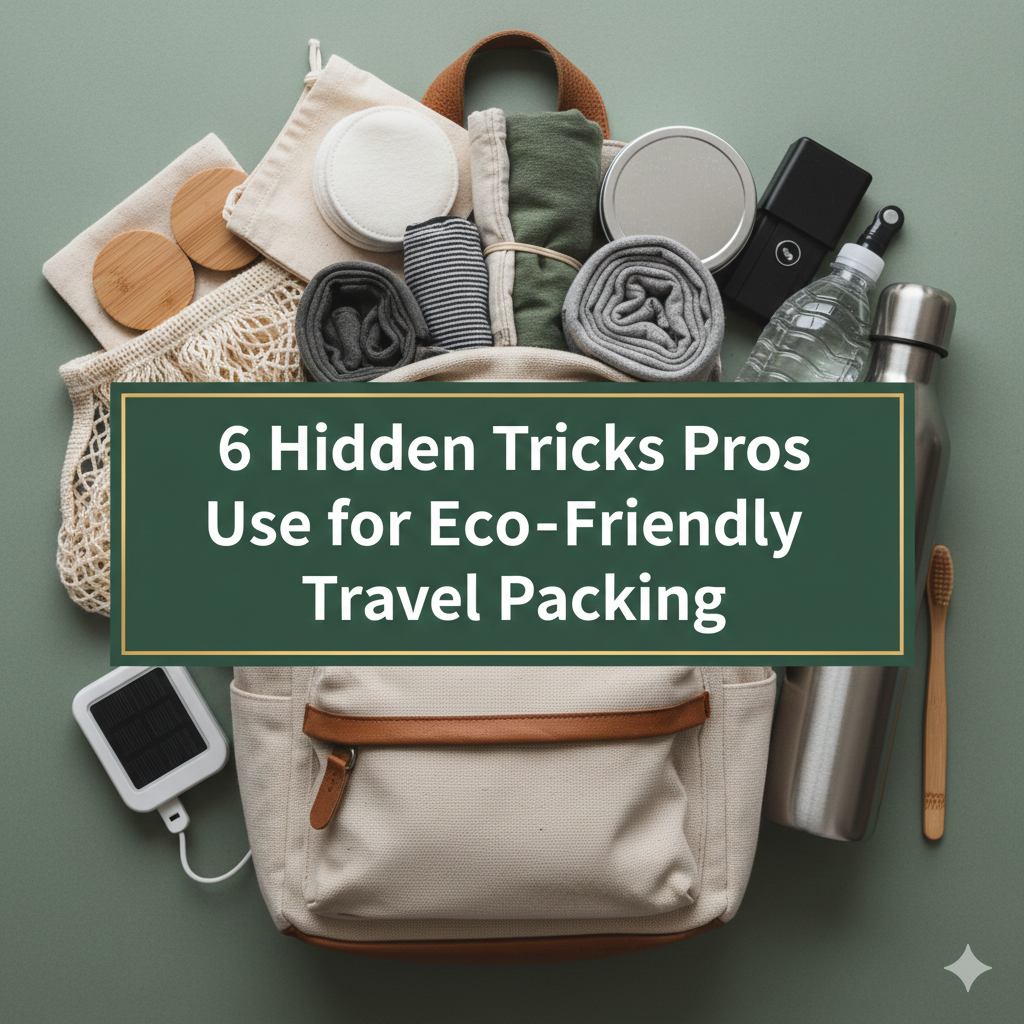
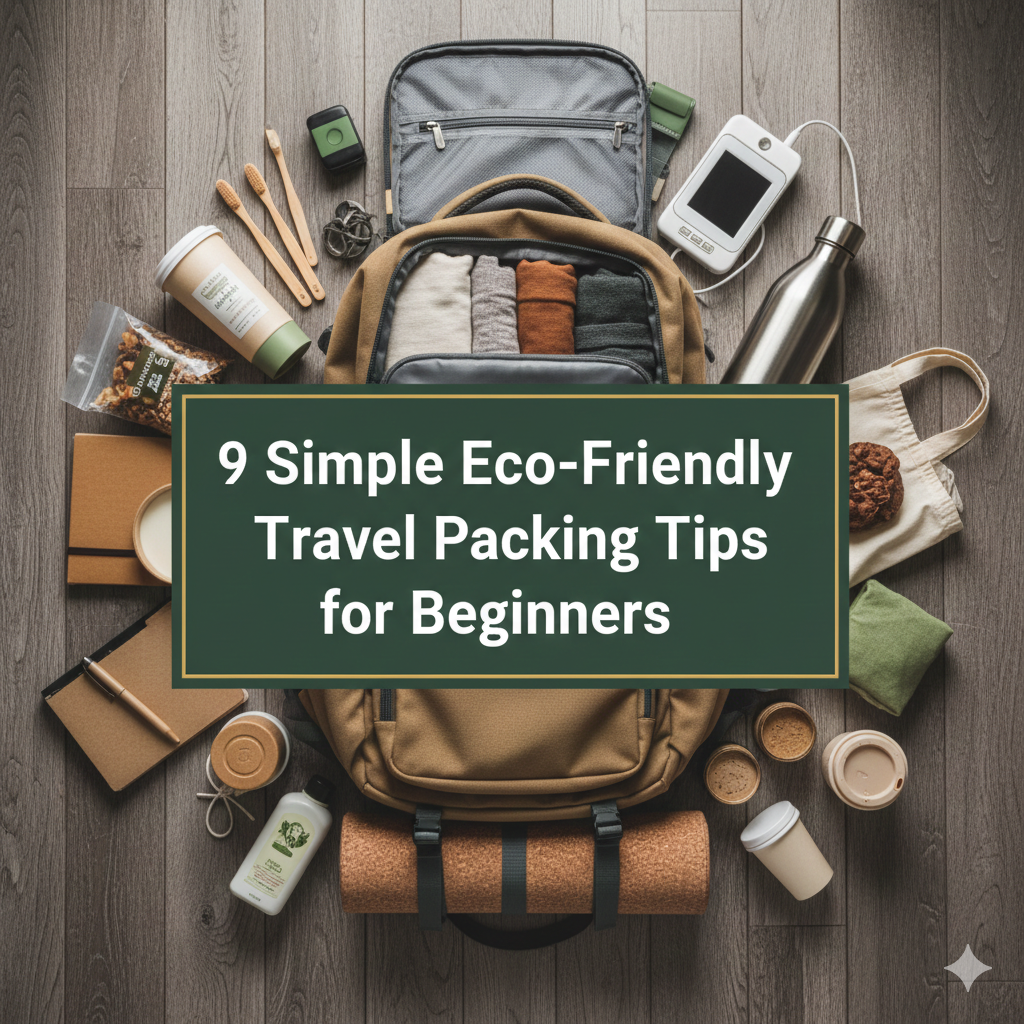

You’ve booked your trip. You’re over the moon about this. But between choosing your destination and throwing a bunch of stuff into a suitcase, that little thought pops up: Is there a way to travel more sustainably?
The answer is yes. And you can do something about it, more easily than you might imagine.
Eco-friendly travel is not about roughing it in the woods, scratching behind your ears and washing with grapefruit juice. It’s about packing smart and traveling smart — and that doesn’t mean spending a fortune on the latest accessories and gadgets.
Tourism accounts for around 8 percent of the world’s greenhouse gas emissions annually. Much of it adds up from the small, everyday choices travelers make — single-use plastics, unnecessary purchases, and overpacking. When millions of people make even just a few better choices, the aggregate impact multiplies rapidly.
This guide consists of 9 simple eco-friendly travel packing tips focused on beginners. No guilt trips. No complicated rules. Just simple, achievable swaps that allow you to travel the world with a lighter conscience.
Let’s get packing.
Why Your Packing List Is Actually Worthy of the Planet
For most people, eco-travel means taking the train instead of flying, or staying at a green hotel. All of those things matter — but your packing list is pretty important, too.
Here’s why: The heavier your bag, the more energy it takes a plane, car, or bus to transport it. Lighter bags translate into less emissions per passenger. Packing reusable goods means less plastic trash in landfills and choking the oceans. Opting for eco-friendly products equals less demand for toxic manufacturing.
Your suitcase is a statement. What’s in it says something about you as a traveler.
The good news? Some low-cost substitutions can actually change the game for you without draining your time, budget, or comfort.
Tip 1: Pack Less, Travel Lighter
The Ethics of Sustainable Travel
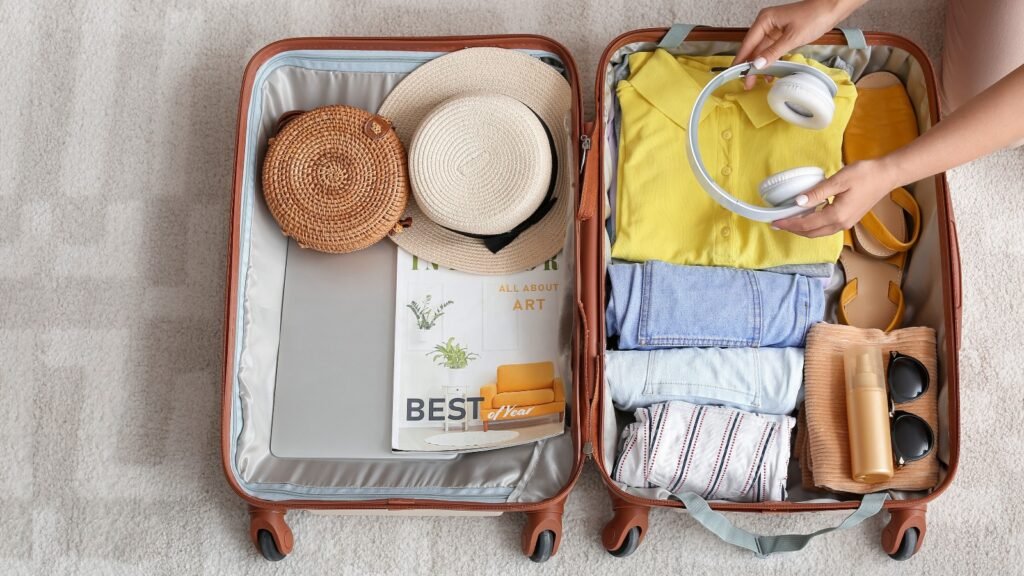
The No. 1 greenest thing you can do before your trip even begins is pack less.
Overpacking is very much the norm, especially among novices. People throw in “just in case” outfits, backup shoes, and gadgets they never lay a finger on. The result is an overweight bag that burns more fuel and stresses you out at every airport.
A lighter bag means:
- Lower carbon emissions from transport
- No checked-baggage fees (which usually involve extra, fuel-hungry cargo holds)
- Easier movement, less physical strain
- Space to pack worthwhile souvenirs
How to Actually Pack Light
Start a packing list a few days before your trip. Jot down the stuff you think you need. Then cut it by 30%.
Use the “One Week Rule”: For trips lasting up to two weeks, one week’s worth of clothes will likely suffice if you anticipate doing laundry at least once. Opt for neutral shades that you can easily mix and match. Select clothes that can do double duty — a lightweight jacket for both hiking and dinner out, or a scarf turned beach wrap.
Rule of thumb: If you need to check a bag, force yourself to pack it all in a carry-on.
Tip 2: Switch Over to Reusable Toiletries and Containers
The Trouble With Single-Use Travel Toiletries
Those little bottles of hotel shampoo and conditioner might seem harmless. But multiply by millions of hotel guests a year and you have a gigantic plastic waste problem. Most of those mini bottles ultimately land and languish in landfills — even when hotels say they recycle them.
One of the easiest eco-friendly travel packing tips you can implement today is to bring your own reusable toiletry containers.
What to Bring Instead
Buy a set of reusable silicone travel bottles. They’re TSA-approved (under 3.4 oz), virtually indestructible, and can be refilled hundreds of times. Load them up with your preferred products from home.
Even better — substitute in the solid forms of your staples:
| Product | Swap To |
|---|---|
| Liquid shampoo | Shampoo bar |
| Liquid conditioner | Conditioner bar |
| Body wash | Solid soap bar |
| Toothpaste | Toothpaste tablets |
| Moisturizer | Solid lotion bar |
| Deodorant | Solid or paste deodorant |
Solid products are lighter, smaller, and usually more durable than liquids. Great options from many brands are now available at a reasonable price.
Tip 3: Take a Reusable Water Bottle (And Actually Use It)
Why This One Item Is So Disruptive
Plastic water bottles are some of the most wasteful items to travel with. A tourist in an unfamiliar city may go through 3–5 plastic bottles a day. Over a two-week trip, that adds up to 40-plus plastic bottles per person — most of which wind up in the trash or worse, the ocean.
A good reusable water bottle takes all of that away.
Selecting the Best Bottle for Travel
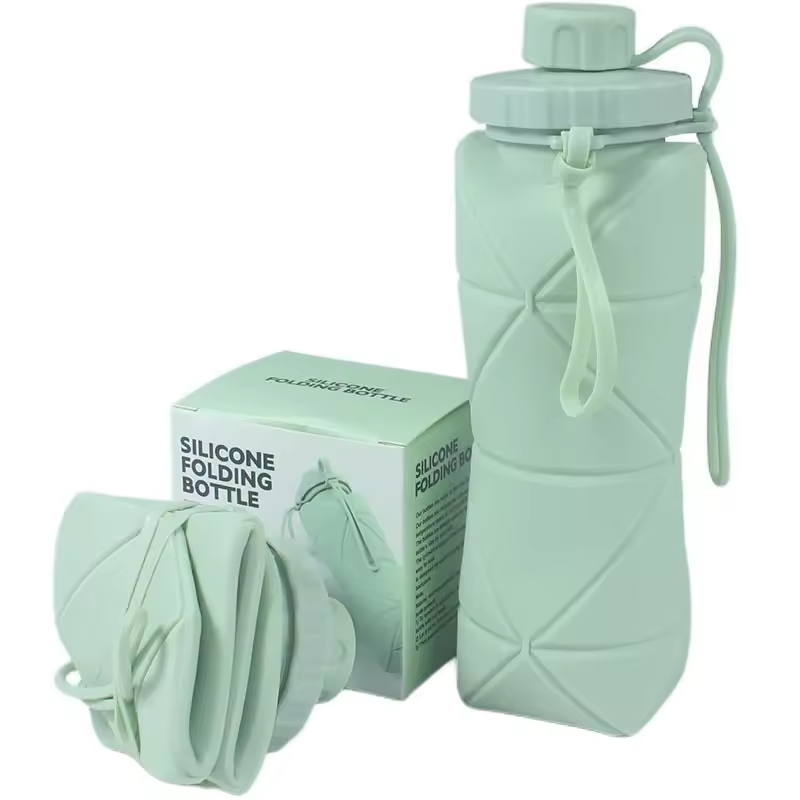
Look for an insulated stainless steel bottle. It’ll keep cold water cold for 24 hours and hot beverages hot for 12. It is long-lasting, resistant to chemical leaching, and can last for years.
Check the tap water situation at your destination before you travel. Apps like Tap and websites like Travel Safe Abroad list cities where tap water is safe to drink. For destinations where it is not, consider:
- Filter-equipped water bottles (containing activated carbon or UV filters)
- Refill stations in airports and hotels
- Buying large 5-gallon jugs to refill your bottle, rather than purchasing small plastic bottles
Carrying your own bottle saves you money every single day of your trip.
Tip 4: Say Goodbye to Plastic Bags — Opt for Reusable Options
Plastic Bags Are Everywhere in Travel — Here’s How to Curb Their Use
From airport security bins to beach days, plastic bags seem to sneak their way into nearly every aspect of travel. They are handed out at shops, used to separate wet swimwear, and crammed with souvenirs. The majority are used for minutes and discarded.
Easy Replacements to Stash in Your Bag
A couple of featherweight, reusable bags take up barely any space and work perfectly for everything:
Tote bags — For errands, day trips, and carrying snacks. Many fold into a tiny pouch.
Mesh produce bags — Perfect for markets and grocery runs at your destination.
Wet bags — Waterproof pouches for swimwear, sweaty gym clothes, or wet shoes. So much better than a plastic bag.
Packing cubes — Rather than using plastic bags to separate items in your suitcase, packing cubes let you organize more easily. Bonus: they compress your clothes and save space.
Throwing a couple of these into your bag before you leave almost costs nothing and cuts an astounding amount of plastic waste.
Tip 5: Opt for Reef-Safe and Natural Sunscreen
What’s Wrong With Regular Sunscreen?
This one catches many travelers off guard. Common sunscreen — the type you may already be using — can include chemicals such as oxybenzone and octinoxate. These chemicals rinse off your skin in the ocean and harm coral reefs.
Coral reefs are among the world’s richest ecosystems in terms of biodiversity. They sustain about a quarter of all marine species. And they’re already reeling from the effects of climate change. Sunscreen chemicals only make it much, much worse.
A handful of destinations — including Hawaii, Palau, and the U.S. Virgin Islands — have gone so far as to ban certain chemical sunscreens to protect their reefs.
What to Pack Instead
Look for sunscreen labeled reef-safe or mineral-based. Zinc oxide and titanium dioxide are the active ingredients to look for — both are considered safer for marine life.
Some popular reef-safe sunscreen brands among travelers are:
- Raw Elements
- Thinksport
- All Good
- Badger Balm
- Stream2Sea
These can be found easily online and at outdoor or health stores. Store them in reusable containers if you can.
For more inspiration on traveling sustainably, Eco Friendly Travel is a great resource packed with practical green travel ideas.
Tip 6: Bring a Zero-Waste Snack Kit
Why Plastic and Food Waste Go Hand in Hand When We Travel
Single-use plastic packaging is clogging up airports, train stations, and tourist hotspots. Snacks come in plastic wrappers, drinks in plastic cups, utensils in plastic-wrapped sleeves. It’s all but impossible to avoid — unless you come prepared.
Bringing your own snack kit is one of the most convenient eco-friendly travel packing tips for long flights, road trips, or full days of sightseeing.
What to Pack in a Zero-Waste Snack Kit
Here’s a straightforward setup that fits right in a small pouch:
| Item | Why It Helps |
|---|---|
| Reusable utensil set (fork, spoon, knife) | Skips plastic cutlery at every meal |
| Bamboo or metal straw | Longer-lasting than single-use plastic straws |
| Small cloth napkin | Reduces the need for paper napkins |
| Reusable snack bags or beeswax wraps | For carrying snacks without relying on plastic zip bags |
| Lightweight reusable cup or coffee mug | Great for coffee shops and airport cafes |
Pre-pack snacks from home in your reusable bags — nuts, dried fruit, granola bars, crackers. You’ll also spend less by not purchasing overpriced airport food swathed in layers of plastic.
Tip 7: Say No to Fast-Fashion Travel Clothes
The Hidden Cost of Buying New Clothes for Every Trip
There’s certainly a temptation to purchase an entire new wardrobe just for vacation. But fast fashion — cheap, trendy clothing made quickly and sold at discount prices — is one of the most polluting industries on earth. It is responsible for approximately 10 percent of global carbon emissions and churns out massive amounts of textile waste.
Buying five new outfits for a one-week trip, wearing each piece twice, and then never looking at them again is a cycle that contributes to the problem.
What to Do Instead
Shop your own closet first. Most of us already have perfectly good travel clothes we’ve just forgotten about. Mix and match what you have before thinking of buying anything new.
Buy secondhand. Thrift stores, consignment shops, and apps like Poshmark or ThredUp are packed with travel-worthy clothing at steep discounts. Secondhand shopping means clothing has a longer life and stays out of landfills.
Choose quality over quantity. If you do make a purchase, focus on one or two versatile, durable pieces made from sustainable materials — organic cotton, recycled polyester, Tencel, or merino wool. These last longer, feel nicer, and have a smaller environmental impact.
Pack for rewearing. Plan outfits where each item works in several combinations. A good rule: bring three bottoms and five tops and you’ll have more outfit options than you’d expect.
Tip 8: Go Digital — Leave the Paper at Home
The Accumulation of Paper Waste in Travel
Think about all the paper that gets used during a typical trip: printed boarding passes, hotel confirmations, tour tickets, maps, travel guides, restaurant flyers. The majority of it is used once and thrown away.
Going digital is one of the easiest eco-friendly travel packing tips out there — it requires almost no effort, just a tiny shift in habit.
How to Go Paperless on Your Travels
- Use mobile boarding passes. All major airlines and most budget carriers offer them. Add your boarding pass to the Wallet app on your phone.
- Download offline maps. Google Maps allows you to download entire city maps for offline use. No data, no paper, no worries.
- Save confirmations digitally. Use an app like TripIt, or organize a dedicated email folder for hotel, tour, and restaurant confirmations.
- Read travel guides on your phone. Apps like Lonely Planet, Wikivoyage, and even Pinterest boards make great substitutes for hardcover guidebooks.
- Use e-tickets for attractions. Many museums, parks, and tours now offer QR code tickets sent directly to your email.
Going digital also makes travel lighter — physically. No lugging around bulky guidebooks or folders full of paper.
Tip 9: Pack a Small “Leave No Trace” Kit
What Is Leave No Trace?
Leave No Trace refers to a set of outdoor ethics principles encouraging minimal impact on nature. The main concept is straightforward: leave a destination the way you found it — or better.
You don’t have to be a hardcore hiker to follow these principles. Leave No Trace thinking is useful even for city travelers and beach visitors.
According to the Leave No Trace Center for Outdoor Ethics, practicing these principles helps preserve natural spaces for future generations — and it all starts with the small choices you make before leaving home.
What to Put in Your Kit
A tiny pouch that doesn’t take up much room can make a real difference:
Trash bags or reusable pouches — For picking up litter you find on trails or beaches. Yes, that includes picking up other people’s trash.
Biodegradable soap — For washing hands, dishes, or yourself near natural water sources. Regular soap can pollute streams and lakes.
A compact microfiber towel — Dries fast and replaces wasteful paper towels.
Silicone collapsible bowl — Great for camping or eating on the go without disposables.
A small first-aid kit — Cuts down on having to buy throwaway medical supplies while out and about.
Carrying this kit says something important: that you respect the places you visit. That is what eco-friendly travel is all about.
At a Glance: Your Green Packing Checklist
Here’s a quick checklist to have handy when you’re packing:
| Eco-Friendly Item | Purpose |
|---|---|
| Reusable water bottle | Replaces single-use plastic bottles |
| Solid toiletry bars | Prevents the use of plastic containers |
| Reef-safe sunscreen | Protects oceans and coral from damage |
| Reusable tote bag | Stops using disposable bags while shopping |
| Reusable utensil set | Prevents the need for single-use plastic cutlery |
| Packing cubes | Gets rid of plastic bags for organizing |
| Toothpaste tablets | Eliminates toothpaste tube waste |
| Biodegradable soap | Safe near natural water sources |
| Microfiber towel | Replaces paper towels |
| Digital travel documents | Cuts back on paper waste |
Print this out once — or even better, save it to your phone.
How These Tips Compare: The Big Picture
| Tip | Difficulty Level | Environmental Impact | Cost |
|---|---|---|---|
| Pack lighter | Easy | High | Free |
| Reusable toiletry bottles | Easy | Medium | Low |
| Reusable water bottle | Easy | High | Low–Medium |
| Reusable bags | Easy | Medium | Very Low |
| Reef-safe sunscreen | Easy | High | Medium |
| Zero-waste snack kit | Medium | Medium | Low |
| Skip fast fashion | Medium | High | Free–Low |
| Go paperless | Easy | Low–Medium | Free |
| Leave No Trace kit | Medium | High | Low |
FAQs About Eco-Friendly Travel Packing
Q: Do I have to spend a lot of money in order to pack sustainably?
Not at all. Many eco-friendly swaps are completely free — such as packing light, going paperless, and shopping your closet instead of buying new clothes. Others — like reusable bottles and toiletry containers — cost a little more upfront but save you money in the long run.
Q: Are solid shampoo bars any good? Will they work for my hair type?
Many modern shampoo bars are formulated for a broad range of hair types. The key is finding the right formula — shop for bars formulated for your specific hair concern (moisturizing, volumizing, color-safe, etc.). Your hair may take a week or two to adjust if you’re transitioning from liquid shampoo.
Q: What about traveling somewhere with unsafe tap water?
Opt for a filtered water bottle with a built-in filter (brands like LifeStraw or GRAYL work great), or buy large refillable water jugs from local stores rather than individual plastic bottles. This significantly reduces plastic waste even in destinations where tap water is not safe to drink.
Q: How can I find reef-safe sunscreen that doesn’t cost a fortune?
Brands like Banana Boat and Neutrogena have begun offering mineral-based versions at drugstore prices. You can also find affordable reef-safe options on Amazon or at health food shops. Check the label — zinc oxide or titanium dioxide should be the active ingredient.
Q: Can I really have an impact as just one traveler?
Yes — and here’s why. Individual choices drive demand. When travelers start requesting reef-safe sunscreen, carrying reusable bottles, and skipping single-use plastic, companies respond. Hotels, airlines, and tourist attractions all adjust to what travelers want. Your choices indicate what kind of travel industry you’d like to see in the future.
Q: What’s the single most important eco-friendly packing tip for a total newbie?
Start with a single change — the reusable water bottle. It’s inexpensive, easy, and reduces a significant amount of plastic waste with each trip. Once that feels natural, add one more swap. Small steps are more sustainable (pun intended) than trying to overhaul everything at once.
Wrapping It All Up
Eco-friendly travel is not a personality type. It’s a series of small, deliberate choices made before, during, and after a trip.
You don’t have to be perfect. You don’t have to switch everything out overnight. You just have to begin somewhere.
The nine eco-friendly travel packing tips in this guide are for true beginners — those who want to explore the world without leaving it worse off. From bringing a reusable water bottle to selecting reef-safe sunscreen to going totally paperless, each tip here is not only doable and affordable but also makes a real difference.
The Earth’s most beautiful places — coral reefs, mountain trails, ancient forests, and the built-up beauty of coastal cities — are worth preserving. And one of the best things you can do to protect them is visit thoughtfully.
Pack smart. Travel light. Leave places nicer than when you arrived.
That is what eco-friendly travel looks like. And now you’re ready for it.