
Travel is one of the greatest pleasures of life. But there’s a cost — not just the price of your ticket.
Millions of tons of plastic waste are generated annually by tourism. Single-use toiletry bottles, disposable cups, plastic bags and paper towels fill up hotel waste bins around the world. The bulk of it goes to landfills. Some of it ends up in oceans.
The good news? You can explore and save the planet.
Eco-friendly travel packing tips are not about sacrificing comfort. They are about making better choices before you even zip your bag closed. When you pack with a purpose, you minimize waste, save money and travel lighter — both in physical weight and mental load.
So if you’re feeling lost with how to pack for a zero waste trip, this list will help set you straight. Whether you’re on your way to a beach resort, mountain path or city hotel, these approaches will serve you well.
Let’s get into it.
Why Your Packing List Is the First Step in Sustainable Travel
When most of us hear the words sustainable travel, we think of eco-friendly hotels or making the choice to fly less. Those things matter. But your packing list is where it all starts.
What you pack is what you toss.
If you pack single-use items, you create single-use waste. When you bring along reusable, durable and plastic-free alternatives, your trip automatically turns to (almost) zero waste.
It’s a matter of making that mental shift — less is more, and we should travel light, travel wisely, and pack green.
Tip 1: Swap Out Plastic with a Reusable Water Bottle (Then Stop Buying Plastic)
This is the single most impactful thing you can change.
A traveler who purchases two plastic water bottles a day on a 10-day trip creates 20 plastic bottles of waste. Multiply that by millions of tourists around the world, and the figures become staggering.
All these problems are addressed entirely by a good insulated stainless steel water bottle.
What to Consider When Choosing a Travel Water Bottle
- Insulation: Double-wall stainless steel keeps drinks cold for 24 hours and hot for 12.
- Size: A 32 oz bottle will do for most day excursions.
- Filtering option: Brands like LifeStraw have filters built into them, which help ensure peace of mind while traveling to places with unsafe tap water.
- Leak-proof lid: A must when that container will be in your carry-on.
Now you can find refill stations in most airports, train stations and hotels. Apps like Refill My Bottle assist you in locating free water stations anywhere in the world.
Bringing a reusable water bottle is the foundation of all eco-friendly travel packing tips for one simple reason: it alone can eliminate hundreds of pieces of plastic waste per trip.
Tip 2: Go Solid — Shampoo Bars, Soap Bars and Solid Toiletries
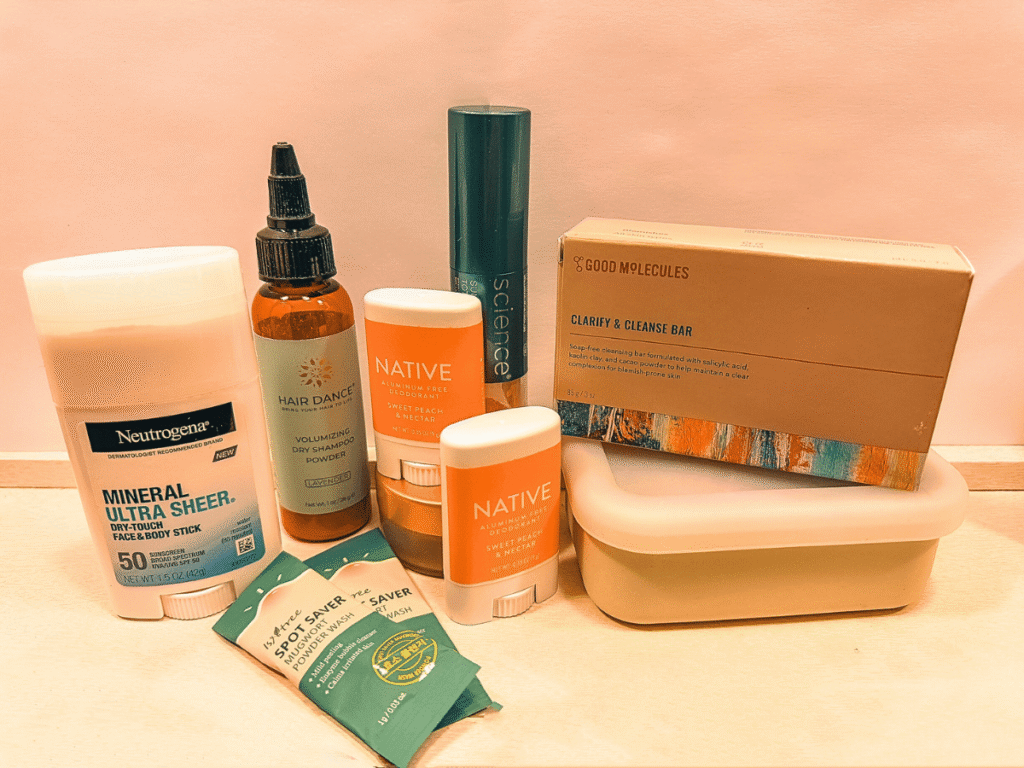
Hotel toiletries look convenient. But they are also a colossal source of waste, those small plastic bottles.
The hotel industry tosses out billions of little plastic bottles annually. And even when you squeeze out every last drop, the bottle goes in the trash.
The fix is simple: go solid.
Solid Toiletries That Actually Work
| Product | Solid Alternative | Equivalent To |
|---|---|---|
| Liquid shampoo | Shampoo bar | 2–3 bottles |
| Conditioner | Conditioner bar | 2 bottles |
| Body wash | Soap bar | 1–2 bottles |
| Toothpaste | Toothpaste tabs | 1 tube |
| Deodorant | Solid deodorant stick | One plastic roll-on |
| Sunscreen | Sunscreen stick | 1 bottle |
Solid toiletries are also TSA-friendly. No liquids bag required. No fretting over the 3.4 oz regulation.
Brands like Ethique, HiBar and Lush sell solid versions of just about all the toiletries you would use. They also come in compostable or recyclable packaging, so they’re perfect to add to your eco-friendly travel packing kit.
Tip 3: A Tote Bag and Reusable Produce Bags Are Essential Items to Carry Around
Shopping while traveling is unavoidable. You’ll want to grab groceries or souvenirs, snacks at a market, or even a beach bag for your gear.
Without a reusable bag, you’re back to plastic store bags — and most of us use those once then chuck them.
A collapsible, foldable tote almost doesn’t take up space in your luggage. It weighs almost nothing. And it substitutes dozens of plastic bags over the course of a single trip.
Upgrade Your Bag Game
Pack a few little reusable mesh or cotton produce bags, also. These are great for:
- Purchasing fruits and vegetables at local markets
- Storing snacks during travel days
- Being able to separate dirty laundry from your clean clothes
- Traveling with souvenirs without the need for additional packaging
This is also when some travelers pack a reusable silicone zip bag or two. These take over what would otherwise be a need for plastic zip bags for snacks, wet swimsuit containment or any liquid items that might leak.
These small additions take up next to no weight in your bag but eliminate an astounding amount of plastic waste over a week on the road.
Tip 4: Do More With Less in Clothing Selection

The enemy of sustainable travel is overpacking.
The more you put in, the heavier your bag. Flights with fuller bags burn more fuel. The more fuel that is burned, the bigger the carbon footprint. It all connects.
The answer is to pack a capsule wardrobe — a few adaptable separates that mix and match without hassle.
Building a Zero Waste Travel Wardrobe
Choose natural or recycled fabrics. Organic cotton, bamboo, Tencel and recycled polyester are all better alternatives to fast fashion synthetics. They also last longer and are better for the environment.
Pick neutral colors. Neutral colors (white, gray, navy and khaki) go further together. With five pieces, you can make 15+ outfits.
Go for multi-use items. A sarong can be a beach cover-up, or a picnic blanket, or even a scarf or towel. Convertible pants zip into shorts. A fleece liner works within a jacket or as an independent layer.
Follow the 1-2-3 rule:
- 1 layer to wear outdoors (coat or cardigan)
- 2 bottoms (pants + shorts, or 2 pairs of pants)
- 3 tops (rotate daily)
This works for journeys that don’t exceed 10 days. For longer trips, tuck one or two more pieces in per week.
Pack a Quick-Dry Travel Towel
Hotel towels exist, sure, but on beaches, hostels or day trips, a compact quick-dry towel earns its keep. Microfiber towels dry 3x faster than cotton, take up minimal space, and eliminate the need for disposable paper towels or bulky single-use beach towels from a resort shop.
Tip 5: Say No to Plastic Packaging — Say Hello to Reusable Containers and Wraps
Reflect on all the single-use packaging that comes with eating food on the go. Plastic forks, paper napkins, straw wrappers, sandwich bags, condiment packets.
You can cut most of this out with a tiny zero waste travel kit.
Your Zero Waste Snack and Mealtime Kit
| Item | What It Replaces |
|---|---|
| Bamboo or metal cutlery set | Plastic forks, spoons, knives |
| Reusable metal or bamboo straw | Plastic straws |
| Small food container (stainless steel) | Takeout containers, plastic bags |
| Beeswax wrap | Plastic wrap, sandwich bags |
| Reusable cloth napkin | Paper napkins |
| Collapsible silicone cup | Plastic cups, paper coffee cups |
The complete set weighs less than half a pound and fits in a small pouch. But it takes the place of hundreds of items of disposable waste over a two-week journey.
Some travelers are surprised by how much trash they produce just from eating. Packing this kit is one of the best eco-friendly travel packing tips you can start doing today.
Tip 6: Reconsider Your Sunscreen and Bug Spray
This one surprises people. Even if you’re following every other eco-friendly rule, your sunscreen and bug spray could threaten ecosystems.
Traditional chemical sunscreens use oxybenzone and octinoxate. These chemicals bleach coral and disturb marine ecosystems. They have already been banned in Hawaii, as well as a number of other destinations.
Bug sprays with DEET work, but DEET is toxic to aquatic invertebrates, birds and other wildlife.
Better Choices for Reef-Safe and Eco-Friendly Protection
For sunscreen:
- Choose a mineral sunscreen with zinc oxide and/or titanium dioxide
- Choose brands with reef-safe certifications
- Opt for stick or solid formulas to avoid plastic bottles
- Good brands: Raw Elements, Badger and Stream2Sea
For bug repellent:
- Opt for plant-based insect repellents containing lemon eucalyptus oil or picaridin
- Seek out options in glass bottles or refillable packaging
- Don’t use aerosol sprays (the cans are frequently not recyclable)
What’s on your skin, when you swim in oceans, rivers or lakes, goes into that ecosystem. Opting for reef-safe and eco-certified products is one small yet direct step in preserving the places you love.
Tip 7: Pack a Zero Waste First Aid and Medicine Kit
A well-equipped travel first aid kit is smart no matter where your adventures take you. But most commercial first aid kits are all wrapped up in plastic.
With a few thoughtful swaps, you can make a cleaner version yourself.
What to Pack for a Greener First Aid Kit
Swap plastic bandage wrappers for bamboo or cloth bandages. Brands like Patch make compostable bandages made from bamboo fiber. They perform the same as traditional ones and are designed to decompose after use.
Use a small glass or metal container for pain relievers. Purchase a small amount of ibuprofen or aspirin, strip off the superfluous packaging and keep pills in a reusable tin.
Pack reusable medical items:
- Thermometer that can be reused (not the disposable ones)
- Triangular bandage of cloth (may be washed and reused)
- Small glass dropper bottle for antiseptic
Explore solid or tablet medicine options. Some brands now offer electrolyte tablets, vitamin C tablets and other supplements in reduced or plastic-free packaging.
Your first aid kit doesn’t have to be fancy. But a couple of green swaps cost nearly nothing, save waste and don’t sacrifice your health or safety.
Tip 8: Make It Electronic — Go Digital Before You Leave Your House
Paper waste en route is greater than most travelers suspect.
Consider everything you print and receive on paper: boarding passes, hotel confirmation letters, tour tickets, maps and restaurant bills.
One of the simplest and most overlooked eco-friendly travel packing tips is going digital.
How to Go Paperless on Your Next Trip
Your phone is already your travel hub. Save everything in one place — your boarding passes inside Apple Wallet or Google Pay, hotel bookings within your email or travel app, and tour tickets as PDFs.
Download offline maps. Google Maps can be used to download maps for offline use. Apps like Maps.me work entirely offline. No need to purchase or print a paper map.
Use digital translation tools. Apps such as Google Translate make phrasebooks and printed translation cards obsolete.
Choose e-receipts. If you’re shopping or dining out, request digital receipts rather than paper. The majority of businesses offer this now.
Don’t bother with the guidebook — use technology. A guidebook is heavy, and it goes out of date fast. Digital alternatives such as Lonely Planet’s app or travel blogs provide up-to-date information without paper.
Being paperless also means your bag can be a little lighter and your travel more organized. All of it is searchable, backed up and available — even when offline.
For more ideas on making your travels greener from start to finish, Eco Friendly Travel is a great resource packed with practical sustainable travel guides.
A Quick Look at the Impact: What These Changes Actually Mean
Here is a rough calculation of how much waste you can prevent on one two-week trip by using all 8 tips:
| Product Replaced | Single-Use Waste Prevented |
|---|---|
| Reusable water bottle | ~28 plastic bottles |
| Solid toiletries | 6–10 plastic bottles |
| Tote and produce bags | 15–20 plastic bags |
| Cutlery and straw kit | 20+ pieces of plastic |
| Reef-safe stick sunscreen | 1 plastic bottle |
| Digital documents | 10–15 sheets of paper |
| Compostable bandages | ~5–10 wrappers |
Total: Approximately 80–100+ pieces of single-use trash eliminated in just two weeks.
Now, consider if every traveler did that. The numbers become transformational.
How These Tips Fit Into the Big Picture
Eco-friendly travel packing tips are not only a matter of personal preference. They are a signal to the travel industry.
When tourists start regularly carrying their own reusable water bottles, hotels build refill stations. When tourists decline single-use plastic bags, shops fill the void with reusable ones. When visitors ask for reef-safe goods, stores stock them.
Consumer behavior shapes industry behavior. Your packing list is a vote for the kind of travel economy you hope will exist.
FAQs: Eco-Friendly Travel Packing Tips
Q: How costly is it to transition to travel gear that is better for the environment?
There’s a cost upfront, sure, but most reusable items pay for themselves in due time. A $30 stainless steel water bottle saves hundreds of dollars on bottled water over its useful life. Solid shampoo bars cost less per wash compared to liquid bottles, which in the long run saves you money. Consider it a one-time purchase rather than a continuous expense.
Q: Am I allowed to take solid toiletries on an airplane?
Yes. Liquid restrictions don’t apply to solid toiletries. Shampoo bars, conditioner bars, solid deodorant and toothpaste tabs can all be packed in your carry-on bag with no worries. It’s actually one of the largest practical advantages to going solid.
Q: What if I visit a country where tap water is not safe?
For this situation, a reusable water bottle with a filtration system (LifeStraw, Sawyer) works just right. You may also use water purification tablets, which are packaged in small, plastic-free containers and operate in virtually any water source.
Q: What is the top eco-friendly travel packing tip for someone who’s new to it?
Begin with the reusable water bottle. It is the easiest, most significant change you can make. When that’s a habit, throw one or two more of these tips on the pile. You don’t have to completely overhaul your entire packing system in one fell swoop.
Q: Are reef-safe sunscreens as effective as regular ones?
Yes. Mineral sunscreens containing zinc oxide offer broad-spectrum UVA and UVB protection. They may feel a bit heavier on the skin than chemical ones, although many modern formulations have addressed that. Choose a formulation containing “non-nano” zinc oxide to make the most effective — and environmentally safe — choice.
Q: What about managing waste at places without good recycling infrastructure?
This is a real challenge. It’s better to create as little waste in the first place — and that’s exactly what eco-friendly packing does. When you use reusables, there is barely any waste to manage, no matter what the local infrastructure is.
Q: Is there really such a thing as a capsule travel wardrobe that will work anywhere?
With a bit of planning, yes. For cooler conditions, swap shorts for an extra layer and include thermal base layers in your luggage. For more tropical destinations, embrace lighter fabrics and leave the heavy ones at home. The heart of the philosophy — mixing neutrals with every other neutral — is relevant in all climates.
Pack Light, Travel Right
Travelling sustainably doesn’t have to be a compromise. It requires intention.
These 8 eco-friendly travel packing tips show that little daily decisions really do make a big difference. One reusable bottle here, a solid shampoo bar there and a digital boarding pass in place of a printed one — none of them seem like that big of a sacrifice in isolation. Combined, they change the whole way you live out your travel footprint.
The best part? Most of these changes will make your trip easier, not harder. You pack less, spend less and fuss less about liquids restrictions, the cost of plastic bags or whether there’s a drugstore in the country you’re visiting.
Zero waste travel is not a fad. It’s a new way to move through the world. And it begins with what you put in your bag.
Pack smart. Travel light. Leave only footprints.