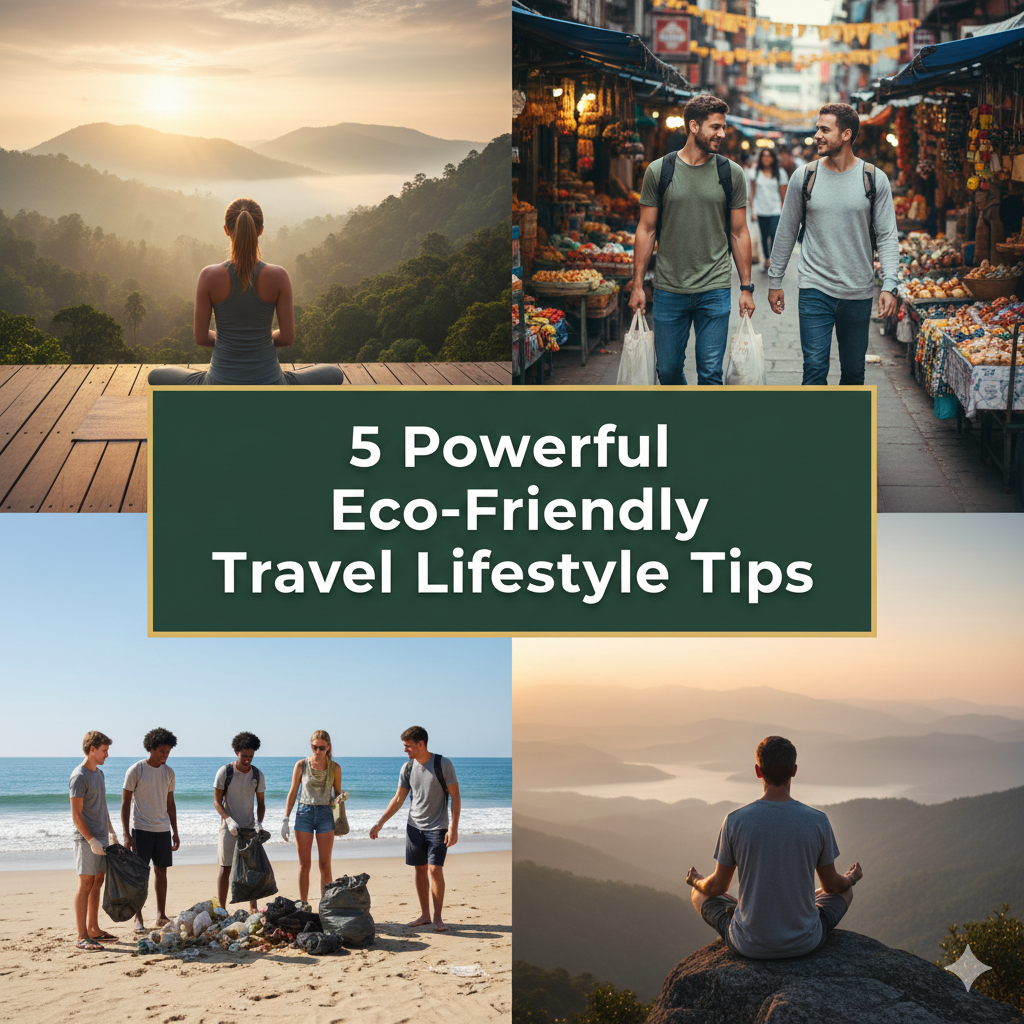


Have you ever returned from a trip and felt guilty about everything that went in the trash, all the plastic you used or all the flights you took? You are not alone. Millions of travelers are beginning to ask the same question: How can I see the world without destroying it?
The good news is, living an eco-friendly travel lifestyle doesn’t have to be boring or devoid of fun. It just takes making smarter choices — little changes that really add up over time.
Here we present 7 simple, realistic and helpful tips on how to become more ‘green’ when you travel. So whether you are a weekend road-tripper or long-term globetrotter, here are some ideas to help you explore responsibly while feeling good about it.
Why You Should Travel in an Eco-Friendly Way — Its Importance is Growing Stronger Than Ever
Tourism is one of the largest global industries. But it also has a massive footprint. Tourism makes up an estimated 8% of the world’s greenhouse gases, researchers say. That includes flights, hotels, food and transportation.
And then there is plastic waste. Trash left by visitors is piled up in many popular tourist destinations — on the beaches, in the mountains, in forests.
The planet is speaking up. Coral reefs are bleaching. Forests are disappearing. Wildlife is losing its habitat. And travelers have a real part in this story.
But here is the other side of that: travelers can also change things. The impact of millions of people making choices that are a little bit greener can be huge. That’s where eco-friendly travel comes in.
What Does ‘Eco-Friendly Travel’ Mean?
Eco-friendly travel — it’s also referred to as responsible tourism, sustainable travel and green travel — entails a more responsible way of traveling that supports the healthy sustainment of our planet. The idea is to be considerate, not perfect.
It covers things like:
- How you move from here to there
- Where you sleep
- What you eat
- What you buy
- How you handle wildlife and the environment
You don’t need to be an environmental activist to travel green. You just have to care a bit and tweak things. If you want to dive deeper into what this lifestyle really looks like in practice, Eco Friendly Travel is a great resource to explore tips, guides, and inspiration for greener adventures around the world.
Tip 1: Slow Down, Go Green With Transportation
Flights Are the Biggest Culprit

For most travelers, air travel is the No. 1 contributor to their carbon footprint. Flying between New York and London, for instance, creates something on the order of 1.5 to 2 tonnes of CO₂ per passenger for a round-trip journey. That’s about the same as an entire year of carbon emissions for someone living in India.
So what can you do?
Where Possible, Travel by Train or Bus
Trains are among the least-polluting modes of transport. A train journey produces about 90% less carbon than the equivalent plane trip. Shorter distances can be covered by bus, too.
Japan, France, Germany and the UK have superb rail systems. In the United States, Amtrak routes directly connect many major cities at a fraction of the carbon cost associated with flying.
If You Must Fly, Fly Smart
Sometimes flying is unavoidable. In that case:
- Book direct flights. It is takeoffs and landings that use the most fuel. Fewer stops mean fewer emissions.
- Fly economy. Business and first-class seats have a larger footprint, meaning more emissions per passenger.
- Travel carry-on only. Lighter planes burn less fuel.
- Offset your carbon. Offset your flight’s emissions with trusted programs like Gold Standard or Cool Effect.
Rent Electric or Hybrid Vehicles
If you’ll be needing a car where you are going, consider renting an electric vehicle (EV) or perhaps a hybrid. They are now available through a number of rental companies. Combine that with apps like PlugShare to locate charging stations along your route.
Tip 2: Find Places That Give a Damn About the Planet
Not All Hotels Are the Same
Where you sleep carries a larger environmental impact than most people acknowledge. Hotels consume vast quantities of water, energy and single-use plastic every day.
Choosing the right accommodation can go a long way.
Look for Eco-Certified Properties
More hotels and lodges are green certified today. These are not simply marketing labels — they represent actual inspections and standards.
| Certification | Region | What It Covers |
|---|---|---|
| Green Key | Global | Energy, water, waste and education |
| EarthCheck | Global | Carbon, waste and water management |
| LEED | Global | Building efficiency and sustainability |
| Rainforest Alliance | Latin America | Biodiversity and community support |
| EU Ecolabel | Europe | Energy, noise and waste reduction |
When you are looking for hotel rooms on Booking.com or Expedia, switch on the eco-filter function. Or try dedicated websites and apps, such as BookDifferent or Ecobnb — which cater only to those seeking environmentally friendly accommodations.
Go Local: Guesthouses, Homestays and Hostels
Locally owned guesthouses or homestays keep money in the community and are often much less environmentally impactful than large chain hotels.
You also enjoy a more genuine travel experience — local food, local stories and a real connection to the place you visit.
Tip 3: Lighten Your Load and Pack Right
Why the Size of Your Bag Matters
This may surprise you, but overpacking is a climate issue. Fuel consumption on planes rises with the pounds. And lugging heavy bags around makes you more likely to spring for a taxi versus walking or biking.
Pack only what you need. Try travelling with a carry-on only, even for week-long trips.
Swap Single-Use for Reusable
This is probably one of the easiest eco-friendly travel lifestyle swaps. Here’s what to buy before your next voyage:
- A reusable water bottle (with a built-in filter like LifeStraw for countries with unsafe tap water)
- Reusable shopping bags (there are super-compact ones that fold up into a tiny pouch)
- A bamboo or metal cutlery set
- A reusable coffee cup or travel mug
- Solid toiletries — shampoo bars, conditioner bars, and solid sunscreen take up less space and eliminate plastic bottles
Choose Eco-Friendly Toiletries

Many popular sunscreens include chemicals such as oxybenzone and octinoxate, which have been found to harm coral reefs. Switch to reef-safe mineral sunscreen, especially if you’re heading to the tropics.
Look for toiletries that are:
- Biodegradable
- Cruelty-free
- Free from microplastics
- Packaged in recycled or minimal packaging
Tip 4: Eat Local, Eat Seasonal, Eat Less Meat
Food Has a Carbon Footprint Too
What you eat when traveling is as important as how you travel. The world’s food system is responsible for about one-third of greenhouse gas emissions. Meat production — especially beef — is a major cause.
When you travel, you have a golden opportunity to nudge your eating habits in a green direction without missing out.
Why Eating Local is a Win-Win
Choosing local food means:
- Lower transport distance (fewer food miles = fewer emissions)
- Support for local farmers and vendors
- Fresher, tastier food
- An authentic taste of local life
Bypass the international fast-food chains. Instead, hit the local markets and sample from street stalls and family-run restaurants. Ask what is in season. Seek out dishes you’ve never heard of.
Go Easy on Meat (Even Just a Little)
You don’t need to fully veganize your trip. But eating less meat — especially beef and lamb — can go a long way toward shrinking your travel footprint.
Many destinations have fabulous plant-based or fish-based cuisines. Think Thai vegetable curries, Indian dal, Middle Eastern mezze, or Mediterranean seafood.
Even substituting one meal a day for a plant-based option can yield a measurable difference.
Tip 5: Respect Wildlife — Safely From Afar
The Dark Side of Wildlife Tourism
Wildlife tourism is a multi-billion dollar industry. But much of it is not harmless. Some of the most widely used tourist activities — elephant rides, tiger selfies, swimming with captive dolphins — involve serious animal cruelty behind the scenes.
Animals used in entertainment are commonly:
- Taken from the wild
- Kept in poor conditions
- Trained through cruel methods
- Deprived of natural behavior
How to Spot Ethical Wildlife Experiences
Ask yourself these questions before booking any wildlife activity:
- Are visitors allowed to touch or ride the animals? (If yes, avoid it.)
- Are the animals doing unnatural tricks? (If yes, avoid it.)
- Is the facility certified by a reputable conservation organization?
- Do animals have space to roam freely and behave naturally?
- Does the operation support conservation or anti-poaching efforts?
Look for experiences like:
- Sanctuary visits where rescued animals live in natural surroundings
- Safaris in actual national parks with well-run responsible operators
- Whale watching with certified operators who follow marine guidelines
- Birdwatching with local guides in protected habitats
Organizations like World Animal Protection and the Global Welfare Guidance for Animals in Tourism publish guidelines as well as lists of ethical operators to help you make an informed decision.
Never Buy Wildlife Products
Don’t purchase souvenirs crafted from animal parts — shells, feathers, ivory, coral or exotic skins. These items drive poaching and the illegal wildlife trade, even when they appear harmless in a souvenir shop.
Tip 6: Leave No Trace — Wherever You Go
The Golden Rule of Eco-Friendly Travel
The Leave No Trace philosophy is simple: leave each place as you found it — or better.
That applies whether you’re hiking in a national park, swimming at a beach or strolling through a city neighborhood.
Seven Core Leave No Trace Principles
| Principle | What It Means in Practice |
|---|---|
| Plan ahead and prepare | Know the rules and special concerns for the area you’ll visit |
| Travel on durable surfaces | Stick to marked trails; avoid trampling vegetation |
| Dispose of waste properly | Pack out your trash; use designated bins |
| Leave what you find | Don’t pick flowers, take rocks, or remove anything from nature |
| Minimize campfire impact | Use a camp stove; avoid fires in dry or fragile areas |
| Respect wildlife | Observe from a distance; never feed wild animals |
| Be considerate of others | Keep noise down; respect local customs and other visitors |
Do a Little Extra: Pick Up Trash
One of the most impactful things a traveler can do is pick up litter that isn’t theirs. Even collecting a handful of plastic on a beach or trail makes a difference — and sets an example for others.
Some communities even organize plogging events (jogging while picking up trash) and dive against debris underwater cleanups. These are great ways to give back in a way that’s active and enjoyable.
Tip 7: Support Local Communities and Spend Wisely
Tourism Money Should Stay Local
One of the less discussed sides of eco-friendly travel is economic sustainability. Where you spend your money matters enormously out on the road.
Profits from large international hotel chains and tour operators often go back to head offices in wealthy countries. That money does not do much for the local economy.
On the other hand, when you:
- Stay in locally owned guesthouses
- Eat at family-run restaurants
- Hire local guides
- Buy crafts directly from artisans
- Use local transport options
…your money stays in the community and directly helps people make a living.
Choose Tour Operators Committed to Communities
Look for tour companies that:
- Employ local guides and staff
- Partner with local businesses
- Invest in community development projects
- Are transparent about how profits are distributed
Platforms like Responsible Travel and G Adventures are known for connecting travelers with community-first experiences.
Respect Local Culture
Eco-friendly travel is not only about the environment — it is also about people. Respecting local customs, traditions and ways of life is a core part of responsible tourism.
This means:
- Dressing appropriately for religious or cultural sites
- Learning a few words of the local language
- Asking permission before photographing people
- Not haggling aggressively at markets where vendors rely on fair prices
Quick Comparison: Conventional Travel vs. Eco-Friendly Travel
| Area | Conventional Travel | Eco-Friendly Travel |
|---|---|---|
| Transport | Frequent flights, private cars | Trains, buses, EVs, direct flights |
| Accommodation | Big chain hotels | Locally owned or eco-certified stays |
| Food | Fast food, heavy on meat | Local, plant-forward meals |
| Packing | Overpacking, single-use items | Light packing, reusable gear |
| Wildlife | Elephant rides, captive dolphin shows | Ethical sanctuaries, responsible safaris |
| Waste | Leaving trash behind | Leave No Trace, picking up litter |
| Spending | Big corporations | Local guides, artisans and businesses |
How to Embrace Your Eco-Friendly Travel Lifestyle One Step at a Time
You do not have to get all seven things perfect on your very first trip. Sustainable travel is a process, not a destination.
Start with one change. Perhaps you switch to a reusable water bottle. Then the next time you travel, you book a locally owned guesthouse. Then you experiment by taking the train rather than flying.
Each step builds on the last. Over months and years, these habits become second nature. And the more travelers who nudge themselves into these new patterns, the greater our collective impact on our planet.
There is a growing global movement of conscious travelers who are showing that having epic adventures and protecting the world are not mutually exclusive. You can be part of that movement starting today.
FAQs About Eco-Friendly Travel
Q1: Is green travel costlier? Not always. Staying in locally owned guesthouses is generally a fraction of the cost of larger hotels. Trains can be cheaper than airplanes. Local street food is generally very affordable. Yes, some eco-friendly options will cost a little more upfront — reusable gear comes to mind — but they save money in the long run.
Q2: Can I fly and still be an eco-friendly traveler? Yes. Eco-friendly travel is about reducing what you can, not being perfect. If you must fly, choose more wisely: direct routes, economy class and carbon offsetting. Every improvement counts.
Q3: What is carbon offsetting, and does it do any good? Carbon offsetting means paying to fund projects that reduce or remove greenhouse gases — like planting trees or funding renewable energy. When done through reputable, verified programs (not just any random website), it can be a useful tool. However, it should be a last resort after first reducing emissions wherever possible.
Q4: How can I find genuinely eco-certified hotels? Seek out certifications from established organizations such as Green Key, EarthCheck or LEED. Use platforms that screen properties before listing them, such as Ecobnb or BookDifferent. Always ensure that the certification is current and issued by a legitimate certifying agency.
Q5: Can eco-friendly travel work with kids? Absolutely. Kids often love eco-friendly experiences — wildlife sanctuaries, nature hikes, local food markets. Traveling green can also be a valuable education for children about the environment and other cultures.
Q6: What are some of the best places for eco-conscious travel? Countries such as Costa Rica, Slovenia, Bhutan, New Zealand and the Netherlands are consistently ranked among the most sustainable travel destinations. They have strong environmental policies, well-preserved nature and developed eco-tourism infrastructure.
Q7: How does eating local food help the environment? Local food travels a much shorter distance than food shipped from halfway around the world. It also benefits local farmers who tend to use more traditional, lower-impact farming methods. Less transportation equals fewer emissions and a smaller overall carbon footprint.
Conclusion: The World is Worth Saving
The planet we travel to visit — its beaches, mountains, jungles and cities — is the same planet that sustains billions of other living things. Every decision we make as travelers either adds to the problem or becomes part of the solution.
An eco-friendly travel lifestyle is not about sacrifice. It is about conscience, imagination and care. It means traveling with your eyes wide open — not just to the beauty around you, but to the responsibility that comes with seeing it.
The seven tips in this article are not complicated. You don’t need a big budget or a lot of advance planning. They simply require a small shift in mindset.
So the next time you pack your bag, book a hotel or order a meal on the road — stop for just a moment and ask: Is there a greener option here? Most of the time, the answer is yes. And that choice, multiplied across millions of travelers, is exactly how we protect the world for every generation that comes after us.