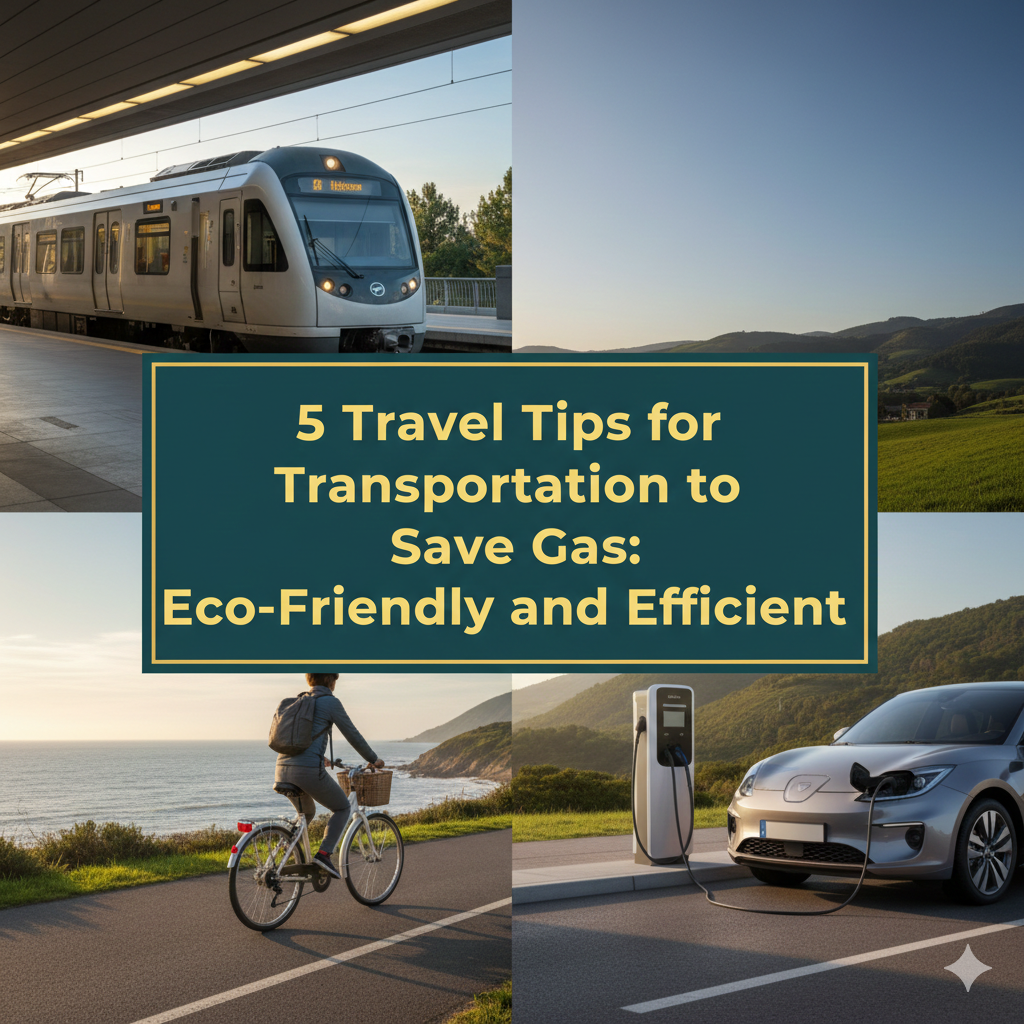

If you fly or rent a car, you leave a footprint of exactly how many kilograms of carbon dioxide (CO₂) lurk in the atmosphere thanks to your contribution. That mark is known as a carbon footprint. And for most travelers, transportation is the largest slice of that footprint.
The good news? You don’t have to end your travels in order to make a difference. You simply have to travel smarter.
With these 7 eco-friendly travel transportation tips, there’s no need to sacrifice your sustainable lifestyle when hitting the road during a weekend getaway or two-week international adventure. Let’s get into it.
Why Where You Travel Now Really Matters
But before we get to the tips, it’s important to understand why this is all relevant.
Transportation produces about 16% of the world’s greenhouse gases. All aviation combined accounts for around 2.5% of total CO₂ emissions globally — but when you consider other warming effects from flying at high altitude, the true climate impact is almost three times larger.
Cars aren’t much better. An average passenger car emits about 4.6 metric tons of CO₂ per year.
But here’s the other side of the equation: when millions of travelers make small greener gestures, the cumulative impact is enormous. Taking a train instead of flying for one leg of your trip — like if you fly into Paris and immediately catch a TGV to a French ski resort — can reduce your emissions by 90% or more compared with the short-haul flight itself.
Small choices, massive results.
Tip 1: Opt for Trains Instead of Planes Whenever You Can
Why the Train Wins Every Time
Riding the rails has some very significant environmental advantages compared with other modes of transport. Trains emit much less CO₂ per passenger than planes or cars, especially on short- and medium-distances.
Take Europe as an example. A flight from London to Paris uses around 100 kg of CO₂ per passenger. The Eurostar on the same route? About 6 kg. That’s a 94% decrease — to the same destination.
Average Amtrak trips are responsible for emitting 46% less carbon per mile than car trips and 34% less than domestic flights.
When Train Travel Is Ideal
Train travel is really at its best for distances of 500 miles or less. For anything longer, it depends on what options you have and how much time you can spare. Countries like Japan, France, and Spain have high-speed rail, which can make even longer distances fast and comfortable.
Here’s a quick comparison:
| Mode | CO₂ per Passenger (per km) |
|---|---|
| Short-haul flight | 255g |
| Long-haul flight | 195g |
| Car (solo driver) | 171g |
| Car (average of 4 occupants) | 43g |
| Bus/Coach | 27g |
| Train (EU average) | 14g |
| Eurostar (electric) | ~6g |
The numbers speak for themselves. If there is a train option, take the train.
Pro Tips for More Sustainable Rail Travel
Book in advance for the best fares. Plan your trip during off-peak hours when trains are less crowded. Use rail passes if you are doing a multi-city trip — they’re usually cost-effective and often provide the incentive to forgo flying altogether.
Tip 2: You Can Conserve Fuel With Light Packing
The Weight-Fuel Connection
This one is simple, but often overlooked. Each additional kilogram you carry on a plane, train, or bus needs that much more power to move. On a plane, bringing 15 extra kg of luggage can add around 20 kg of CO₂ to your trip.
That may not sound like much, but multiply that by 150 passengers on a single flight — all over-packing — and you get more than two metric tons in excess emissions from luggage alone.
How to Pack Smarter
Go carry-on only whenever possible. Choose lightweight, multi-use clothing. Roll instead of folding your clothes to save more room. Use packing cubes for efficient use of space.
Leave behind anything you can buy at your destination if necessary — or better yet, borrow from your hotel or hostel.
The Bonus Benefits of Light Packing

In addition to being environmentally friendly, packing light will save you money on checked baggage fees. It also makes your journey physically easier — no waiting at baggage claim, no strained shoulders, and no trudging with heavy suitcases up cobblestone streets.
Tip 3: Use Public Transportation Like a Local
Buses, Metros, and Trams Are Your Green Best Friends
Do not hail a taxi or rent a car right away when you arrive at your destination. Public transportation systems — buses, trams, subways, and light rail — will almost invariably be the greener option.
A city bus can carry dozens of passengers at once, and although it has its own emissions, its per-person emissions are dramatically lower than the average solo trip in a gas-powered car. In many cities, buses and trains run on electricity or compressed natural gas, which makes them even cleaner.
Cities With World-Class Green Transit
Some places have built amazing public transportation systems that take all the inconvenience out of going car-free:
- Tokyo – One of the earliest and busiest subway systems in the world
- Amsterdam – Not a corner of the city that trams, buses, and ferries don’t reach
- Singapore – Affordable, air-conditioned, and very reliable MRT system
- Bogotá – The TransMilenio bus system represents a sustainable mass transit model for any city
Even smaller cities generally have a surprisingly good transit system if you take the time to look it up in advance of your trip.
For more inspiration on sustainable travel choices, visit Eco Friendly Travel — a great resource for green-minded travelers looking to reduce their impact on the road.
How to Plan Like a Pro
Download the local transit app before you arrive. Google Maps works well for transit navigation in most cities. Consider a multi-day transit pass — its cost-saving advantage makes it easier to leave the rental car behind.
Tip 4: Rent an Electric or Hybrid Vehicle When You Need a Car
Sometimes a Car Is Unavoidable
Let’s face it — there are some places where public transportation just isn’t going to cut it. In rural areas, national parks, and off-the-beaten-path locations, you’ll often need a car.
In such cases, opting for an electric vehicle (EV) or hybrid rental is one of the most sustainable eco-friendly travel transportation tips you can adopt.
How Much Greener Are EVs?
An electric car has no direct emissions. When charged with power from a renewable energy grid, the lifecycle emissions drop dramatically compared to gas-powered vehicles.
And even on a grid with some fossil fuel electricity, EVs still emit far less overall than gas cars. An average electric vehicle generates around 53g of CO₂ per mile across its lifetime — versus about 170g for a gas-powered car.
| Vehicle Type | CO₂ Per Mile (lifetime average) |
|---|---|
| Gas-powered car | 170g |
| Hybrid vehicle | 110g |
| Plug-in hybrid | 80g |
| Electric vehicle (mixed grid) | 53g |
| Electric vehicle (renewable grid) | ~20g |
Finding EV Rentals
Big rental companies such as Enterprise, Hertz, and Avis now offer electric and hybrid cars in most major cities. Platforms like Turo also allow you to rent directly from owners, many of whom list EVs specifically.
Book early — EV rentals are in high demand and book up quickly.
Tip 5: Embrace Cycling and Walking for Short Distances
The Greenest Option of All
Zero emissions. Zero fuel cost. Zero traffic. Cycling and walking are the most eco-friendly travel transportation options on this entire list — and they come with serious health bonuses too.
Many travelers are surprised by how walkable their destination turns out to be. Check the distance on a map before you book a transfer or jump into a taxi. If it’s less than 2 miles, consider walking. Under 5 miles? A bike might be perfect.
Bike-Share Programs Are Everywhere Now

Cities across the world have heavily invested in bike-share programs. There’s no need to bring your own bicycle — just rent one when you arrive.
Some of the best bike-share cities include:
- Amsterdam – Famous for cycling culture; bicycles outnumber people
- Copenhagen – More than 390 km of dedicated cycling lanes
- Montreal – BIXI bike-share system is massive and affordable
- Barcelona – Bicing program with hundreds of stations
- New York City – Citi Bike serves Manhattan and Brooklyn with thousands of bikes
Most programs charge just a few dollars per day and offer weekly passes for frequent riders.
E-Bikes for Hilly Terrain
Don’t let hills stop you. E-bikes give you a motor assist when you need it, making cycling accessible even if you’re not super fit. E-bike rentals are available in many tourist destinations and can cover longer distances without breaking a sweat.
Tip 6: Offset What You Can’t Avoid
Not Every Emission Can Be Eliminated
The fact is, sometimes you need to fly. Long-haul international travel, business trips, or visiting family across continents can’t always be swapped for a train or a bike.
This is where carbon offsetting comes in.
Carbon offsetting involves paying for projects that shrink or remove CO₂ from the atmosphere to make up for the emissions you’re responsible for creating. This can involve planting trees, financing renewable energy, or preserving existing forests.
How Carbon Offsetting Works
When you fly, use an online carbon calculator — many airline booking sites now have these built in. Then you donate to a carbon offset project that removes an equivalent amount of CO₂.
For instance, a round-trip flight from New York to London produces about 1.8 metric tons of CO₂ per passenger. Offsetting all of that might cost $15–$25, depending on which program you use.
Choosing a Legit Offset Program
Carbon offset programs are not all created equal. Seek out programs accredited by well-regarded standards:
| Certification | What It Means |
|---|---|
| Gold Standard | High-integrity projects with verified social and environmental benefits |
| Verified Carbon Standard (VCS) | Widely recognized, science-based verification |
| American Carbon Registry | Focuses on North American projects |
| Cool Effect | Transparent nonprofit connecting travelers to vetted projects |
Stay away from vague programs that don’t spell out exactly where your money is going. According to the Gold Standard Foundation, certified offset projects must demonstrate real, measurable, and permanent climate benefits — so always look for that seal before you give. Stick with certified, transparent organizations.
Is Offsetting Enough?
Carbon offsetting is a mechanism, not a way out. It’s much better to lower your own emissions first, and then offset the rest. Think of it as a supplement — not a replacement for greener travel choices.
Tip 7: Travel Slower and Stay Longer
The Biggest Impact You Can Make
This tip may be the most powerful one on the list — and possibly the most ignored.
The environmental impact of travel is not just about how you get there. It’s also about how often you go. Taking fewer, longer trips instead of many short ones dramatically cuts your total annual emissions.
Look at it this way: if you take one two-week vacation instead of four separate weekend trips by plane, you can reduce your aviation emissions by 60–70%, without reducing the total amount of time you spend traveling.
Slow Travel Is Easy on the Planet — and the Heart
Slow travel isn’t just greener — it’s richer. When you stay in one place longer, you go deeper. You stumble upon hidden restaurants that TripAdvisor doesn’t even know about. You build meaningful connections with locals. You actually rest.
The endless rush of cramming five countries into 10 days is exhausting — and environmentally expensive.
What Slow Travel Looks Like in Practice
Rather than hopping between three cities in Europe, fly to one and spend an entire week there. Instead of flying home and back for a holiday weekend, plan a local road trip or staycation. Instead of booking a new international destination every month, explore your own region more deeply.
Slow travel transforms the way you see the world — and gives the world a much-needed break as well.
Putting It All Together: Your Eco-Friendly Travel Plan
Here’s how all 7 tips come together in a real trip scenario:
Example: A 10-day trip from Chicago to Western Europe
- Getting there: You can’t avoid the transatlantic flight — but book direct (it’s far more fuel-efficient than a connecting flight), pack carry-on only, and offset your emissions through Gold Standard.
- Getting around: Travel between cities using high-speed trains rather than short-haul flights.
- In the city: Use metros, trams, and bike-share programs every day.
- When needed: Rent a hybrid vehicle for a day trip to the rural countryside.
- The mindset: Stay longer. Choose two countries instead of five.
The result? A trip that remains amazing — but with a fraction of the environmental cost.
FAQs About Eco-Friendly Travel Transportation
Q: Is flying always bad for the environment? Not necessarily, but it is one of the most carbon-intensive methods of transportation. Long-haul flights have a larger per-trip footprint than most other forms of transport. If you have to fly, choose direct routes, stick to economy class (business class has a much larger carbon footprint per seat), and offset your emissions.
Q: Do carbon offsets actually work? When done right, yes. Offsets from certified programs fund real projects that remove or reduce CO₂. The key is choosing reputable, verified programs and not using offsetting as an excuse to ignore other eco-friendly choices.
Q: Is an electric vehicle always the greenest rental option? In most cases, yes. Even on a partially fossil-fuel grid, EVs still result in fewer lifetime emissions compared to gas cars. The greener the local electricity grid, the bigger the benefit.
Q: What if my destination doesn’t have good public transit? Plan ahead. Research transit options before you arrive. Look for destinations known for walkability or cycling infrastructure. If you must use a car, opt for a hybrid or EV rental and carpool when possible.
Q: How does packing light actually help the environment? It takes more fuel to move every additional kilogram on a plane, bus, or car. Lighter loads mean less fuel burned and fewer emissions. It’s a small change per person, but across tens of millions of travelers it adds up significantly.
Q: Is slow travel realistic for people with limited vacation time? It depends on your schedule. Even small tweaks can make a much bigger difference — like combining trips or choosing destinations reachable by train instead of plane. You don’t need to take a month off work to travel more slowly. Even adding two extra nights to a trip can help.
Q: What’s the single easiest eco-friendly travel transportation tip to start with? Opt for public transportation when you land. It’s cheaper, lowers emissions immediately, and quite possibly gives you a more authentic local experience. No special planning required — just download the transit app and board.
The Bottom Line
Eco-friendly travel transportation isn’t about giving up adventure. It’s about making smarter choices that keep you exploring for years and decades to come — without burning the planet down in the process.
Start small. Take that train instead of a short-haul flight. Walk or bike through the city. Pack carry-on only. Offset what you can’t avoid. Stay longer in each place.
You don’t need to be perfect with any of these tips. They just ask you to be thoughtful.
The world is worth seeing. Let’s make sure it stays worth seeing.