


Pretty much all travel advice will tell you the same things.
Book a train. Fly less. Ride a bike.
But what really separates the pros — the sustainable travel researchers, green tourism consultants, and dedicated eco-travelers — from the rest of us? What are the things you don’t hear about on most travel blogs?
That’s what this article is about.
These 6 eco-friendly travel transportation tips cut right past the basics. They are the techniques by which serious green travelers truly cut their carbon footprints — without sacrificing comfort, convenience, or adventure.
Whether you’re a rookie eco-traveler, or someone who has been doing their best to make travel more sustainable for years, there’s something in here that will make you reconsider how to move from point A to point B.
Let’s get into it.
Why “Good Enough” Green Travel Is No Longer Good Enough
It’s hard to avoid the climate numbers.
The international transport industry represents about 37% of CO₂ emissions from energy, according to the International Energy Agency. Tourism is responsible for approximately 8% of global greenhouse gas emissions worldwide — with the largest proportion coming from transportation.
The issue is that many of those who want to travel in a greener way don’t take it beyond the most superficial level. They choose the train over the plane a single time, feel good about it, and then carry on. But experts say that real impact requires a more consistent, deeper approach.
Here’s a quick look at how varied transportation options compare:
| Mode of Travel | CO₂ per Passenger per km | vs. Flying |
|---|---|---|
| Domestic flight | 255g | Baseline |
| Petrol car (solo) | 192g | 25% better |
| Long-haul flight | 195g | Similar |
| Electric car | 70g | 73% better |
| Coach/Bus | 27g | 89% better |
| Eurostar train | 6g | 98% better |
| Cycling/Walking | 0g | 100% better |
There’s an incredible spread between the best and worst options. And once you begin stacking smart strategies on top of each other, the effect compounds quickly.
That’s the expert approach. And that’s what the next six tips are all about.
Tip 1: Plan Your Travel to Minimize Radiative Forcing
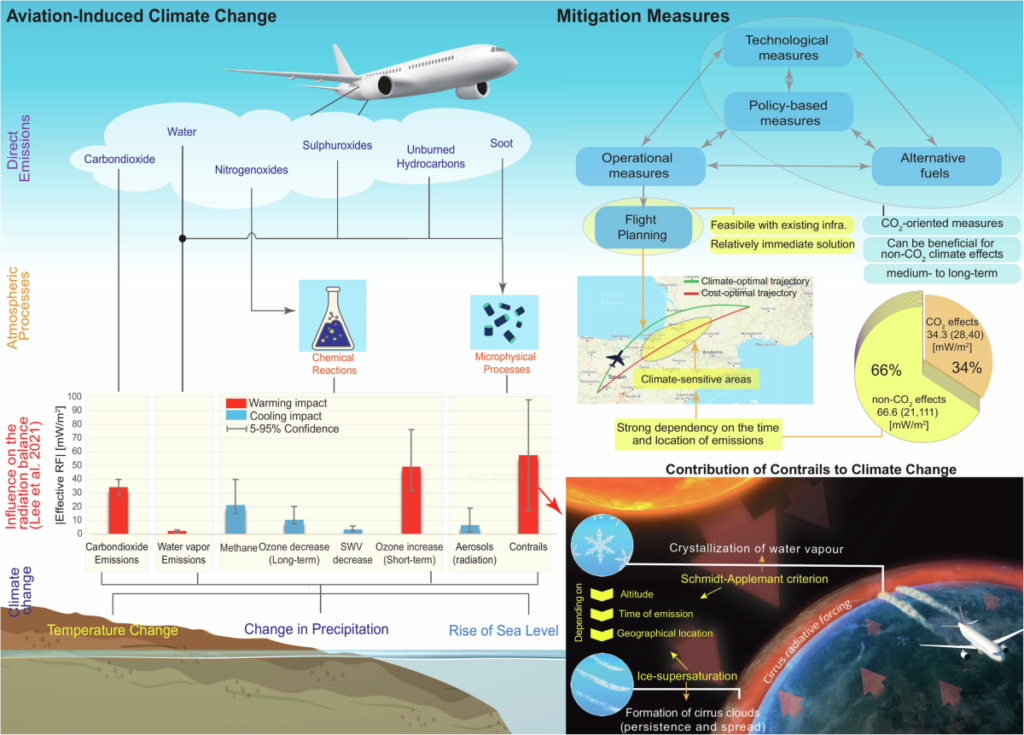
It’s fairly common knowledge that flying generates CO₂. But far fewer people know about a concept called radiative forcing — one that experts argue is among the most underestimated contributors to aviation’s true climate impact.
Radiative Forcing: What It Is and Why You Should Care
When a plane flies at cruising altitude, it does more than just emit CO₂. It also creates water vapor trails (contrails), nitrogen oxides, and other particles that contribute to the greenhouse effect. This is known as radiative forcing, and it means the true climate impact of a flight could be two to four times worse than its CO₂ number alone suggests.
Here’s the expert insight: nighttime flights tend to produce more warming contrails than daytime flights. That’s because contrails produced during the day reflect a bit of sunlight back into space, which dampens their warming effect. Nighttime contrails don’t have that benefit — they simply trap heat.
The Practical Move
If you must fly, book daytime flights when you can. It won’t solve the problem, but studies from institutions like the German Aerospace Center (DLR) suggest it could significantly lessen your flight’s overall climate impact.
This is the sort of detail most travelers never consider — but experts do.
Tip 2: Master the “Train Sandwich” for Long Trips
This is a planning strategy that eco-travel experts love, and it turns out to be surprisingly simple once you get the hang of it.
What Is the Train Sandwich?
The goal is to replace the most carbon-intensive segments of a trip — typically the short-haul connecting flights — with train travel, leaving only the necessary long-haul flight in the middle.
Picture it as a sandwich: trains on either end, one long flight in the middle.
Example: Instead of flying New York → London → Paris → New York, you fly New York → London (unavoidable long-haul), take the Eurostar train from London to Paris (fast, cheap, and low-emission), then fly Paris → New York (unavoidable return).
You’ve eliminated one short-haul flight entirely. Short-haul flights are disproportionately polluting because takeoff and landing burn the most fuel — the efficient cruising phase never gets a chance to balance it out.
Why Experts Swear By It
Short-haul flights emit about 255g of CO₂ per passenger per kilometer. The Eurostar generates about 6g — a 97% reduction for that one leg of the journey.
Multiply that across a multi-city itinerary, and you’re cutting the total emissions of your trip by a large margin — frequently 40 to 60% — without stopping international travel entirely.
| Journey Leg | Flight Emissions | Train Alternative | Savings |
|---|---|---|---|
| London → Paris | 90 kg CO₂ | 6 kg CO₂ | 93% |
| Amsterdam → Brussels | 55 kg CO₂ | 3 kg CO₂ | 95% |
| Barcelona → Madrid | 80 kg CO₂ | 5 kg CO₂ | 94% |
| Frankfurt → Zurich | 65 kg CO₂ | 4 kg CO₂ | 94% |
The Train Sandwich is one of the highest-leverage eco-friendly travel transportation strategies available to international travelers today.
Tip 3: Don’t Just Look at Price — Factor in Transit Access When Deciding Where to Stay
This tip sounds like it’s about hotels, but it’s really a transportation play — and one of the most underrated eco-friendly travel moves out there.
The Hidden Emissions in Getting Around
Most travelers calculate the emissions from their main journey — the flight or train to a destination. But they seldom think about the transportation they’ll be using once they arrive.
Daily taxis, rideshares, and rental car trips within a destination can account for a surprisingly significant chunk of your trip’s total carbon output. Experts estimate that in-destination transport can make up 20 to 30% of a traveler’s total emissions on an average holiday.
How Transit-Centered Accommodation Fixes This
When you book accommodation within walking distance of major attractions, public transit hubs, and local markets, you naturally eliminate a large amount of in-destination transport.
You walk to dinner instead of calling a cab. You take the metro to the museum instead of renting a car. You cycle to the beach instead of booking a transfer.
None of this requires sacrifice. In fact, most travelers report that staying in walkable, transit-connected neighborhoods leads to a richer, more authentic experience.
What to Look For When Booking
- Proximity to the nearest metro, tram, or bus stop (aim for under 5 minutes on foot)
- Walkability score of the neighborhood (Walk Score works well for US cities; local knowledge helps elsewhere)
- Proximity to a bike-share station
- Whether the hotel offers guests public transit maps or bike rentals
This single accommodation choice can cut several hundred kilograms of CO₂ over the course of a week-long trip.
Tip 4: Learn to Intermodal Hop
Intermodal travel is about piecing together various forms of transportation in a coherent, well-integrated way — getting you where you’re going with the smallest possible emissions footprint.
Experts don’t think of trips as if only one mode of transportation is allowed. They think in networks.
How Intermodal Travel Works in the Real World
Say you’re traveling from a small town in Germany to a coastal village in Portugal.
An average traveler might book a connecting flight out of the nearest regional airport and rent a car on arrival.
An expert intermodal traveler might:
- Board a regional train from the small town to Frankfurt
- Fly Frankfurt → Lisbon (a direct long-haul, which is more efficient than two short hops)
- Ride the Lisbon Metro from the airport to the city center
- Catch a regional bus or train to the coastal area
- Hire an e-bike for local exploring
Every leg of this journey uses the lowest-emission option available for that distance and context. The result is a dramatically greener trip — without any single leg feeling like a compromise.
The Tools Experts Use to Plan Intermodal Trips
| Tool | What It Does |
|---|---|
| Rome2Rio | Compares all transport modes for any route worldwide |
| Omio | Books trains, buses, and flights across Europe in one place |
| Komoot | Plans cycling routes and integrates connections with transit |
| EcoPassenger | Compares rail vs. car vs. flight emissions across Europe |
| Google Maps | Displays public transit, walking, and cycling routes side by side |
The key is to stop thinking of your journey as a single booking and start thinking of it as a series of connected, optimized legs.
Tip 5: Get in on “Deadhead” Opportunities in Car Sharing and Rideshare
This is one of the most expert-level eco-friendly travel transportation tips on this list — and one that hardly anyone talks about.
What Is a Deadhead Trip?
In logistics and transport, a “deadhead” trip is when a vehicle travels empty — no passengers, no cargo. It’s pure waste. The vehicle burns fuel and produces emissions for no productive purpose.
This happens constantly in consumer rideshare and car-sharing networks. A driver finishes a trip in a city outside their normal territory. They need to drive back home with no passengers. That’s a deadhead run.
How to Turn This Into an Eco Win
Some platforms specifically match travelers with drivers who are already headed that way — effectively filling a car that would otherwise be traveling empty.
It’s a form of carpooling or long-distance ride-sharing, and it’s massive in Europe.
BlaBlaCar is the best-known example. It connects private drivers making long-distance trips with passengers going the same direction. The driver was going anyway. You’re just filling an empty seat. The marginal emissions of adding one more passenger to an already-moving car are vanishingly small.
Compared to renting your own car, taking a bus, or booking a separate train, this can be both cheaper and sometimes even lower in emissions per trip — because you’re essentially hitching a ride on a journey that was happening regardless.
Where This Works Best
- Long-distance intercity routes in Europe (BlaBlaCar is massive in France, Spain, Italy, and Eastern Europe)
- Regional routes in parts of Latin America and South Asia
- Airport runs — look for ride-share boards at hostels or through apps
This strategy won’t work for every trip. But when it does apply, it’s one of the cleverest eco-friendly moves available.
Tip 6: Start Thinking in “Carbon Budgets,” Not Just Single Trips
This is the mindset shift that separates casual eco-travelers from genuine experts — and it may be the most powerful tip on this list.
What Is a Personal Carbon Budget?
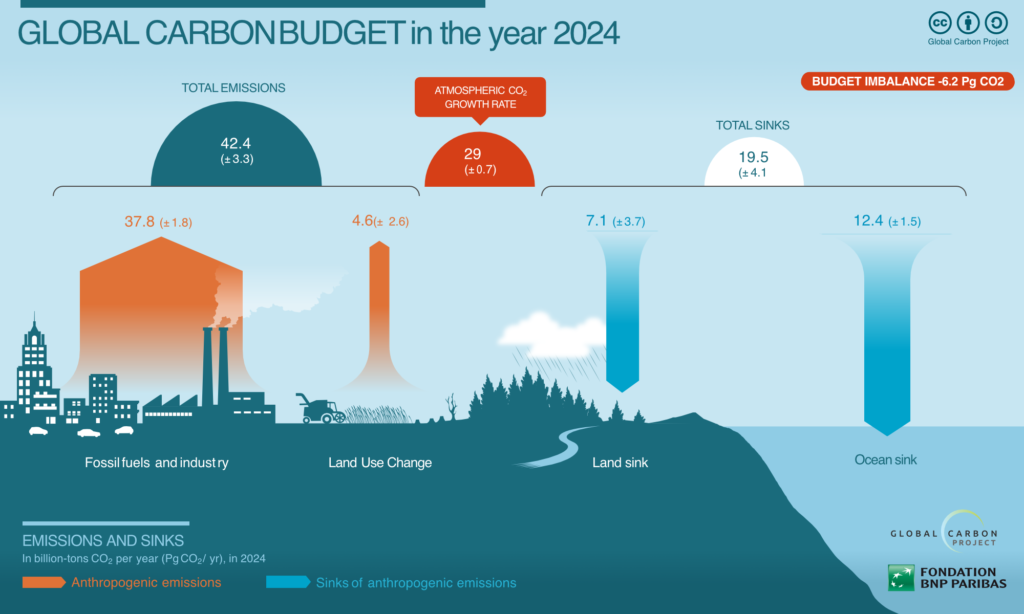
A carbon budget is a limit on the total amount of CO₂ you’re willing to produce over a set period — say, a year of travel.
The average person in a high-income country produces around 10 to 15 tonnes of CO₂ per year in total. Climate scientists suggest we need to bring this down to about 2.5 tonnes per person per year to stay within safe climate limits.
For context, a single round-trip flight from New York to London produces roughly 1.7 tonnes of CO₂ per passenger. That’s nearly 70% of the entire annual sustainable budget — for one trip.
How Experts Put Carbon Budgets to Good Use When Traveling
Rather than judging each trip on its own merits, experts track their travel emissions as an annual total. That changes the decision-making process entirely.
If you know you want to take one long-haul flight this year, then with every other transport decision, you ask how much of your budget it represents. You take trains for domestic travel. You cycle within cities. You skip the short-haul connecting flight and take the bus instead.
You’re not just reacting to each trip — you’re managing a resource.
A No-Nonsense Carbon Budget Framework for Travelers
| Annual Travel Budget | Rough Equivalent |
|---|---|
| 0.5 tonnes CO₂ | Train travel across Europe for two weeks |
| 1.0 tonne CO₂ | One short-haul return flight + ground travel |
| 1.7 tonnes CO₂ | One transatlantic return flight |
| 2.5 tonnes CO₂ | Sustainable annual limit (per climate science) |
Tools like Atmosfair let you calculate and track your flight emissions specifically. Others, like the WWF Carbon Footprint Calculator, cover your full lifestyle — including travel. You can also explore a wide range of eco-friendly travel guides and green transport resources to help plan every leg of your journey more sustainably.
Once you start thinking in carbon budgets, every transport decision becomes sharper. You start asking not just “is this green?” but “is this the best use of my budget?”
That’s the expert mindset. And it changes everything.
How These 6 Tips Work Together
The real power of these strategies isn’t in using just one of them. It’s in layering them.
Here’s what an expert eco-friendly travel transportation approach might look like for a two-week European trip:
Step 1: Set a carbon budget for the trip before booking anything.
Step 2: Use the Train Sandwich method to eliminate short-haul connecting flights.
Step 3: Book accommodation in transit-accessible, walkable neighborhoods at each destination.
Step 4: Plan intermodal routes using Rome2Rio and Omio for in-country travel.
Step 5: Fill travel gaps with BlaBlaCar or local bike-share programs.
Step 6: If a flight is unavoidable, choose a daytime departure to minimize radiative forcing impact.
The result? A trip that might typically generate 800 to 1,200 kg of CO₂ could come in at under 150 kg. That’s not an incremental improvement — it’s a transformation.
FAQs About Expert Eco-Friendly Travel Transportation
Q: How realistic are these tips for budget travelers? In fact, the vast majority of them save money rather than cost more. BlaBlaCar, trains, bikes, and buses tend to be cheaper than flights or rental cars pretty much all of the time. The carbon budget mindset costs exactly nothing. The only tip that could add a little cost is choosing daytime flights, which can sometimes be priced higher than red-eye options.
Q: How can I figure out my travel emissions precisely? Google Flights displays CO₂ estimates for flights. Dedicated tools like Atmosfair go even deeper. For trains and buses in Europe, EcoPassenger is an outstanding resource. For road trips, most fuel-economy calculators can provide a general estimate based on distance and vehicle type.
Q: Is there solid evidence behind the radiative forcing tip? The science of contrail warming is well-established and accepted by climate researchers. The specific recommendation to prefer daytime flights is based on studies from institutions like the German Aerospace Center (DLR) and Imperial College London. It may not be a perfect solution, but the evidence is strong.
Q: Is BlaBlaCar safe to use? BlaBlaCar has a good safety track record and uses verified profile and review systems for both drivers and passengers. It has been in operation since 2006 and has more than 27 million users in 22 countries. As with all shared transport, basic common sense applies — read driver reviews, share your travel plans with someone you trust, and listen to your instincts.
Q: What if I live somewhere with poor public transit? This is a real challenge, and it’s worth acknowledging honestly. In areas without good public transit, your best alternatives are carpooling, electric vehicles, and planning trips that connect to better transit networks. Even partial substitution — taking transit for one leg of a trip rather than none — makes a difference.
Q: Can a carbon budget approach work for families or groups? Absolutely. In fact, groups frequently find it easier to travel low-carbon because shared transport becomes even more efficient with more people. A family of four in one rental EV, for example, generates much lower per-person emissions than four individuals in separate vehicles.
Q: How do I find bike-share or e-scooter options in a new city? The Lime app works in hundreds of cities worldwide. Google Maps also shows bike-share docking stations and available scooters in supported cities. For city-specific systems, a quick search of “[city name] bike share” before your trip will point you to the local app or pass to download.
The Expert Mindset: Intention Over Perfection
Here’s the common thread running through all six of these eco-friendly travel transportation tips.
They require thinking, not sacrifice.
None of them ask you to stop traveling. None of them demand that you endure discomfort or give up adventures that matter to you. What they ask is that you bring a little more intention to the decisions you were already making.
Most travelers weigh two factors: price and convenience. Experts simply add a third — emissions — and weigh all three together.
Over time, that thought process becomes second nature. You stop even seeing it as a trade-off. Greener choices start to feel like the obvious option, because you understand what’s really at stake.
The world’s most extraordinary places — its mountains, coastlines, ancient cities, and wild forests that make travel worth doing — are also precisely the places most threatened by climate change. The way we travel either protects those places or erodes them.
These six tips are a way to be part of the solution without giving up the thing you love.
That’s the expert secret. It was never about perfection. It was always about intention.
Travel smart. Think deeper. Leave the world better than you found it.