
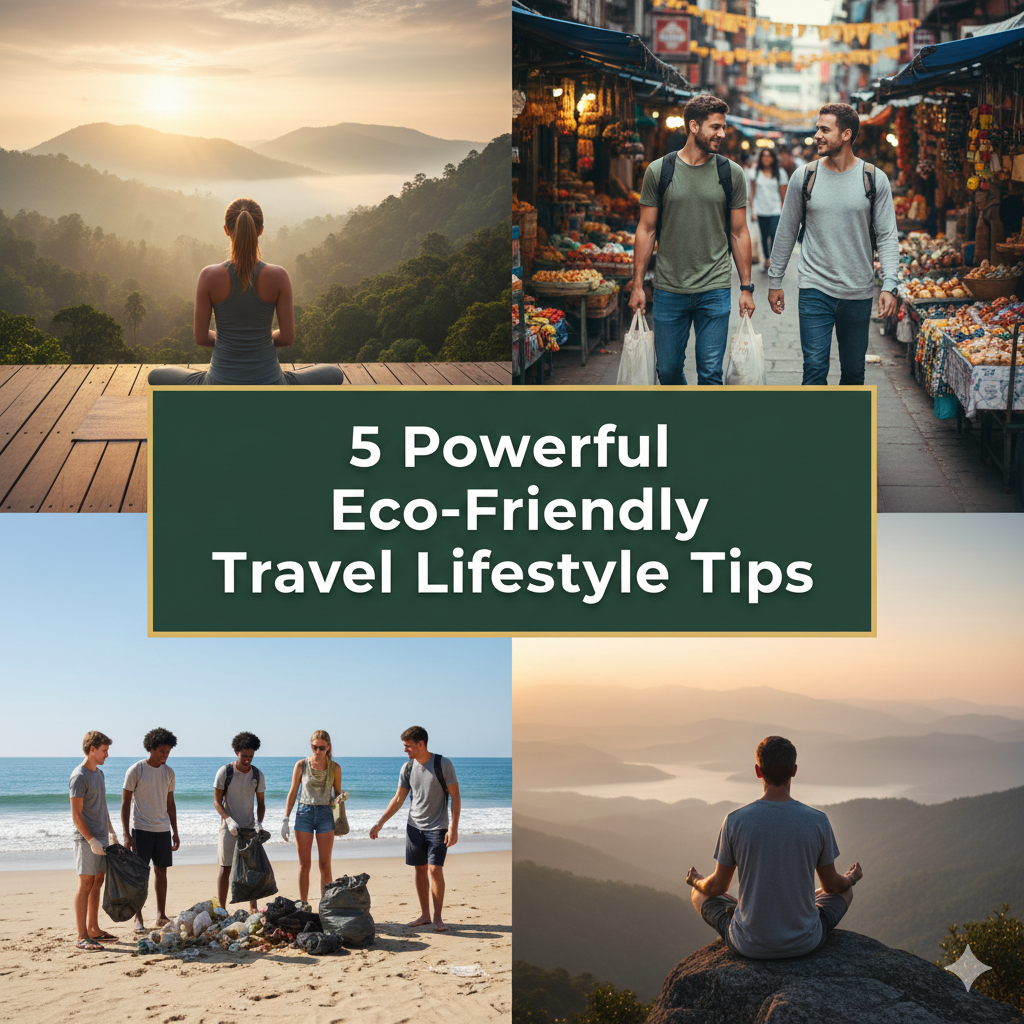

Every time you book a flight, pack a bag, or check into a hotel, you make a choice. That choice either helps the planet or hurts it. The good news? Small shifts in how you travel can create a huge ripple effect.
Eco-friendly travel isn’t about giving up adventure. It’s about being smarter, more intentional, and more aware of your footprint. Millions of travelers are already making this shift. And once you start, there’s no going back.
This guide breaks down five powerful eco-friendly travel lifestyle tips that actually work. Not just in theory — but in real trips, real destinations, and real daily habits.
Let’s dive in.
Why the Way You Travel Matters More Than You Think
Tourism is one of the biggest industries on earth. It accounts for about 8% of global carbon emissions, according to research published in Nature Climate Change. That includes flights, hotels, food, shopping, and transportation.
When millions of people travel without thinking about their impact, the damage adds up fast. Coral reefs get damaged. Local cultures get commercialized. Wildlife gets disturbed. Carbon fills the atmosphere.
But here’s the flip side: when travelers make conscious choices, the positive impact is just as powerful. You support local economies. You reduce waste. You protect ecosystems. You inspire others to do the same.
Eco-friendly travel isn’t a trend. It’s a responsibility. And it starts with the five tips below.
Tip 1: Choose Lower-Carbon Ways to Get Around
The Carbon Cost of How You Move
Transportation is the single biggest source of travel emissions. A round-trip flight from New York to London produces roughly 1.7 metric tons of CO₂ per passenger. That’s nearly what an average car produces in four months of driving.
The way you get from Point A to Point B matters enormously.
Trains Are the Green Champion
Train travel produces up to 90% fewer emissions than flying on the same route. In Europe, Japan, and parts of Asia, high-speed rail makes train travel fast, comfortable, and affordable.
If you’re traveling within a continent, trains are almost always the greener choice. And honestly? The journey is often more beautiful. You see mountains, coastlines, and countryside that you’d completely miss at 35,000 feet.
When You Have to Fly, Fly Smarter
Sometimes flying is unavoidable. When that happens, a few smart moves can lower your footprint.
Book direct flights. Takeoff and landing produce the most emissions. Every layover adds a new round of that cycle. A non-stop flight is always greener than a connecting one.
Choose economy class. Business and first class seats take up more space, which means the emissions per passenger are significantly higher. Economy class passengers share the carbon load more efficiently.
Fly with airlines that invest in sustainable aviation fuel (SAF) and have strong environmental programs. Carriers like KLM, Lufthansa, and Alaska Airlines have made notable commitments in this space.
Carbon Offsetting: Not a Magic Fix, But Still Useful
Carbon offset programs let you fund projects that absorb or reduce CO₂ — like reforestation, renewable energy, or methane capture — to balance out your flight emissions.
It’s not a perfect solution. Critics rightly point out that some offset programs are poorly managed. But choosing verified programs through Gold Standard or Verified Carbon Standard (VCS) adds real accountability.
Think of it as a last resort, not a first response.
| Transport Type | CO₂ Per Passenger Per km | Relative Impact |
|---|---|---|
| Short-haul Flight | ~255g | Very High |
| Long-haul Flight | ~195g | High |
| Car (solo driver) | ~171g | High |
| Bus | ~89g | Medium |
| Train (electric) | ~14g | Very Low |
Tip 2: Stay in Places That Actually Give Back
Hotels Are Not All Created Equal

Where you sleep matters just as much as how you get there. The hospitality industry uses enormous amounts of water, electricity, and single-use plastics. A single hotel guest can use up to 300 liters of water per day — triple what most people use at home.
The good news is that a growing number of accommodations are doing things very differently.
What Makes an Eco-Friendly Stay
Genuinely sustainable accommodations do more than hang a “please reuse your towels” sign in the bathroom. Here’s what to look for:
Renewable energy use. Does the property run on solar, wind, or hydropower? This single factor dramatically cuts a hotel’s carbon footprint.
Water conservation systems. Greywater recycling, low-flow fixtures, and rainwater harvesting are signs of real commitment.
Local food sourcing. Properties that source food from nearby farms cut transportation emissions and support local farmers.
Plastic-free policies. Shampoo bars instead of mini bottles. Filtered water stations instead of plastic bottles. Bamboo toothbrushes instead of plastic ones.
Community investment. The best eco-lodges hire locally, pay fair wages, and support nearby schools or conservation projects.
Where to Find Them
Platforms like BookDifferent, EcoBnb, and Green Pearls specialize in verified sustainable accommodations. Look for certifications like Green Key, EarthCheck, or Rainforest Alliance.
Homestays and locally owned guesthouses are often naturally eco-friendly. They tend to be smaller, use fewer resources, and keep your money directly in the local community.
A Quick Comparison
| Accommodation Type | Eco-Friendliness | Community Benefit | Typical Cost |
|---|---|---|---|
| Large Chain Hotel | Low–Medium | Low | High |
| Boutique Eco-Lodge | High | Medium–High | Medium–High |
| Homestay/Guesthouse | Medium–High | High | Low–Medium |
| Glamping Eco-Camp | High | Medium | Medium |
Tip 3: Pack Light and Pack Right
Why Your Luggage Is Part of the Problem
This one surprises most travelers. Your luggage weight affects your carbon footprint. Heavier planes burn more fuel. Airlines are acutely aware of this — it’s why they charge for overweight bags.
But it goes deeper than weight. What’s inside your bag matters too.
The Art of Packing Light

The goal isn’t to show up somewhere with nothing. The goal is to bring only what you actually need.
Start with a packing list. Write down every item you think you need. Then cut it by 30%. You’ll almost never miss those extra items.
Wear versatile clothing. Neutral colors that mix and match easily. Fabrics that dry quickly so you can wash and re-wear. Layers that work in multiple climates.
Use a carry-on whenever possible. No checked bag fees. No lost luggage. And significantly less weight on the plane.
Swap to Sustainable Gear
Your travel gear itself can be part of your eco-friendly travel lifestyle. Here are some simple swaps:
- Reusable water bottle with a built-in filter (LifeStraw, Hydro Flask) instead of buying plastic bottles
- Solid toiletries — shampoo bars, conditioner bars, solid sunscreen — instead of liquids in plastic containers
- Beeswax wraps or reusable bags instead of plastic zip-locks
- Bamboo or steel cutlery set for when you eat street food or takeaway
- Reef-safe sunscreen to protect coral ecosystems when you swim
What to Leave at Home
Single-use plastics. Cheap fast-fashion clothing bought just for the trip. Excessive electronics. Products with harmful chemicals (especially sunscreen with oxybenzone and octinoxate, which bleach coral reefs).
Every item you leave at home is one less thing produced, shipped, and eventually thrown away.
Tip 4: Eat, Shop, and Spend Like a Local
Your Money Is a Vote
Every dollar, euro, or peso you spend while traveling is a vote for a certain kind of economy. When you eat at an international chain, that money flows out of the local community. When you eat at a family-run restaurant, it stays and circulates locally.
This is one of the most powerful — and enjoyable — eco-friendly travel lifestyle tips on this list. Because it doesn’t feel like sacrifice. It actually makes your trip better.
Eat Local, Eat Seasonal
Local food is fresher, cheaper, and dramatically lower in carbon. A tomato grown down the road has a tiny fraction of the footprint of one flown in from across the world.
Go to local markets. Try street food. Ask your host where they eat. Avoid restaurants that serve imported foods when local alternatives exist.
Eating plant-heavy meals when traveling also makes a real difference. Animal agriculture — especially beef — is one of the most carbon-intensive food systems on earth. You don’t have to go fully vegan. But choosing a plant-based meal a few times a week genuinely adds up.
Shop From Artisans, Not Souvenir Factories
Mass-produced souvenirs are usually made in large factories far from where you’re visiting. They’re cheap, they break easily, and the money rarely benefits local communities.
Instead, buy directly from local artisans. Visit craft markets. Ask about the story behind what you’re buying. That hand-woven textile or hand-carved wooden piece supports real livelihoods and preserves traditional skills.
Always ask: “Was this made here?” It’s a simple question that changes where your money goes.
Avoid Wildlife Tourism That Harms Animals
This one deserves a hard line. Elephant rides, tiger selfies, dolphin shows — these industries cause immense animal suffering. They’re often presented as fun, cultural, or even educational. They’re not.
Genuine eco-friendly wildlife experiences involve observation, not interaction. Visit sanctuaries that rescue and rehabilitate animals. Go on responsible safari tours where animals are in their natural habitat. Choose boat tours that maintain safe distances from marine life.
The rule is simple: if an animal is performing, posing, or being ridden, walk away.
Tip 5: Travel Slower and Stay Longer
The Hidden Cost of Rushing
Modern travel culture glorifies the “I visited 10 countries in 14 days” kind of trip. Instagram feeds are full of it. But speed comes at a cost — to the planet and to your own experience.
Every additional destination means additional transportation. More flights, more transfers, more emissions. And you barely scratch the surface of any single place.
Slow travel is the antidote.
What Slow Travel Actually Looks Like
Slow travel means spending more time in fewer places. Instead of one week split across five cities, you spend one week in a single region. You rent an apartment instead of staying in hotels. You take day trips by local bus or bike.
You get to know a neighborhood. You find your favorite coffee shop. You learn a few words of the local language. You connect with people rather than just photographing landmarks.
And your carbon footprint drops significantly — because you’re not hopping on transportation every two days.
The Digital Nomad Approach
Remote work has made slow travel more accessible than ever. Digital nomads choose a base — Lisbon, Chiang Mai, Medellín, Tbilisi — and live there for a month or more. They work, explore, and integrate into the local community.
This model is as eco-friendly as travel gets. You use local transit. You shop at local markets. You build real connections. And you make a meaningful economic contribution to the community over time.
Off-Season Travel: Double the Win
Traveling in the off-season is great for slow travelers. Crowds are smaller. Prices are lower. And you reduce the strain on over-touristed destinations.
Overtourism is a real crisis. Cities like Amsterdam, Dubrovnik, and Kyoto have all struggled with tourist numbers that overwhelm infrastructure, drive up housing costs for locals, and damage natural and cultural heritage.
Going in the shoulder season spreads that impact out. It’s a small choice with real community benefits.
How These 5 Tips Work Together
These five tips aren’t meant to be used one at a time. They build on each other.
When you travel slow, you need less transportation. When you pack light, your transportation footprint drops further. When you stay in eco-accommodations and eat locally, your money stays in the community. When you make all these choices together, the result isn’t just a lower carbon footprint — it’s a richer, more connected, more memorable travel experience.
Here’s a simple visual overview:
| Eco Travel Tip | Primary Benefit | Secondary Benefit |
|---|---|---|
| Choose low-carbon transport | Reduces emissions | Saves money on long routes |
| Stay in eco-accommodations | Lowers resource use | Supports local economy |
| Pack light and sustainable | Cuts weight-related emissions | Saves on baggage fees |
| Eat and shop locally | Keeps money in communities | Lowers food miles |
| Travel slower | Big reduction in transport emissions | Deeper cultural experience |
Real Talk: Is Eco-Friendly Travel Expensive?
This is one of the most common misconceptions. Eco-friendly travel is often cheaper — not more expensive.
Trains are frequently less expensive than flights, especially in Europe and Asia. Local guesthouses cost less than big hotels. Eating at local markets beats restaurant prices every time. Packing light means no baggage fees. Slow travel means fewer transportation costs overall.
Yes, some certified eco-lodges charge a premium. And some sustainable gear has a higher upfront cost. But the overall travel budget for an eco-conscious trip is often lower than a fast, consumerist trip.
FAQs About Eco-Friendly Travel
Q: Can I still fly and call myself an eco-friendly traveler?
Yes. The goal isn’t perfection. It’s progress. Fly when you must, but make smarter choices around every other part of the trip. Offset when possible. Reduce where you can.
Q: What’s the single biggest impact I can make as a traveler?
Reduce your flights. Aviation is the most carbon-intensive part of most trips. If you can swap one long-haul flight for a train journey or a closer destination, the impact is significant.
Q: Are carbon offsets actually worth it?
They have value when done correctly. Look for offsets certified by Gold Standard or the Verified Carbon Standard. Avoid cheap, unverified programs. But treat offsetting as a supplement to reducing emissions — not a replacement.
Q: How do I find genuinely eco-friendly hotels?
Use platforms like EcoBnb, Green Pearls, or BookDifferent. Look for recognized certifications: Green Key, EarthCheck, or Rainforest Alliance. Read reviews that specifically mention sustainability practices.
Q: Is slow travel practical for people with limited vacation time?
Absolutely. Slow travel doesn’t require months of freedom. Even a two-week trip to one region instead of five cities is a form of slow travel. The principle scales to any schedule.
Q: What’s reef-safe sunscreen, and why does it matter?
Reef-safe sunscreen uses mineral-based UV filters (zinc oxide, titanium dioxide) instead of chemical ones like oxybenzone. Chemical sunscreens have been shown to bleach and kill coral. If you’re swimming anywhere near a reef, this swap genuinely matters.
Q: How can I encourage others to travel more sustainably?
Lead by example. Share your experiences on social media. Talk about the choices you made and why. Recommend eco-friendly destinations and accommodations to friends. You don’t need to lecture anyone — just share your story.
The Bigger Picture
One traveler making eco-friendly choices might seem small. But travel is inherently social. People share trips. They post photos. They tell stories. They inspire.
When you travel sustainably, you model something important for everyone watching. Your choices influence your friends, your followers, your family. The ripple effect is real.
The world’s most beautiful destinations — the rainforests, the reefs, the ancient cities, the wild coastlines — are worth protecting. And the best way to protect them is to visit them responsibly.
Start with one of these five tips. Then add another. Then another. Before long, eco-friendly travel won’t feel like a set of rules. It’ll just feel like who you are.
Because that’s what happens when travel lifestyle tips stop being tips and start being values.
The planet is waiting. Go explore it — carefully.
The world can look different when you apply these eco-friendly travel lifestyle tips. Find 5 effective methods to travel more sustainable and ways to save money and the planet. 5 Gaming-Changing Eco-Friendly Travel Lifestyle Tips That Are Too Powerful For Words Each time you book a flight, pack a
pasted
Format this article without changing anything or paraphrasing anything. Just make it look good by formatting it. Only remove those words or correct them if you think there are spelling mistakes. Please embed one internal link into the article https://ecofriendlytravel.online/ with some text related to the website. Please also add one suitable external link in the article. I don’t need the text in docx format or in code. Give me the editable text in your own editor.
09:47
Meta Description: Eco-friendly travel lifestyle tips can transform how you explore the world. Discover 5 powerful ways to travel greener, save money, and protect the planet.
5 Game-Changing Eco-Friendly Travel Lifestyle Tips That Are Too Powerful For Words
Every time you book a flight, pack a bag, or check into a hotel, you’re making a decision. That choice saves the planet — or it destroys it. The good news? Tiny changes in the way you get around make big waves.
Going green doesn’t mean giving up adventure. It’s time to be smarter, more intentional, and more mindful about your footprint. This shift is already happening among millions of travelers. And once you start, it’s not reversible.
This guide uncovers 5 potent eco-friendly travel lifestyle tips that really work. Not just in concept — but through actual travel, real destinations, and actual daily habits.
Let’s dive in.
Why How You Travel Matters More Than Where You Go
Tourism is one of the largest industries on the planet. It is responsible for some 8 percent of global carbon emissions, according to research in Nature Climate Change. That includes flights, hotels, meals, shopping, and transportation.
When millions of people travel without considering their impact, the damage accumulates quickly. Coral reefs get damaged. Local cultures get commercialized. Wildlife gets disturbed. Carbon fills the atmosphere.
But here’s the flip side: when travelers make conscious choices, the positive impact can be just as strong. You support local economies. You reduce waste. You protect ecosystems. You become a role model for others to follow.
Eco-friendly travel isn’t a trend. It’s a responsibility. And it begins with these five tips.
Tip 1: Go Lower-Carbon in Getting Around
The Carbon Cost of How You Get Around
Travel emissions come predominantly from transportation. A round-trip flight from New York to London generates roughly 1.7 metric tons of CO₂ per passenger. That’s roughly what an average car emits over four months of driving.
How you get from Point A to Point B matters a lot.
Trains Are the Green Champion
Traveling by train yields up to 90% fewer emissions than flying the same route. High-speed rail exists in Europe, Japan, and parts of Asia where train travel is fast, comfortable, and affordable.
If you are traveling within a continent, trains are nearly always the greener option. And honestly? It’s also usually the more beautiful trip. You get views of mountains, coastlines, and countryside you’d entirely miss at 35,000 feet.
When You Must Fly, Fly Smarter
Sometimes flying is unavoidable. When it does happen, a few smart decisions can reduce your footprint.
Book direct flights. The highest emissions come from takeoff and landing. Each layover is a fresh cycle of that. A nonstop flight is always greener than a connecting one.
Choose economy class. Business and first-class seats take up more space, so the emissions per passenger are much greater. The carbon burden is shared more efficiently among passengers in economy.
Fly with airlines that are investing in Sustainable Aviation Fuel (SAF) and have robust environmental programs. Carriers such as KLM, Lufthansa, and Alaska Airlines have made significant commitments in this area.
Carbon Offsetting: No Magic Wand, But Still Useful
Carbon offset programs allow you to fund projects that absorb or reduce CO₂ — such as reforestation, renewable energy, or methane capture — to compensate for your flight’s emissions.
It’s not a perfect solution. Critics are correct to argue that some offset programs are poorly regulated. But selecting verified programs through Gold Standard or Verified Carbon Standard (VCS) brings real accountability.
Treat it like a last resort, not your first response.
| Transport Type | CO₂ Per Passenger Per km | Relative Impact |
|---|---|---|
| Short-haul Flight | ~255g | Very High |
| Long-haul Flight | ~195g | High |
| Car (solo driver) | ~171g | High |
| Bus | ~89g | Medium |
| Train (electric) | ~14g | Very Low |
Tip 2: Stay in Places That Actually Give Back
Not All Hotels Are Created Equal
Where you sleep is just as important as how you get there. The hospitality industry consumes vast quantities of water, electricity, and single-use plastics. One hotel guest can use up to 300 liters of water in a single day — three times as much as most people use at home.
The good news is that a growing number of accommodations are doing things very differently.
What Makes an Eco-Friendly Stay
Genuinely sustainable accommodations go beyond hanging a “please reuse your towels” sign in the bathroom. Here’s what to look for:
Renewable energy use. Is the property solar, wind, or hydropowered? This single factor hugely reduces a hotel’s carbon footprint.
Water conservation systems. Greywater recycling, low-flow fixtures, and rainwater harvesting are signs of serious commitment.
Local food sourcing. Properties that source food from nearby farms reduce transportation emissions and support local farmers.
Plastic-free policies. Shampoo bars instead of mini bottles. Filtered water stations instead of plastic bottles. Bamboo toothbrushes instead of plastic ones.
Community investment. The best eco-lodges hire locally, pay fair wages, and support nearby schools or conservation projects.
Where to Find Them
Platforms like BookDifferent, EcoBnb, and Green Pearls specialize in verified sustainable accommodations. Look for certifications like Green Key, EarthCheck, or Rainforest Alliance.
Homestays and locally owned guesthouses are often naturally eco-friendly. They tend to be smaller, use fewer resources, and keep your money directly in the local community. If you’re looking for deeper inspiration and resources, Eco Friendly Travel is a great place to start your green travel journey.
A Quick Comparison
| Accommodation Type | Eco-Friendliness | Community Benefit | Typical Cost |
|---|---|---|---|
| Large Chain Hotel | Low–Medium | Low | High |
| Boutique Eco-Lodge | High | Medium–High | Medium–High |
| Homestay/Guesthouse | Medium–High | High | Low–Medium |
| Glamping Eco-Camp | High | Medium | Medium |
Tip 3: Pack Light and Pack Right
Why Your Luggage May Be Part of the Problem
This one surprises most travelers. The weight of your luggage affects your carbon footprint. Heavier planes burn more fuel. Airlines are acutely aware of this — it’s why they charge for overweight bags.
But it goes deeper than weight. What’s inside your bag matters too.
The Art of Packing Light
The goal isn’t to show up somewhere empty-handed. The idea is to bring only what you will actually use.
Start with a packing list. Write down everything you think you need. Then cut it by 30%. You’ll almost never miss those extra items.
Wear versatile clothing. Neutral colors that mix and match easily. Quick-drying fabrics so you can wash and re-wear. Layers that work across multiple climates.
Use a carry-on whenever possible. No checked bag fees. No lost luggage. And significantly less weight on the plane.
Swap to Sustainable Gear
Your travel gear itself can be part of your eco-friendly travel lifestyle. Here are some simple swaps:
- Reusable water bottle with a built-in filter (LifeStraw, Hydro Flask) instead of buying plastic bottles
- Solid toiletries — shampoo bars, conditioner bars, solid sunscreen — instead of liquids in plastic containers
- Beeswax wraps or reusable bags instead of plastic zip-locks
- Bamboo or steel cutlery set for when you eat street food or takeaway
- Reef-safe sunscreen to protect coral ecosystems when you swim
What to Leave at Home
Single-use plastics. Cheap fast-fashion clothing bought just for the trip. Excessive electronics. Products with harmful chemicals — especially sunscreen with oxybenzone and octinoxate, which bleach coral reefs.
Every item you leave at home is one less thing produced, shipped, and eventually thrown away.
Tip 4: Eat, Shop, and Spend Like a Local
Your Money Is a Vote
Every dollar, euro, or peso you spend while traveling is a vote for a certain kind of economy. When you eat at an international chain, that money flows out of the local community. When you eat at a family-run restaurant, it stays and circulates locally.
This is one of the most powerful — and enjoyable — eco-friendly travel lifestyle tips on this list. Because it doesn’t feel like sacrifice. It actually makes your trip better.
Eat Local, Eat Seasonal
Local food is fresher, cheaper, and dramatically lower in carbon. A tomato grown down the road has a tiny fraction of the footprint of one flown in from across the world.
Go to local markets. Try street food. Ask your host where they eat. Avoid restaurants that serve imported foods when local alternatives exist.
Eating plant-heavy meals while traveling also makes a real difference. Animal agriculture — especially beef — is one of the most carbon-intensive food systems on earth. You don’t have to go fully vegan. But choosing a plant-based meal a few times a week genuinely adds up.
Shop From Artisans, Not Souvenir Factories
Mass-produced souvenirs are usually made in large factories far from where you’re visiting. They’re cheap, they break easily, and the money rarely benefits local communities.
Instead, buy directly from local artisans. Visit craft markets. Ask about the story behind what you’re buying. That hand-woven textile or hand-carved wooden piece supports real livelihoods and preserves traditional skills.
Train yourself to ask: “Was this made here?” It’s a simple question that changes where your money goes.
Avoid Wildlife Tourism That Doesn’t Treat Animals With Dignity
This one deserves a hard line. Elephant rides, tiger selfies, dolphin shows — these are industries built on immense animal suffering. They’re often presented as fun, cultural, or even educational. They’re not.
Genuine eco-friendly wildlife experiences involve observation, not interaction. Visit sanctuaries that rescue and rehabilitate animals. Go on responsible safari tours where animals are in their natural habitat. Choose boat tours that maintain safe distances from marine life.
The rule is simple: if an animal is performing, posing, or being ridden, walk away.
Tip 5: Travel Slower and Stay Longer
The Hidden Cost of Rushing
Modern travel culture glorifies the “I visited 10 countries in 14 days” kind of trip. Instagram feeds are full of it. But speed comes at a cost — to the planet and to your own experience.
Every additional destination means additional transportation. More flights, more transfers, more emissions. And you barely scratch the surface of any single place.
Slow travel is the antidote.
What Slow Travel Actually Looks Like
Slow travel means spending more time in fewer places. Instead of one week split across five cities, you spend one full week in a single region. You rent an apartment instead of staying in hotels. You take day trips by local bus or bike.
You get to know a neighborhood. You find your favorite coffee shop. You learn a few words of the local language. You connect with people rather than just photographing landmarks.
And your carbon footprint drops significantly — because you’re not hopping on transportation every two days.
The Digital Nomad Approach
The work-from-anywhere era has made slow travel more attainable than ever. Digital nomads pick a base — Lisbon, Chiang Mai, Medellín, Tbilisi — and stay for a month or more. They work, explore, and integrate into the local community.
This model is as eco-friendly as travel gets. You use local transit. You shop at local markets. You build real connections. And you make a meaningful economic contribution to the community over time.
Off-Season Travel: Double the Win
Off-season travel is a big win for slow travelers. Crowds are smaller. Prices are lower. And you take the pressure off over-touristed destinations.
Overtourism is a real crisis. Cities like Amsterdam, Dubrovnik, and Kyoto have all grappled with tourist numbers that overwhelm infrastructure, drive up housing costs for locals, and damage natural and cultural heritage. According to the UNWTO’s research on sustainable tourism, spreading visitor traffic across seasons is one of the most effective ways to manage this pressure.
Going in the shoulder season spreads that impact out. It’s a small choice with real community benefits.
How These 5 Tips Work Together
These five tips aren’t meant to be used one at a time. They build on each other.
When you travel slow, you need less transportation. When you pack light, your transportation footprint drops further. When you stay in eco-accommodations and eat locally, your money stays in the community. When you make all these choices together, the result isn’t just a lower carbon footprint — it’s a richer, more connected, more memorable travel experience.
| Eco Travel Tip | Primary Benefit | Secondary Benefit |
|---|---|---|
| Choose low-carbon transport | Reduces emissions | Saves money on long routes |
| Stay in eco-accommodations | Lowers resource use | Supports local economy |
| Pack light and sustainable | Cuts weight-related emissions | Saves on baggage fees |
| Eat and shop locally | Keeps money in communities | Lowers food miles |
| Travel slower | Big reduction in transport emissions | Deeper cultural experience |
Real Talk: Is Eco-Friendly Travel Expensive?
This is one of the most common misconceptions. Eco-friendly travel is often cheaper — not more expensive.
Trains are frequently less expensive than flights, especially in Europe and Asia. Local guesthouses cost less than big hotels. Eating at local markets beats restaurant prices every time. Packing light means no baggage fees. Slow travel means fewer transportation costs overall.
Yes, some certified eco-lodges charge a premium. And some sustainable gear has a higher upfront cost. But the overall travel budget for an eco-conscious trip is often lower than a fast, consumerist trip.
FAQs About Eco-Friendly Travel
Q: Can I still fly and call myself an eco-friendly traveler?
Yes. The goal isn’t perfection. It’s progress. Fly when you must, but make smarter choices around every other part of the trip. Offset when possible. Reduce where you can.
Q: What’s the single biggest impact I can make as a traveler?
Reduce your flights. Aviation is the most carbon-intensive part of most trips. If you can swap one long-haul flight for a train journey or a closer destination, the impact is significant.
Q: Are carbon offsets actually worth it?
They have value when done correctly. Look for offsets certified by Gold Standard or the Verified Carbon Standard. Avoid cheap, unverified programs. But treat offsetting as a supplement to reducing emissions — not a replacement.
Q: How do I find genuinely eco-friendly hotels?
Use platforms like EcoBnb, Green Pearls, or BookDifferent. Look for recognized certifications: Green Key, EarthCheck, or Rainforest Alliance. Read reviews that specifically mention sustainability practices.
Q: Is slow travel practical for people with limited vacation time?
Absolutely. Slow travel doesn’t require months of freedom. Even a two-week trip to one region instead of five cities is a form of slow travel. The principle scales to any schedule.
Q: What’s reef-safe sunscreen, and why does it matter?
Reef-safe sunscreen uses mineral-based UV filters (zinc oxide, titanium dioxide) instead of chemical ones like oxybenzone. Chemical sunscreens have been shown to bleach and kill coral. If you’re swimming anywhere near a reef, this swap genuinely matters.
Q: How can I encourage others to travel more sustainably?
Lead by example. Share your experiences on social media. Talk about the choices you made and why. Recommend eco-friendly destinations and accommodations to friends. You don’t need to lecture anyone — just share your story.
The Bigger Picture
One traveler making eco-friendly choices might seem small. But travel is inherently social. People share trips. They post photos. They tell stories. They inspire.
When you travel sustainably, you model something important for everyone watching. Your choices influence your friends, your followers, your family. The ripple effect is real.
The world’s most beautiful destinations — the rainforests, the reefs, the ancient cities, the wild coastlines — are worth protecting. And the best way to protect them is to visit them responsibly.
Start with one of these five tips. Then add another. Then another. Before long, eco-friendly travel won’t feel like a set of rules. It will simply feel like who you are.
That’s what happens when travel lifestyle tips stop being tips and start being values.
The planet is waiting. Go explore it — carefully.