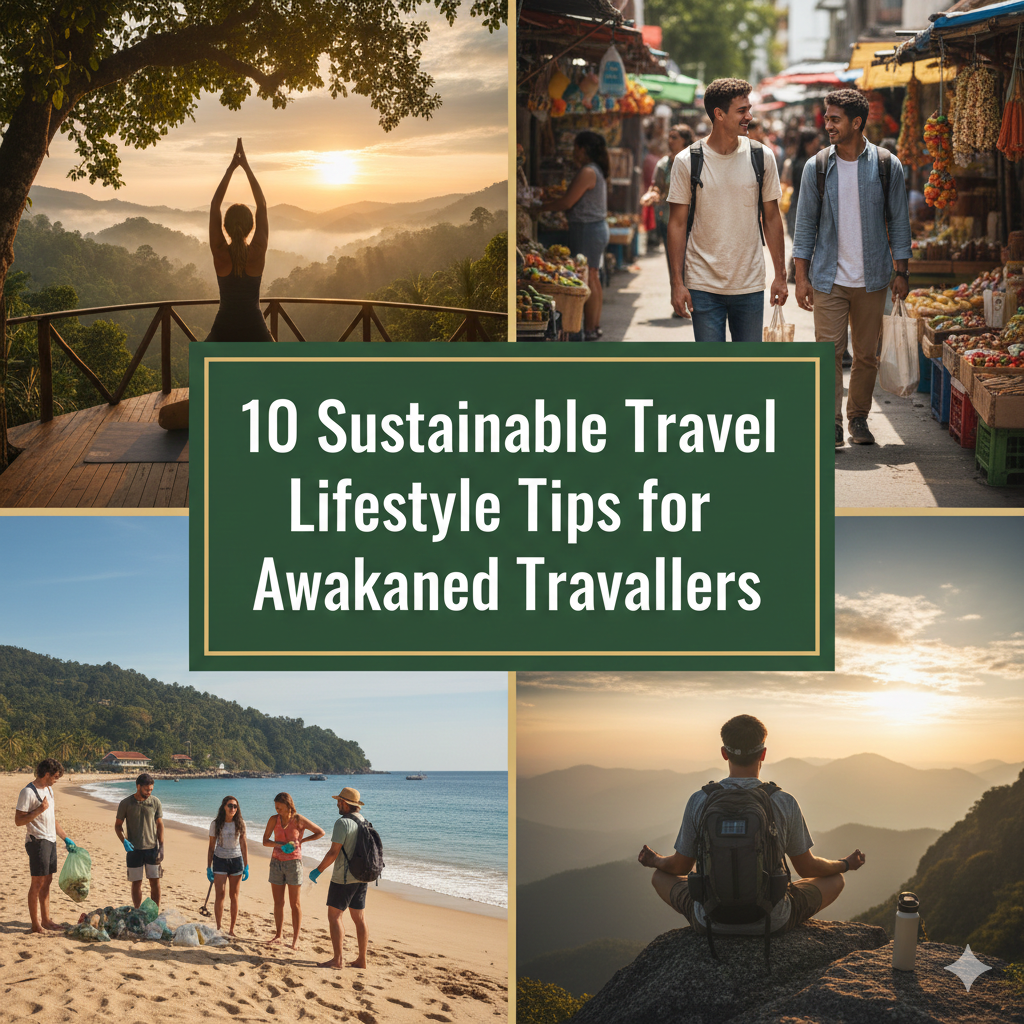

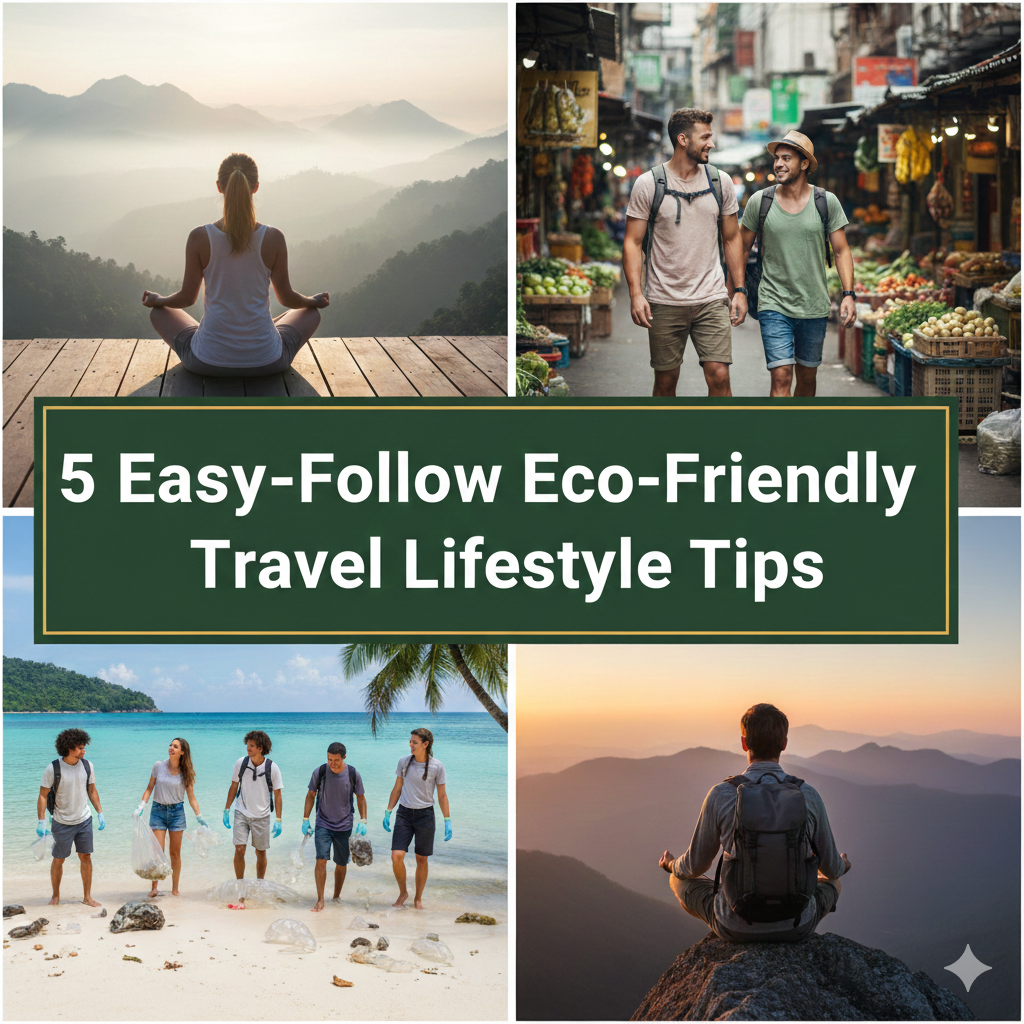

Imagine this: You’re on the beach, white sand stretching for miles. The water is crystal clear. The air is ripe with saltwater and freedom.
Now imagine that same beach cluttered with plastic bottles, cigarette butts, and trash left by tourists.
That’s the fate of thousands of gorgeous spots around the world today. And the harsh reality is that it’s fellow travelers — people like you and me — who are a large part of the problem.
But here’s the thing: You don’t have to be.
The eco-friendly travel lifestyle is not some all-or-nothing, radical movement. It’s not a question of canceling your vacation plans or never setting foot on an airplane. It’s about making smarter, more mindful choices — choices that give us freedom to keep exploring the world without ripping it apart at the same time.
The five tips in this article are easy. They’re realistic. And they genuinely work.
Whether you’re a seasoned frequent flyer, a road tripper, or someone planning your first solo adventure, these habits will help you travel with less guilt and more purpose. In some cases you’ll spend less money, grow more deeply connected to the places you visit, and leave behind a much lighter footprint.
Ready to travel better? Let’s get into it.
Why the Eco-Friendly Travel Lifestyle Actually Makes a Difference
Before we get there, let’s briefly zoom out.
Travel is one of the world’s biggest industries. The United Nations World Tourism Organization reported that international tourist arrivals skyrocketed to nearly 1.5 billion in recent years — and those figures are bouncing back fast since the pandemic dip.
Those travelers need planes, hotels, food, transport, and activities. And that demand comes with an enormous environmental footprint.
Here’s an overview of what travel does to the world:
| Travel Activity | Environmental Impact |
|---|---|
| One long-haul flight (economy) | 1–3 tonnes of CO₂ per passenger |
| Average hotel stay (per night) | 20–30 kg of CO₂ |
| Renting a petrol car for one week | ~100–200 kg of CO₂ |
| Eating beef every day during a week of travel | Equivalent to driving 100+ miles |
| Single-use plastic per tourist per trip | 4–8 kg on average |
Those figures add up quickly — especially when you multiply them by billions of travelers.
But the flip side is just as powerful. The benefits multiply too when travelers make conscious choices. Choosing a local guesthouse instead of a chain hotel keeps money in the community. Choosing a train over a domestic flight can cut your emissions by as much as 90 percent. Avoiding single-use plastic helps protect marine ecosystems that millions of people rely on.
Small decisions. Massive ripple effects.
That’s why the eco-friendly travel lifestyle isn’t just a good idea. It’s genuinely necessary — and it is truly within reach for every traveler.
Tip 1 — Move as if the Planet Is Watching (Because It Is)
Transportation is typically the biggest source of a traveler’s carbon footprint. More than hotels. More than food. More than anything else.
How you get from Point A to Point B — and everywhere in between — has a larger impact on the environment than almost any other decision you make when you travel.
The True Price of Getting There
Flying is the most carbon-intensive mode of transport. A round-trip flight from New York to London produces roughly 1.5 to 2 tonnes of CO₂ per passenger in economy class. Business class? That number triples, because those wide seats take up more space and claim a greater proportional share of the plane’s total emissions.
But flying typically can’t be avoided entirely — particularly for international travel. So what can you do?
Book direct. Takeoffs and landings are when planes burn the most fuel. Each connection you add means more takeoffs, more fuel, more emissions. A nonstop flight almost always has a smaller carbon footprint than one with stopovers.
Fly economy. This is arguably the most straightforward and impactful eco-friendly swap a traveler can make. It costs less and emits significantly less per person.
Offset what you can’t avoid. Carbon offsetting isn’t perfect, but certified programs through organizations like Gold Standard genuinely invest in real environmental projects — solar power in developing countries, forest protection, clean cookstoves. It’s worthwhile, so long as it supplements rather than replaces efforts to reduce emissions in the first place.
Once You’re There — Go Green on the Ground

This is where the eco-friendly travel lifestyle really comes alive.
Once you’re on the ground, you have far more control over how you move around. And the choices here can be both the most fun and the most impactful.
Trains are the gold standard. Rail emits up to 90% less CO₂ than flying the same distance. In Europe, Japan, and much of South America and Asia, train services are fast, affordable, and often offer far better scenery than flying. Taking the Eurostar from London to Paris instead of flying cuts emissions for that journey by around 90%.
Buses beat cars. Public buses — even ordinary diesel ones — spread their emissions among many passengers, making them considerably more efficient per person than a solo rental car.
Bikes and e-bikes rule in cities. Almost every city now has a bike rental program. Apps like Lime and Bird make it easy to pick up a two-wheeler and drop it off almost anywhere. You see more, spend less, and emit nothing.
Walk whenever possible. It costs nothing. It’s good for your health. And it is truly the best way to discover a place. The best travel memories are often made while wandering down an unmarked alley or stumbling upon a local market that isn’t listed on any map.
Here’s a quick visual comparison of transport options:
| Transport Mode | CO₂ per Passenger (km) | Best Use Case |
|---|---|---|
| Walking | 0g | Short distances |
| Cycling / E-bike | ~5g | City exploration |
| Electric train | ~14g | Long-distance travel |
| Public bus | ~89g | Urban and regional trips |
| Gasoline car (shared) | ~104g | Remote areas, groups |
| Gasoline car (solo) | ~192g | Last resort |
| Domestic flight | ~255g | Avoid if alternatives exist |
Selecting greener transport is the single most high-impact action you can take as an eco-conscious traveler. Start here.
Tip 2 — Where You Sleep Shapes the World You Wake Up In
Your accommodation choice sends a signal. It tells the destination what kind of tourism to build more of.
When millions of travelers opt for large international hotel chains, destinations build more of them. When travelers choose local guesthouses, homestays, and eco-lodges, communities thrive and sustainable tourism infrastructure grows.
The Problem With Conventional Hotels
Big hotels consume enormous amounts of energy. Air conditioning running 24/7, heated pools, laundry services turning over linens daily, and restaurants importing ingredients from around the world — the environmental bill is steep.
Hotels account for approximately 1% of global carbon emissions, according to research from Cornell University’s Center for Hospitality Research. That might not sound like much, until you consider it’s roughly equivalent to the entire aviation industry’s share according to some estimates.
What’s more troubling is the social impact. Most large international chains send their profits offshore. Local staff may be hired, but the financial benefits rarely make their way back into the community in any meaningful way.
What to Book Instead
Eco-lodges are built from the ground up to minimize environmental damage. The best ones run on solar power, collect rainwater, compost food waste, grow their own produce, and hire entirely from the local community. Staying in one often feels more like an adventure than a hotel stay — and that is very much the point.
Homestays are among the most sustainable accommodation options available. You live with a local family, eat homemade food, and your money goes directly to people who need it. The energy footprint is shared across an existing household, making it significantly lower than that of a dedicated hotel facility.
Locally owned guesthouses sit somewhere in between. They are typically small, family-run, and deeply connected to their community. The owner is often a walking guidebook — capable of directing you to the best local food, hidden trails, and cultural experiences that no travel blog has covered yet.
What to Look for When Booking
Several certification programs help travelers identify genuinely sustainable accommodation:
| Certification | Where It’s Common | What It Checks |
|---|---|---|
| Green Key | Worldwide | Energy, water, waste, environment |
| LEED | North America, global | Building sustainability standards |
| EarthCheck | Asia-Pacific | Operational environmental benchmarks |
| Rainforest Alliance | Central/South America | Biodiversity, community impact |
| EU Ecolabel | Europe | Comprehensive environmental criteria |
Platforms like Ecobnb and BookDifferent specialize in verified eco-friendly accommodation and make it easy to filter by certification.
Habits That Help in Any Accommodation
Even if you end up in an uncertified hotel, your habits inside the room still matter.
Hang your towels up instead of leaving them on the floor — it signals to housekeeping that you don’t need fresh ones. Turn off the air conditioning and all lights when you leave. Take short showers. Skip the individually wrapped mini toiletries and bring your own refillable bottles. These small actions, done consistently, genuinely cut the hotel’s daily water and energy consumption.
Tip 3 — Your Money Is a Vote. Cast It for the Right People.
Every dollar, euro, peso, or rupee you spend on a trip is a vote for the kind of tourism you want to see more of.
That is one of the most powerful — and most overlooked — aspects of the eco-friendly travel lifestyle.
Where Tourist Money Usually Goes
In many popular destinations, the vast majority of tourist spending exits the local economy almost immediately. Tourists sleep in foreign-owned hotels, dine at international restaurant chains, book tours with multinational operators, and buy souvenirs manufactured abroad and sold by large retailers.
This is called “tourism leakage.” In some destinations, it’s estimated that as much as 80% of tourist spending leaks out of the local economy.
And that’s not just an economic problem. It’s an environmental one too. International supply chains, imported goods, and foreign-owned facilities all carry larger carbon footprints than their local counterparts.
Spend Local at Every Opportunity
Eat where locals eat. Street food stalls, family-run restaurants, and market vendors offer some of the most authentic food experiences on earth — and they’re almost always cheaper than tourist-facing establishments. The ingredients are local and seasonal, the owners are members of the community, and the experience is irreplaceable.
Buy from artisans directly. Markets where local makers sell their own work can be found everywhere, if you look. Purchasing a handmade piece directly from the person who made it puts money in their hands and keeps a traditional craft alive. Buying the same-looking item from a chain tourist shop likely means it was manufactured overseas.
Book local guides. Local guides not only know the destination better than anyone — they are the destination. They know which trails are fragile and which are robust. They know which communities welcome visitors and which prefer privacy. And every booking supports a family rather than a corporate operator.
Choose locally owned transport. Tuk-tuks, local taxi cooperatives, and community-run boat services all keep money circulating within the destination rather than being funneled away to app-based corporations.
A Practical Spending Breakdown
| Spending Category | Local Option | Impact |
|---|---|---|
| Food | Market stalls, local cafés | Supports farmers, reduces food miles |
| Souvenirs | Artisan markets, maker studios | Preserves handmade heritage |
| Accommodation | Guesthouses, homestays | Keeps profits in the community |
| Transport | Local taxis, cooperatives | Sustains local livelihoods |
| Tours | Locally run operators | Ensures authentic, respectful experiences |
| Coffee | Independent local cafés | Avoids franchise profit extraction |
When you travel this way, something fascinating happens: your trip gets better. The experiences are richer. The connections are more real. The food is more delicious. And you come home knowing that the places you visited are just a little better off because you were there.
For more guidance on how to spend wisely and travel responsibly, Eco Friendly Travel is a fantastic resource packed with practical sustainable travel advice and destination-specific tips.
Tip 4 — Cut the Plastic and Keep the Beauty Alive
This one is personal. It’s visible. And it’s one of the simplest areas where every traveler can make an immediate, noticeable difference.
Single-use plastic is one of the most destructive forces in global tourism. And travelers are among the biggest contributors to the problem.
The Plastic Numbers Are Staggering
The United Nations Environment Programme estimates that 11 million metric tons of plastic flow into the world’s oceans every year. A significant portion of that waste originates in tourist areas — beaches, resorts, cities, and national parks visited by millions of people annually.
Some of the world’s most beloved destinations — the beaches of Thailand, the reefs of the Maldives, the forests of Costa Rica — face a constant battle against plastic left behind by tourists.
The good news: this is one of the most solvable problems in eco-friendly travel. Nearly every single-use plastic item can be swapped for a reusable alternative that fits easily into a daypack.
Your Plastic-Free Travel Kit
Here’s everything you need to all but eliminate plastic from your travels:
| Item to Replace | Sustainable Alternative | Cost | Lasts |
|---|---|---|---|
| Plastic water bottle | Stainless steel or BPA-free reusable bottle | $15–30 | Years |
| Shampoo/conditioner bottles | Solid shampoo and conditioner bars | $8–15 | Months |
| Plastic toothbrush | Bamboo toothbrush | $3–6 | 3 months |
| Disposable razor | Safety razor with metal blades | $20–40 | Decades |
| Plastic straw | Bamboo or stainless straw | $3–8 | Years |
| Plastic shopping bag | Cotton or mesh tote | $2–10 | Years |
| Plastic cutlery | Bamboo or titanium travel cutlery set | $10–20 | Years |
| Single-use wipes | Washable bamboo face cloths | $10–15 | Years |
This kit costs between $70 and $150 to assemble one time. Over the course of even a few trips, it diverts hundreds of plastic items from the waste stream — and saves you money on overpriced airport bottles and disposable hotel products.
Simple Rules for Going Plastic-Free on the Road
Always carry your bottle. Refill it at every opportunity. Free water refill stations can now be found in many airports, cafés, and public spaces. Apps like Refill show you where to find them.
Refuse before you receive. When ordering food or drinks, say upfront: “No straw, please” or “No plastic bag, thank you.” It’s faster than dealing with it afterward and prevents the item from being used in the first place.
Don’t purchase bottled water when the tap is safe. Do your research before you go. In a great many countries and cities, tap water is perfectly safe and free. Where it’s not, a filtered bottle like LifeStraw or a Sawyer Squeeze filter lets you drink safely from almost any source.
Buy in bulk when possible. Larger portions and packages create less plastic per unit of product. Opt for the bigger bottle of sunscreen over four travel-size ones.
Tip 5 — Rush Less, Stay Longer, Experience More
If there’s one piece of advice on this list that will transform both your travel experience and your environmental impact more than any other, it’s this one.
Slow down.
The Hidden Environmental Cost of Moving Fast
Modern travel culture celebrates speed and volume. How many countries can you visit? How many cities can you check off? Social media has turned travel into something of a competitive sport — with passport stamps and landmark selfies as the trophies.
But every move costs carbon.
Each flight, each transfer, each bus to the next destination adds up. A traveler who covers seven countries in two weeks generates a far bigger carbon footprint than one who spends two weeks in one country — even if the total distance from home is the same.
Moving fast also comes with a cost that’s harder to measure: depth of experience.
When you hurry, you see surfaces. When you slow down, you see lives.
What Slow Travel Really Looks Like
Slow travel is not dull travel. It means intentional travel.
It’s spending a week in a city instead of one night. It means renting a bicycle and spending three hours getting lost in a neighborhood that no guidebook has ever covered. It means accepting a dinner invitation from the family who runs your guesthouse and staying at the table long after the food is finished.
Pick a base and take day trips. Instead of bouncing between five different hotels, choose a town or neighborhood as your home base and explore the surrounding area from there. You spend less on transport, really get to know one place, and reduce your emissions considerably.
Rent an apartment from local residents for longer stays. A week or two in a locally rented apartment costs less per night than most hotels, lets you shop at local markets and cook some of your own meals, and generates a fraction of the waste a hotel stay produces.
Leave gaps in your itinerary. A fully scheduled trip leaves no room for the unexpected — and that’s where some of the best travel moments live. Leave whole afternoons open. Say yes to things that weren’t planned.
The Numbers Side of Slow Travel
| Travel Style | Carbon Footprint | Quality of Experience |
|---|---|---|
| 7 countries in 14 days (7 flights) | Very high | Surface-level |
| 3 countries in 14 days (3 trains) | Low | Moderate depth |
| 1–2 regions in 14 days (local transport) | Very low | Deep and meaningful |
| Extended stay in 1 country (1 flight, trains/buses) | Minimal | Rich, immersive |
The message is clear: fewer moves, deeper experiences, smaller footprint.
This is the eco-friendly travel lifestyle at its most powerful — not a restriction, but a reframe. Not less travel, but better travel.
Putting It All Together — The Eco-Traveler’s Action Plan
Here’s a brief summary of everything covered in this guide:
| Tip | Key Action | Biggest Win |
|---|---|---|
| 1. Move Green | Take the train, walk, or cycle — fly nonstop in economy | Massive carbon reduction |
| 2. Sleep Smart | Choose eco-lodges, homestays, local guesthouses | Supports local economies |
| 3. Spend Local | Eat, shop, and tour with local providers | Keeps money in the community |
| 4. Ditch Plastic | Carry a reusable kit, refuse single-use items | Protects oceans and wildlife |
| 5. Slow Down | Stay longer in fewer places, take fewer flights | Reduces footprint, deepens experience |
None of these tips involves being perfect. And none of them require extreme sacrifice. All they ask is for you to think a little — to pause before booking, to carry a bag, to ask “is there a local option here?”
That pause is where the eco-friendly travel lifestyle lives.
FAQs About Eco-Friendly Travel Lifestyle Tips
Q: Do I have to give up flying completely to travel in an eco-friendly way? No. Opting out of all flights is not feasible for most travelers. The goal is to fly less where possible, always choose direct routes and economy class, and offset unavoidable emissions through certified programs. Every reduction counts.
Q: Isn’t eco-friendly travel more expensive? In fact, many sustainable choices cost less. Local food markets beat tourist restaurants. Public transport beats rental cars. Homestays beat chain hotels. The upfront cost of a reusable kit ultimately saves money over time. Eco-friendly travel is frequently about spending smarter, not spending more.
Q: How do I find eco-certified hotels without spending hours researching? Use platforms built specifically for this purpose. Ecobnb, BookDifferent, and the sustainability filters on Booking.com all surface certified properties quickly. Look for certifications like Green Key, EarthCheck, or LEED as reliable markers of genuine commitment.
Q: What is the single easiest plastic-free swap to start with? A reusable water bottle. It eliminates the need for dozens of plastic bottles per trip, it’s useful every single day, and it costs very little. Start there and build the habit from that foundation.
Q: Can slow travel work if I only have two weeks of vacation per year? Yes — and it might actually be the best approach when time is limited. Spending two weeks in one region, explored deeply, is almost always more satisfying than those same two weeks spread across seven countries. You return home refreshed rather than exhausted — and with memories that actually stick.
Q: How do I know if a local tour operator is genuinely responsible? Look for operators who are local — born and raised in the destination, not just operating there. Ask questions: Where are your guides from? Do you follow any wildlife or environmental guidelines? Are you certified by any local tourism authority? Responsible operators welcome these questions.
Q: Is carbon offsetting actually worth doing? When done through reputable programs, yes. Look for Gold Standard or Verified Carbon Standard certification. Keep in mind that offsetting should be a last resort — the primary goal is always to reduce emissions in the first place, then offset what remains unavoidable.
The World Is Still Beautiful — Let’s Keep It That Way
You began reading this because you love to travel. That love is a good thing. It’s the force that fuels curiosity, connection, and understanding between people and across cultures.
But love without responsibility can cause harm. And the world’s most beautiful places are quietly, persistently being damaged by unthinking tourism.
The eco-friendly travel lifestyle is the bridge between those two things — between the freedom to explore and the responsibility to protect.
The five tips in this guide are not sacrifices. They’re upgrades. They will make your food taste better, your experiences run deeper, your connections feel more real, and your footprint land much lighter.
You don’t need to be a perfect eco-traveler from day one. Nobody is. Just choose one thing from this list — one habit, one swap, one slower itinerary — and start there.
Then pick another.
Over time, these choices become second nature. They become the way you travel. And as more and more travelers make them, they become the kind of demand that transforms entire industries.
The world is worth protecting. Your travels are worth having. And the two need not be at odds.
Go explore. Go slowly. Go kindly.