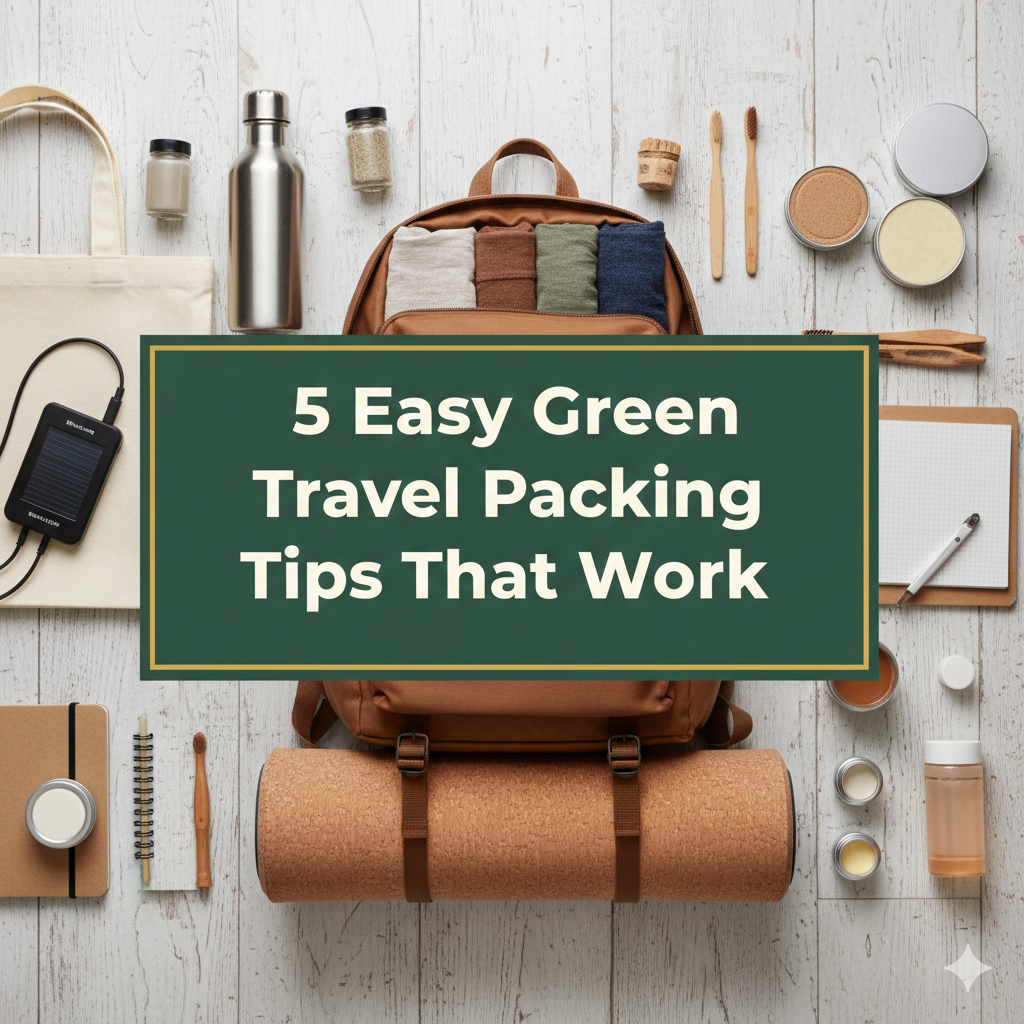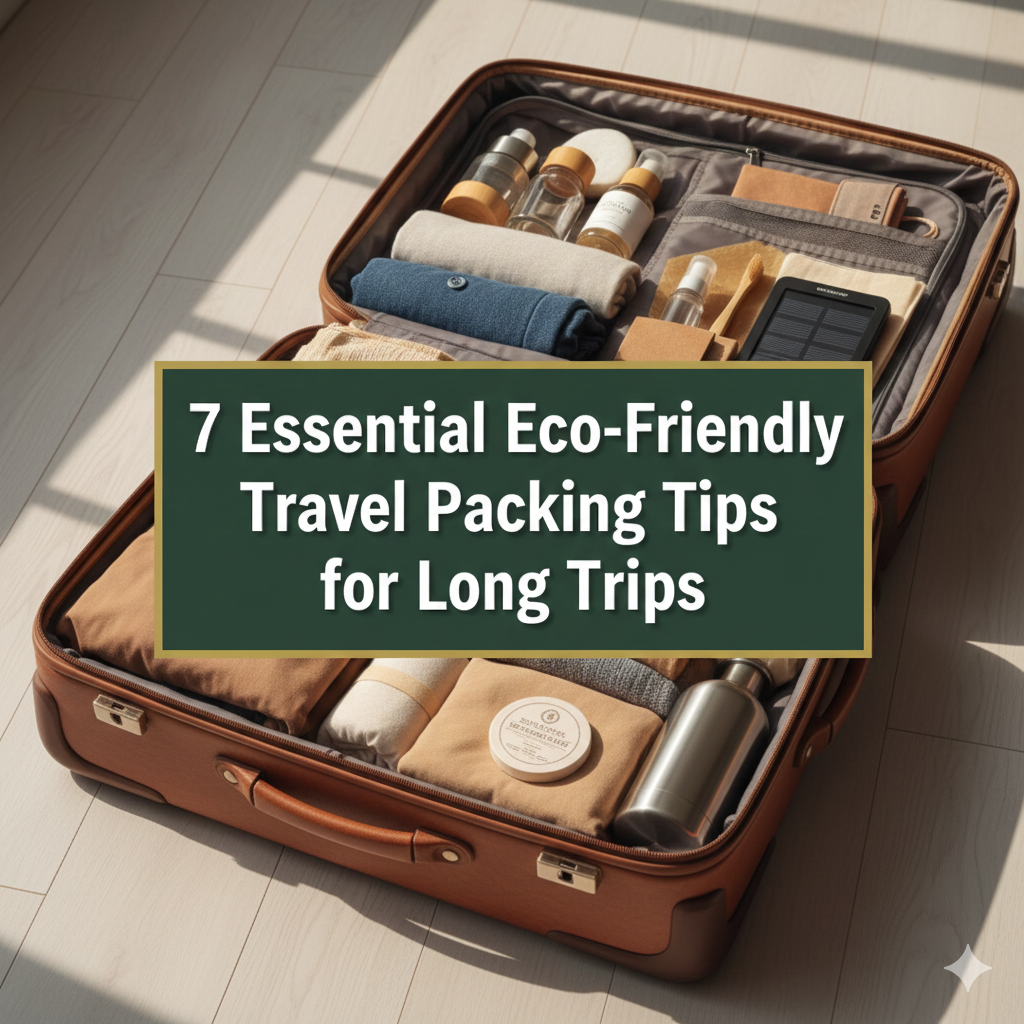

You are looking at your suitcase. It is already full. Half your stuff is still on the bed.
Sound familiar?
Overpacking is one of those travel mistakes people make all too often. And it is not just annoying — it is wasteful. More stuff means more packaging, more single-use products, more plastic, and heavier luggage that burns extra fuel on flights.
Here’s the thing: packing less and packing green are two sides of the same very good coin. The same tricks that reduce your suitcase also reduce your environmental footprint. Eco-friendly travel packing doesn’t mean you have to compromise on creature comforts. It’s about being smarter with what you bring.
These 10 tips are fast to read and easy to put into practice. Whether you are a weekend warrior or a globetrotting traveler, this guide will help you pack lighter, live greener, and travel better.
Let’s get into it.
Tip 1: Start With a Packing List — Then Cut It in Half
Why Most Packing Lists Are Too Long
The majority of people pack for the worst-case scenario. “What if it rains?” “What if there’s a nice dinner?” “What if I want to work out?” The result is a bag stuffed with things you will almost certainly never use.
Before you pack a single item, write out your list. Then go through it again and discard anything you are not 100% certain you will use. Be brutal. If you are already unsure, it’s best to leave it out.
Just this one habit can reduce your packing volume by 30% or more.
The “One Week, One Bag” Rule
Veteran travelers abide by a simple principle: no matter how long the trip, everything fits in one carry-on bag. This forces you to choose only what truly matters.
It also keeps your eco-friendly travel packing in check. Fewer items mean less packaging, less laundry, and less waste overall. It means fewer checked bag fees, quicker airport experiences, and less physical strain on your body.
Build Your List Around Versatility
Rather than packing individual items for individual occasions, pack items that work in many different ways. A packable jacket that keeps you dry in rain and wind. Shoes that go from a walk to a casual dinner. A scarf that can serve as a blanket, head covering, or beach wrap.
Versatility is the foundation of both minimalist and eco-friendly packing.
Tip 2: Roll, Don’t Fold — And Use Every Inch of Space
The Rolling Method Saves More Than You Think
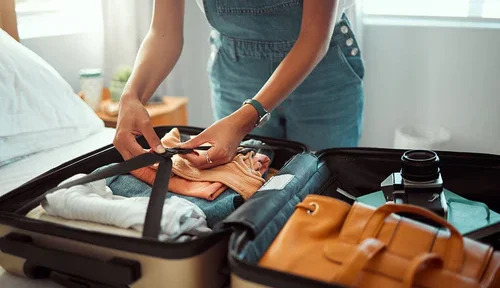
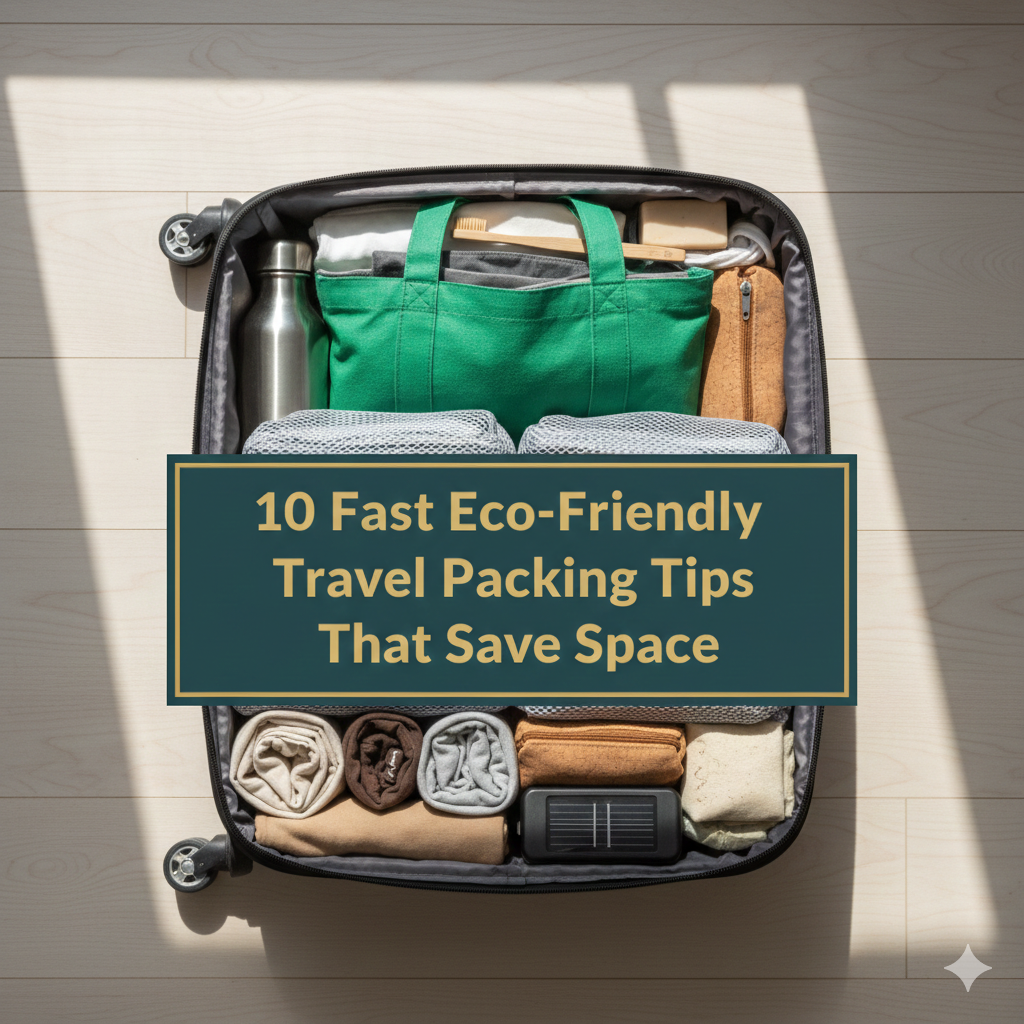
Rolling clothes instead of folding them is one of the oldest tricks in the book — and it works. Rolled clothes take up far less space, resist wrinkles better than flat folds, and let you see everything in your bag at a glance.
Roll softer items like t-shirts, underwear, leggings, and casual pants. Fold stiffer items like a blazer or structured shirt flat and place them on top.
Fill the Dead Zones
Every bag has dead zones — the corners, the insides of shoes, the gaps between rolled items. Use them.
Stuff socks inside your shoes. Slip a small toiletry pouch into a jacket pocket. Tuck underwear around the edges of larger items. These small moves can free up surprising amounts of space, allowing you to pack fewer total bags — which is better for the environment.
Use Packing Cubes — Sustainable Ones
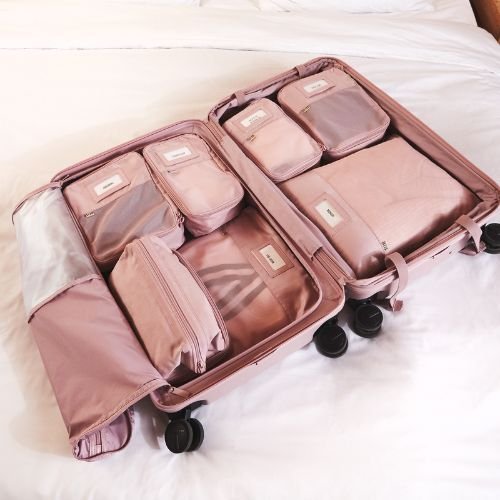
Packing cubes are zippered fabric compartments that compress your clothes and keep your bag organized. They are genuinely one of the best space-saving tools available.
For eco-friendly travel packing, look for packing cubes made from recycled materials. Brands like Eagle Creek, Cotopaxi, and Peak Design make cubes from recycled PET bottles or other sustainable fabrics. Some are even certified by Fair Trade or Bluesign, meaning they meet environmental and ethical production standards.
| Packing Method | Space Saved | Wrinkle Resistance | Best For |
|---|---|---|---|
| Flat folding | Low | Medium | Structured items |
| Rolling | High | High | Casual clothes, soft fabrics |
| Bundle wrapping | Very High | Very High | Full outfits, dress clothes |
| Packing cubes | High | Medium | All clothing types |
Tip 3: Replace Your Liquids With Solid Alternatives
Liquids Are the Biggest Space Wasters in Your Bag
Shampoo bottles. Conditioner. Body wash. Face wash. Toner. Moisturizer. Sunscreen. Most travelers carry a small plastic pharmacy in their toiletry bag. These bottles are heavy, prone to leaking, and subject to the annoying 100ml carry-on rule at airports.
Switching to solid alternatives solves all three problems at once.
What You Can Replace With Solids
The solid personal care market has exploded in recent years. Here is a look at what is available:
| Liquid Product | Solid Alternative | Space Saved |
|---|---|---|
| Shampoo bottle | Solid shampoo bar | ~80% |
| Conditioner bottle | Solid conditioner bar | ~80% |
| Body wash bottle | Solid soap bar | ~75% |
| Face wash | Solid facial cleanser bar | ~75% |
| Toothpaste tube | Toothpaste tablets (jar or bag) | ~70% |
| Sunscreen bottle | Solid mineral sunscreen stick | ~65% |
| Shaving cream | Solid shaving soap bar | ~75% |
One solid shampoo bar replaces two to three full-sized liquid bottles. It fits in the palm of your hand, weighs almost nothing, and has zero plastic packaging. For eco-friendly travel packing, this is one of the highest-impact swaps you can make.
Store Solid Bars the Right Way
To make solid bars last longer and keep them clean in your bag, use a small tin or a ventilated soap case. Let bars dry fully before packing them. A wet shampoo bar left in an airtight container will go soft and mushy fast.
A bamboo soap dish with ventilation slots is a great, planet-friendly option.
Tip 4: Choose Multi-Use Products That Do Double Duty
One Product, Many Jobs
Multi-use products are the single biggest space-saver in any eco-friendly travel packing strategy. The idea is simple: instead of packing ten products that each do one thing, pack five products that each do two things.
Here are some of the best multi-use product swaps:
Coconut oil: Works as a moisturizer, lip balm, hair treatment, and makeup remover. One small tin replaces four separate products.
Tinted SPF moisturizer: Combines sunscreen, moisturizer, and light coverage in one tube. Replaces three products instantly.
2-in-1 shampoo and conditioner bars: Some brands make combination bars that clean and condition in one step.
Baby powder or dry shampoo powder: Works as dry shampoo, shoe deodorizer, and helps remove sand from skin at the beach.
Castile soap: A concentrated liquid soap that works as body wash, shampoo, face wash, hand soap, and even laundry soap. Dr. Bronner’s makes a travel-size version that covers almost your entire cleaning routine.
The Multi-Use Clothing Approach
The same logic applies to clothing. Every item you pack should work in at least two different contexts.
A linen shirt can be casual by day and tucked in for dinner. Swim shorts can double as athletic shorts or casual city wear. A merino wool long-sleeve can layer under a jacket or wear alone in warmer weather.
When everything in your bag has at least two purposes, you naturally pack less — and waste less.
Tip 5: Go Carry-On Only With the Right Bag
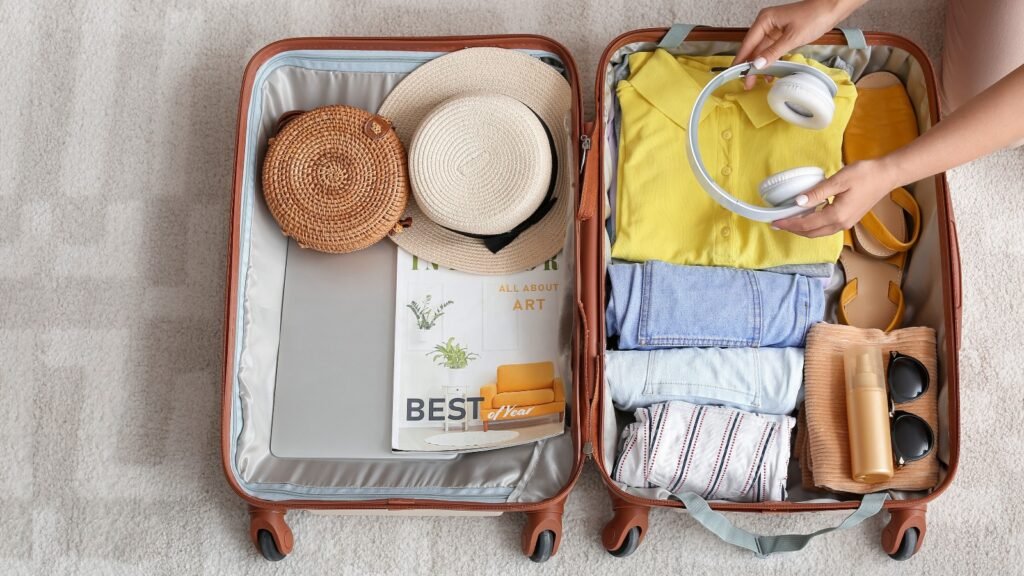
Why Carry-On Only Is an Eco Win
The fuel impact of checked luggage is measurable. Studies have found that the extra weight of checked bags contributes to increased carbon emissions per flight. Going carry-on only is one of the most overlooked eco-friendly travel packing choices a flier can make.
It is also faster, cheaper, and less stressful. No waiting at baggage claim. No lost luggage risk. No checked bag fees.
What Size Bag Do You Actually Need?
Most airlines accept carry-on bags up to 22 x 14 x 9 inches (56 x 36 x 23 cm). A 40-liter backpack or a standard carry-on roller fits within these dimensions at most major carriers.
For eco-friendly travel packing, choose a bag made from sustainable materials:
- Recycled nylon or polyester — Made from reclaimed plastic bottles or fishing nets
- Organic canvas or cotton — Natural, biodegradable, and durable
- Upcycled materials — Brands like Patagonia and Rothy’s incorporate post-consumer waste into their bags
Look for bags with a lifetime warranty too. A bag that lasts 20 years is far more sustainable than one you replace every two or three years.
Organize Your Carry-On Like a Pro
The trick to carry-on only is organization. Use this simple layering system:
Bottom layer: Shoes (stuffed with socks), heavy items like e-readers or cables. Middle layer: Rolled clothing in packing cubes. Top layer: Items you need quick access to — jacket, snacks, travel documents. Front pocket: Toiletries bag, reusable water bottle, small valuables.
Tip 6: Pack a Lightweight Reusable Kit That Folds Flat
The Everyday Reusables That Prevent the Most Waste
Travelers generate a shocking amount of single-use waste — water bottles, plastic bags, coffee cups, plastic cutlery. The good news is that the reusable alternatives to all of these items are now incredibly compact and lightweight.
For more inspiration on sustainable travel choices beyond just packing, EcoFriendlyTravel.online is an excellent resource for green-minded travelers at every experience level.
Here is what a complete, flat-packable reusable kit looks like:
| Item | Packable Version | Weight | Packed Size |
|---|---|---|---|
| Water bottle | Collapsible silicone bottle | 60g | Folds to wallet-size |
| Tote bag | Ripstop nylon packable tote | 30g | Fits in a pocket |
| Cutlery set | Bamboo set in fabric pouch | 80g | Size of a pen |
| Coffee cup | Collapsible silicone cup | 70g | Flattens to 2cm |
| Straw | Collapsible metal straw | 15g | Keyring-sized |
| Total | — | ~255g | Half a zip pocket |
Less than 260 grams. Half a zip pocket. And it prevents dozens of pieces of single-use plastic per trip.
Best Collapsible Products on the Market
The collapsible product category has improved dramatically in recent years. The Stojo collapsible cup is leak-proof and fits in a back pocket. The Nomader collapsible water bottle rolls up like a scroll when empty. Sea to Summit makes ultra-packable tote bags that compress into a tiny built-in pouch.
These are not gimmicks. They are genuinely useful, durable tools that belong in every eco-friendly travel packing kit.
Tip 7: Digitize Everything You Possibly Can
Paper Takes Up Space and Creates Waste
Once upon a time, travel meant carrying a thick folder of printed documents — boarding passes, hotel confirmations, tour tickets, insurance papers, and maps. Most travelers today still carry more paper than they need to.
Going fully digital is one of the fastest and easiest space-saving moves in eco-friendly travel packing.
Everything Your Phone Can Replace
Guidebooks: Download offline travel apps like Maps.me, Organic Maps, or Google Maps with offline regions. For destination guides, try apps like Lonely Planet, Culture Trip, or Wikivoyage.
Boarding passes and tickets: Nearly every major airline and most tour operators now offer mobile passes. Store them in Apple Wallet, Google Wallet, or the airline’s own app.
Travel documents: Photograph or scan your passport, visa, insurance card, and emergency contacts. Store copies in a secure cloud folder and email them to yourself as backup.
Books and journals: A single e-reader weighs less than one paperback and holds thousands of books. For journaling, apps like Day One, Notion, or Google Docs weigh nothing at all.
Maps: Download offline maps before you arrive so you do not need data or a physical map to navigate.
When You Genuinely Need Paper
Some borders require printed visas. Some tours require printed vouchers. In those cases, print only exactly what is required, use both sides of the paper, and recycle responsibly when done.
If you need a notebook for sketching or notes, choose one made from recycled or FSC-certified paper.
According to the Environmental Paper Network, the paper industry is one of the largest industrial consumers of water and a significant contributor to deforestation — another good reason to go digital wherever possible.
Tip 8: Master the Capsule Wardrobe for Travel
What Is a Capsule Wardrobe?
A capsule wardrobe is a small, curated set of clothing where every single piece works with every other piece. The result is a maximum number of outfits from a minimum number of items.
For a 7-day trip, a well-planned capsule wardrobe of 8 to 10 items can produce 20 or more distinct outfit combinations. That is more than enough variety without overpacking.
The Ideal Travel Capsule: A Sample
| Item | Casual Use | Smart/Dressy Use | Outdoor Use |
|---|---|---|---|
| Neutral chinos | ✓ | ✓ | ✓ |
| Dark jeans | ✓ | ✓ | — |
| White linen shirt | ✓ | ✓ | — |
| Merino t-shirt (x2) | ✓ | — | ✓ |
| Lightweight blazer | — | ✓ | — |
| Packable rain jacket | — | — | ✓ |
| Versatile sneakers | ✓ | — | ✓ |
| Simple sandals/loafers | ✓ | ✓ | — |
Eight items. Three completely different contexts. No wasted space.
Stick to a Neutral Color Palette
The key to making a capsule wardrobe work is color. Choose a base of neutrals — black, white, grey, navy, beige, olive — and add one or two accent pieces if you like color.
Neutrals mix and match effortlessly. You will never find yourself in a bind with your top not matching your bottoms. And you will pack far fewer items as a result.
This approach also naturally favors sustainable fabrics. Merino wool, linen, organic cotton, and Tencel all come in beautiful neutral tones and are significantly more eco-friendly than synthetic fast-fashion alternatives.
Tip 9: Choose Eco-Friendly Laundry Options to Pack Even Less
Doing Laundry Means Packing Less Clothing
Here is a mindset shift that seasoned travelers make early: laundry is not an inconvenience. It is a strategy.
If you wash a few items every two or three days, you only need to pack about four to five days of clothing — even for a two-week trip. That cuts your clothing volume nearly in half.
What to Pack for On-the-Road Laundry
Laundry sheets: These are thin, pre-measured sheets of concentrated detergent that dissolve in water. They come in paper or compostable packaging, weigh virtually nothing, and take up no space. Brands like Earth Breeze, Tru Earth, and Kind Laundry are solid choices.
Travel laundry soap bar: A small, solid bar of biodegradable soap handles hand-washing shirts, socks, and underwear in a sink. Safe for greywater and natural water sources.
Scrubba wash bag: This is a lightweight, portable washing bag with an internal scrubbing surface. Fill it with water and a little soap, seal it, and massage your clothes clean in about three minutes. It weighs 145 grams and can replace the need for a laundromat.
Fabrics That Dry Fast and Pack Small
Merino wool and nylon-blend athletic fabrics are the best travel fabrics for quick-dry laundry. Merino wool air-dries in two to four hours and resists odors so well that you can wear it for multiple days between washes.
Avoid heavy denim, thick cotton, or terry cloth towels — these take forever to dry and are not worth the space they consume.
Tip 10: Rethink Your Shoes — Two Pairs Maximum
Shoes Are the Biggest Space-Eaters in Any Bag
Ask any veteran traveler what they wish they had packed less of and the answer is almost always shoes. Shoes are bulky, heavy, and rigid. They crush everything around them in your bag and gobble up space faster than any other category.
The eco-friendly travel packing rule for shoes is simple: no more than two pairs.
How to Choose the Right Two Pairs
Your two pairs of shoes need to cover as many scenarios as possible. Here is a simple framework:
Pair 1 — The Workhorse: A comfortable walking shoe or sneaker that can handle full days of sightseeing, light hikes, and casual meals out. White leather sneakers, trail runners, or clean minimalist athletic shoes work well here.
Pair 2 — The Flex Shoe: A sandal, loafer, or simple flat that works for the beach, nicer dinners, or days when you want something lighter. A leather sandal or a simple slip-on covers a huge range of occasions.
Wear your bulkiest pair while traveling so they do not take up bag space.
Eco-Friendly Shoe Brands Worth Knowing
If you are in the market for new travel shoes, consider brands that prioritize sustainability:
- Allbirds — Made from merino wool and sugarcane, carbon-neutral certified
- Veja — Uses organic cotton and wild Amazonian rubber
- Rothy’s — Made from recycled plastic bottles, machine washable
- Nisolo — Fair Trade certified leather shoes built to last decades
Buying fewer, better-quality shoes that last for years is inherently more sustainable than cycling through cheap fast-fashion footwear every season.
Your Complete Eco-Friendly Space-Saving Packing Checklist
Use this checklist before every trip to make sure you have covered all the bases:
Before You Pack:
- Write your full packing list, then cut it by 30%
- Choose a carry-on bag made from sustainable materials
- Confirm your capsule wardrobe color palette works together
Clothing:
- Maximum 8–10 clothing items for any trip length
- At least one merino wool layer for versatility
- Two pairs of shoes maximum — wear the bulkier pair
Toiletries:
- Solid shampoo, conditioner, and soap bars
- Toothpaste tablets in glass or compostable packaging
- Solid or reef-safe mineral sunscreen
- Multi-use products wherever possible (coconut oil, tinted SPF, castile soap)
Reusable Kit:
- Collapsible water bottle
- Packable tote bag
- Compact cutlery set
- Collapsible coffee cup
Space-Saving Tools:
- Packing cubes (recycled material)
- Laundry sheets or travel soap bar
- Scrubba wash bag (optional but excellent)
Digital:
- All documents digitized and backed up
- Offline maps downloaded
- Mobile boarding passes confirmed
- E-reader loaded with books
FAQs: Eco-Friendly Travel Packing That Saves Space
Q: Can I really fit everything I need into a carry-on for a long trip? Yes — and millions of seasoned travelers do it regularly. The key is combining a capsule wardrobe with on-the-road laundry habits. For trips longer than one week, plan to wash clothes every three to four days. This keeps your clothing volume low no matter how long you travel.
Q: Are solid shampoo bars as effective as liquid shampoo? For most hair types, yes. Premium solid bars from brands like HiBar, Ethique, or Lush perform just as well as liquid shampoo. Those with very dry or chemically treated hair may experience a brief adjustment period as the scalp recalibrates. Many people find their hair actually feels better after switching.
Q: What is the most space-efficient way to pack shoes? Wear your biggest pair while traveling to the airport. Pack your second pair in your bag with socks or underwear stuffed inside to use the space efficiently. Use a shoe bag or a shower cap to keep soles away from your clothing.
Q: Do laundry sheets actually work well? Yes. Laundry sheets from brands like Earth Breeze and Tru Earth work effectively for hand-washing clothing in a sink. They are not as powerful as machine detergent for heavily soiled items, but for travel clothing worn one to two days, they clean thoroughly and rinse out easily.
Q: How do I keep solid soap bars from getting messy in my bag? Let bars dry completely before packing them. Store them in a ventilated tin, a bamboo soap dish, or a small mesh bag. Avoid sealed plastic containers, which trap moisture and cause bars to soften. A silicone soap holder with drainage holes is another great option.
Q: Is going carry-on only really better for the environment? Yes. Checked baggage directly adds weight to the aircraft and increases fuel consumption. Several studies from aviation research groups have confirmed that luggage weight contributes to flight emissions. Going carry-on only is a real, measurable eco-friendly choice — not just a convenience.
Q: What is the best multi-use product for eco-friendly travel? Castile soap is probably the most versatile. A small bottle of Dr. Bronner’s can function as body wash, shampoo, face wash, hand soap, shaving lather, and even laundry soap. One product replaces five or six others, saving both space and plastic.
The Bottom Line: Small Bag, Big Impact
Eco-friendly travel packing is not a compromise. It is a skill.
Once you learn to roll instead of fold, choose solids over liquids, pack multi-use items, and build a smart capsule wardrobe, you will wonder why you ever lugged a massive suitcase around in the first place.
Every trip is a chance to do better — for your back, your budget, and the planet. A lighter bag means less fuel burned, less plastic wasted, and less time spent wrestling with luggage at airports and train stations.
The world’s most incredible destinations — its reefs, forests, mountains, and cities — are best experienced by travelers who arrive prepared to respect them. And that starts before you even leave home.
Pack less. Pack smart. Travel better.
Pick two or three tips from this list and apply them on your very next trip. You do not need to overhaul everything at once. Small, consistent changes build habits — and habits build a genuinely different kind of traveler.